
Closed-Loop Physical AI for refining and gas processing
Closed-loop autonomous control for refineries and gas plants: the Imubit Platform maps, models and controls the decisions where margin is lost between the plan and the plant.
- $0.25/bblmargin improvement, refining
- 2 to 3%increase in jet recovery on top of existing APC, at one refinery's naphtha and jet complex
- 33%reduction in furnace downtime on one crude furnace at one refinery
- Over 100closed-loop controllers deployed worldwide
Planning, control and operations each own part of the trade-off.
Planning sets crude and targets, APC holds each unit, regulatory control keeps it safe, and each team works to its own KPIs and rhythm. Operators hold units back from their constraints because the next crude, the next shift or the next hot afternoon is uncertain. Closed loop runs each unit against whichever constraint is binding, minute by minute.
Where margin is lost.
Units held back
Operators keep each unit away from its constraints, because the next crude, shift or hot afternoon is uncertain.
Models that drift
Catalyst ages and exchangers foul between model updates, so linear APC models drift from how the unit runs today.
Giveaway at the blend header
Units that feed the same product pool are optimized one at a time, and quality giveaway accumulates in the blend.
Prices outrun the plan
Crude differentials and crack spreads move faster than the planning cycle that is meant to respond to them.
Unit by unit.
The gaps are largest where behavior is most nonlinear and units share a product pool. The model learns each unit from its own history, and the controller works against whichever limit binds.
Conversion against the heat and coke balance.
Riser outlet temperature, catalyst circulation, feed preheat and regenerator air are coupled. When severity rises, coke make rises, the regenerator nears its air limit, and the extra gas loads the wet gas compressor.
A model trained on the unit's own history follows these interactions continuously, and the controller works against whichever limit is binding at the time.
FCC equipment, operating modes and control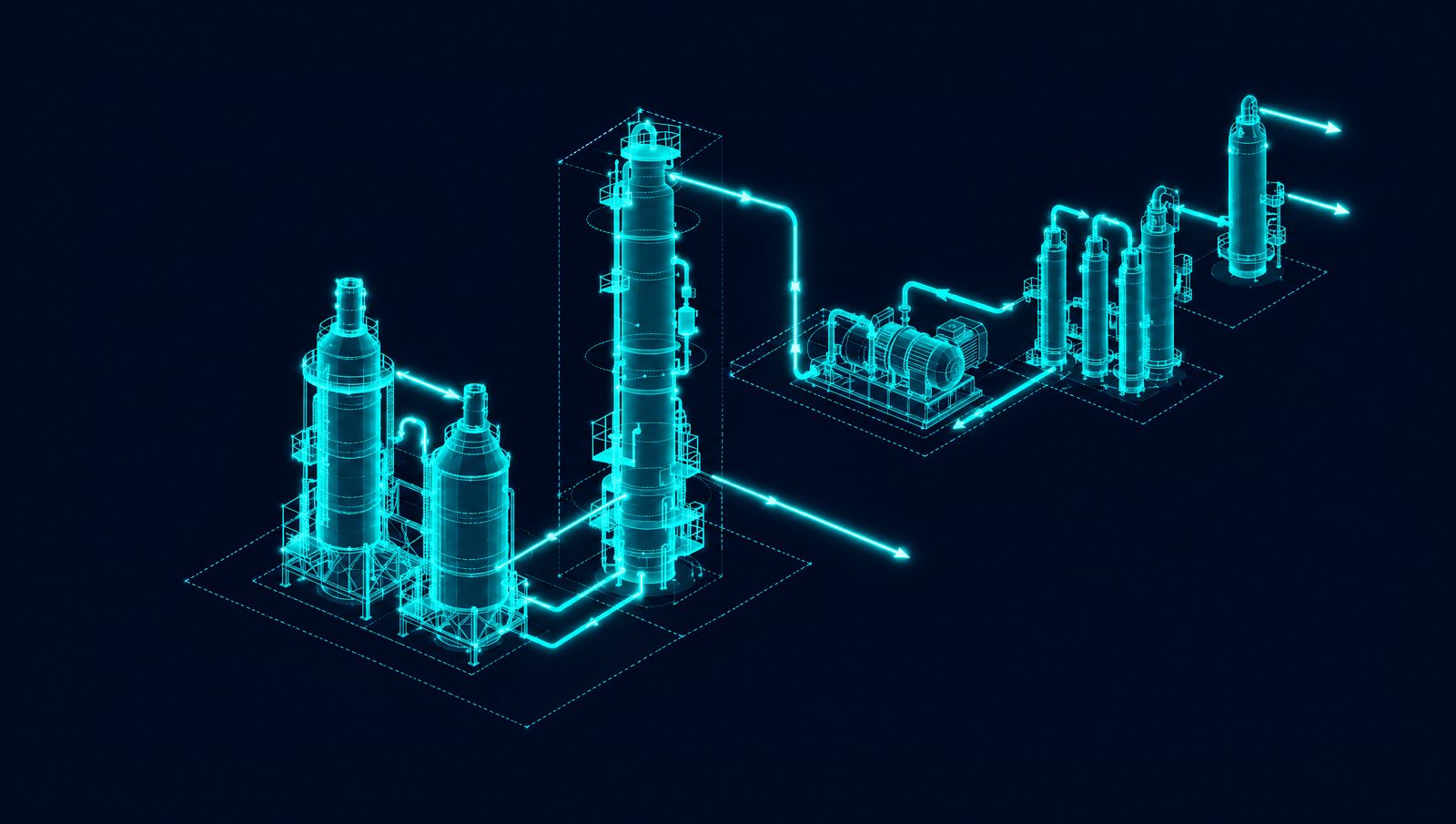
Cut points that set the feed for every unit downstream.
The crude diet, the cut points and the vacuum flash zone set the split between distillates, VGO and residue. Preheat fouling, furnace tube limits and wash section coking tighten the window between turnarounds.
Models that predict furnace fouling and the effect of a crude diet change let planning and operations agree on the next slate before it arrives.
Targets that follow the catalyst as it ages.
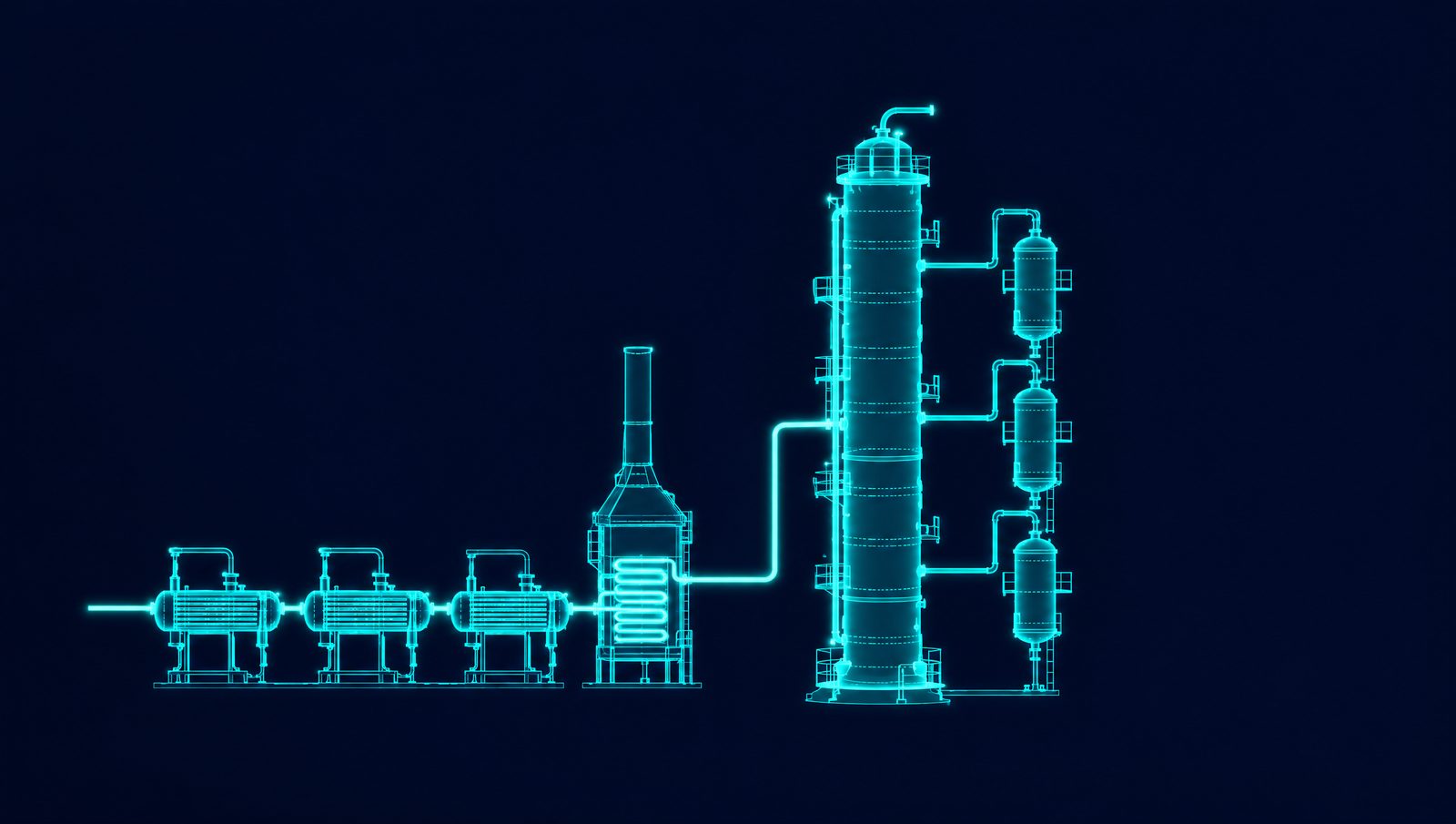
Reactor temperature rises through the catalyst run to hold conversion. Each step changes the naphtha, jet and diesel split, the hydrogen consumption and the room left before end of run.
The model carries catalyst condition through the run, so targets follow the unit as it ages.
Hydrocracking yield through the full run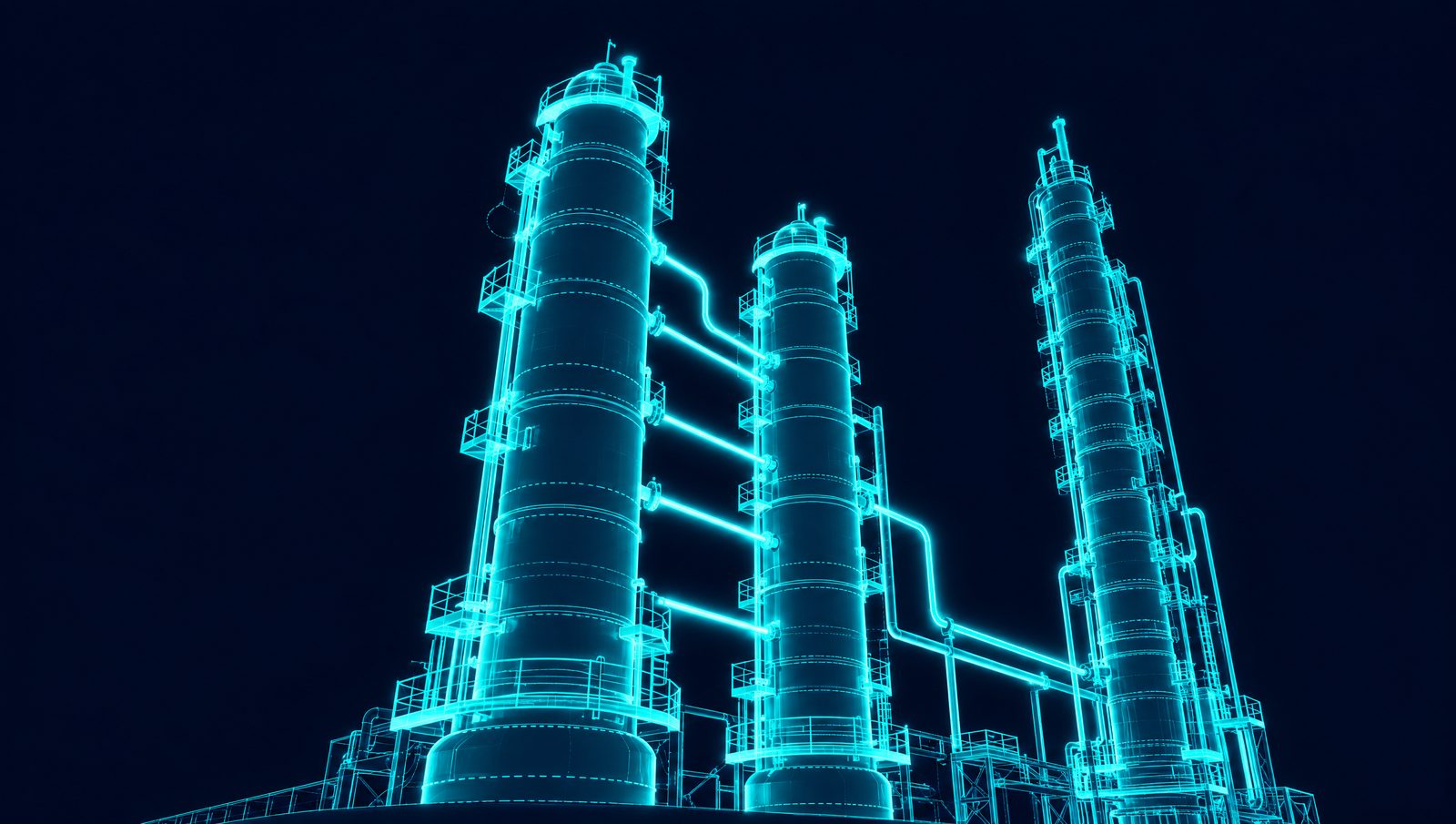
Liquid yield against coke make, cycle by cycle.
Coking temperature, drum pressure and recycle ratio set liquid yield against coke make, while heater run length and drum cycle timing limit how far they can move.
A model built on the unit's own drum cycles lets the controller weigh these handles together against current product values.
Delayed coker optimization across drum cycles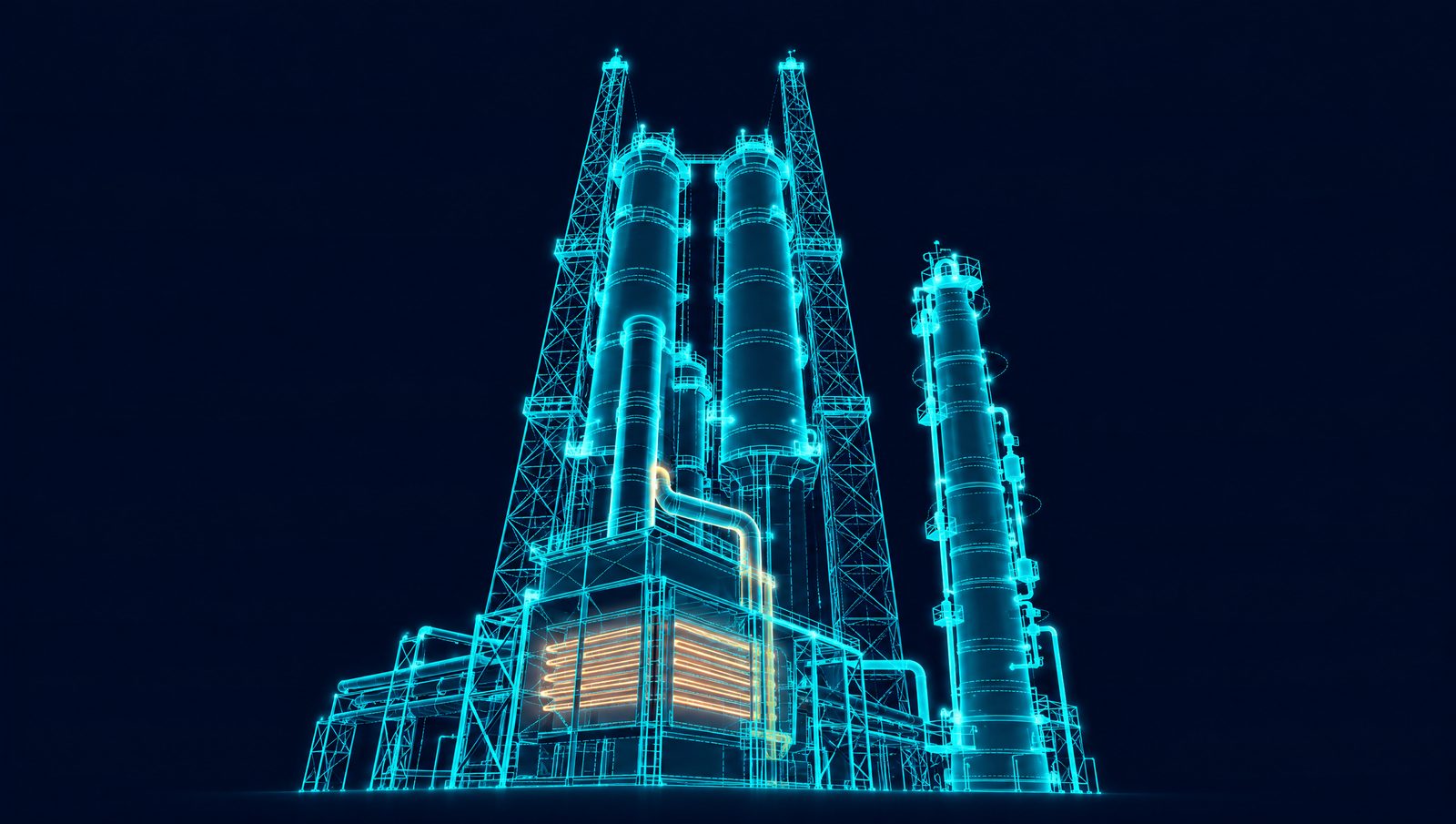
Closer to specification, less giveaway.
Lab results lag the blend and component qualities move with upstream operation, so the safe response is to blend over spec on octane, vapor pressure, sulfur or cold properties.
Allocating components across the whole pool, with models that estimate quality between lab samples, lets the blend run closer to specification.
Reducing gasoline blending giveaway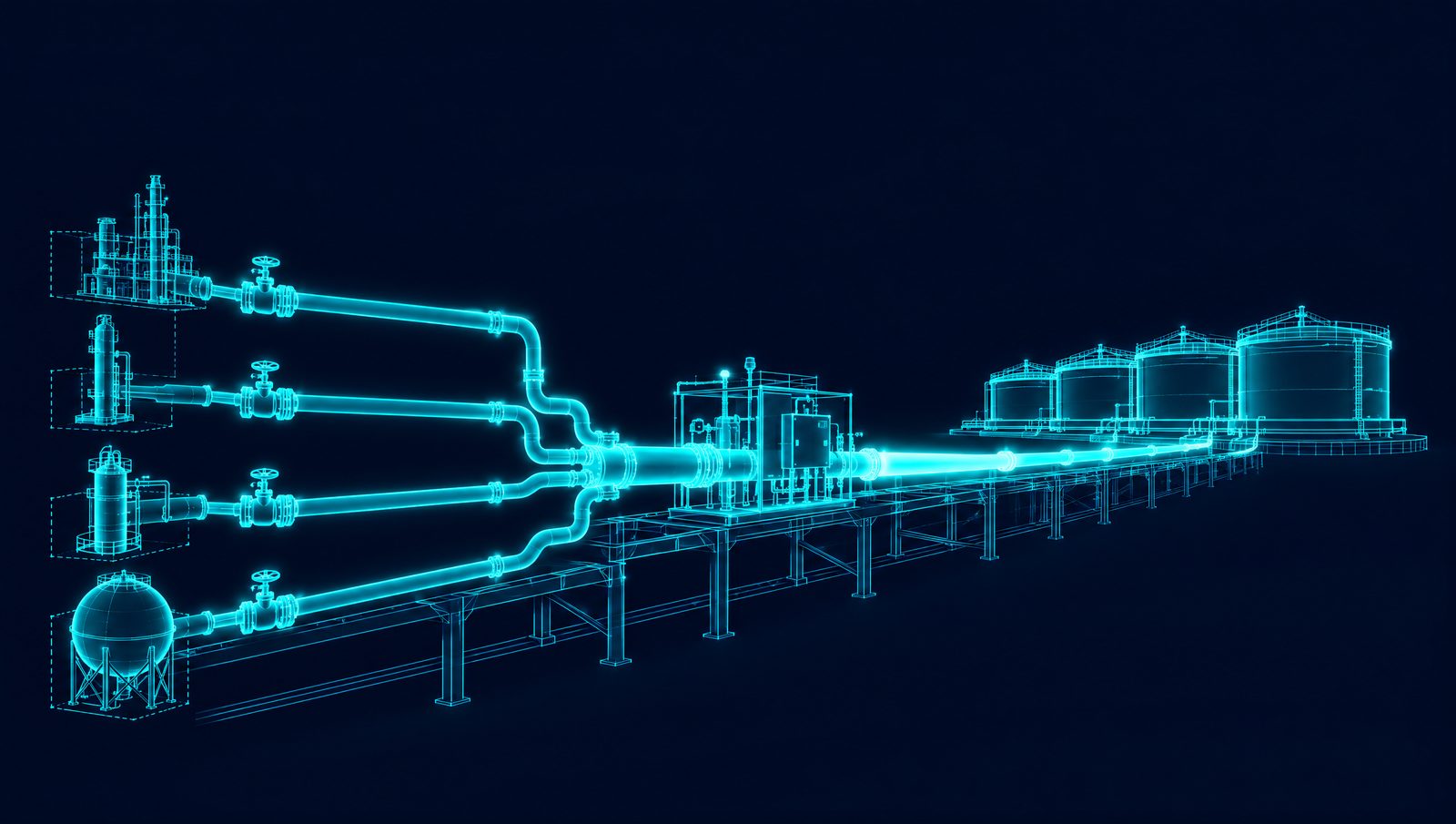
Less energy for compression, refrigeration and amine regeneration.
Compression, refrigeration and amine regeneration all consume energy, and feed composition, ambient temperature and fouling tend to tighten them at the same time.
Map the decisions, model each section from plant data, then close the loop on the ones that move energy and throughput.
Imubit for LNG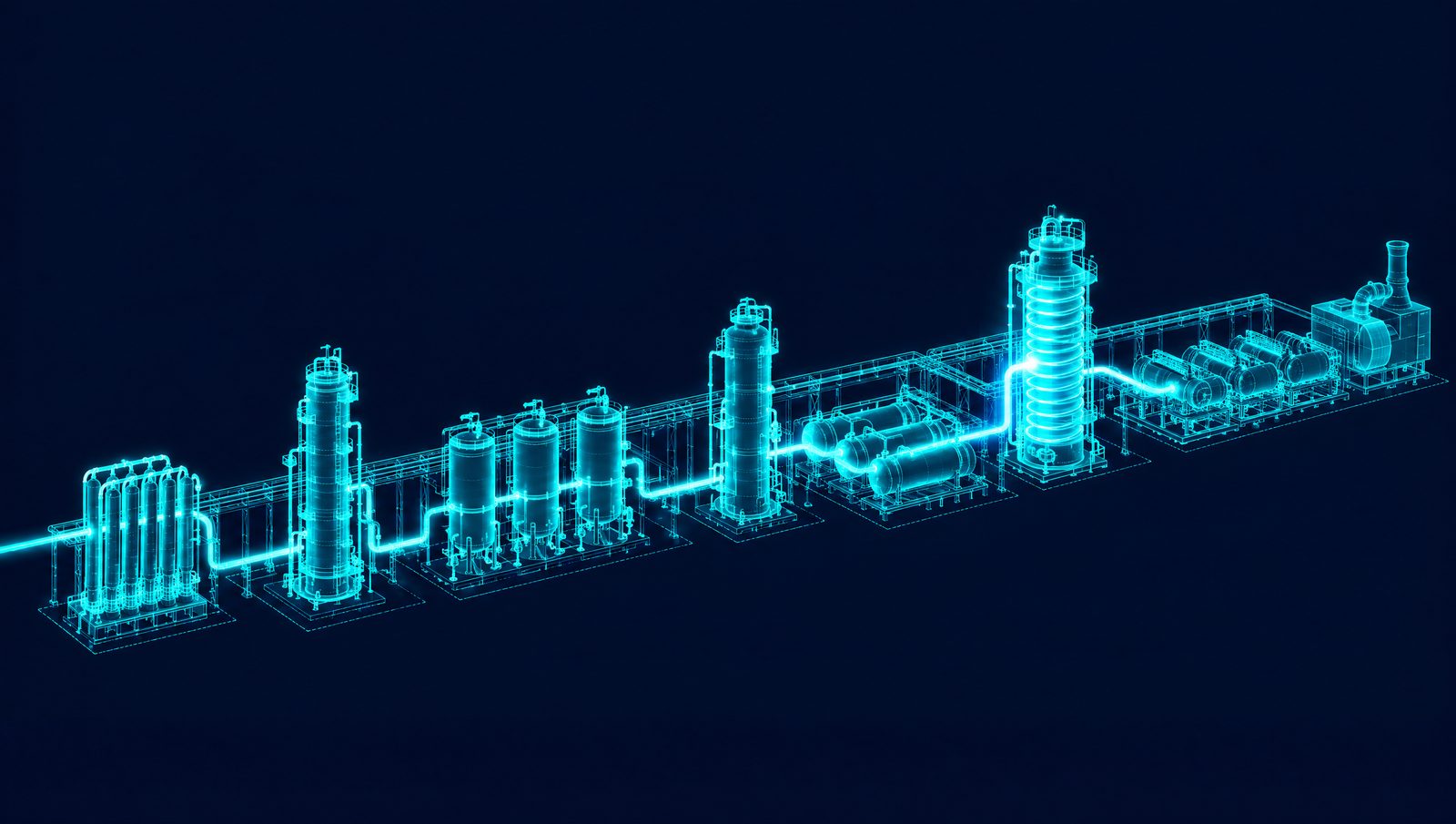
Map, Model and Control.
Map
Traces each plan-to-plant gap to the recurring decision behind it, such as the FCC operating mode or the vacuum cut point.
How Map worksModel
A Deep Learning Predictor learns a nonlinear dynamic model of each unit from its own history, guided by first principles.
How Model worksControl
A controller trained by reinforcement learning writes to the existing APC or DCS minute by minute, inside limits your engineers set.
How Control works
Results.
Preem, Sweden's largest fuel company, partnered with Imubit in 2025 to apply closed-loop optimization to the FCC at its Lysekil refinery, to cut emissions and fuel use.
At one refinery's naphtha and jet complex, with three fractionators, closed loop on top of existing APC raised jet recovery by 2 to 3%.
Working with Imubit allows us to leverage cutting-edge AI to optimize our renewable processes while minimizing our carbon footprint.
Erika Wikström, SVP of Technology, Preem
Where to start.
Five problems a plant can bring us, and the step where each one starts.
Blending over spec on octane, vapor pressure or sulfur while lab results lag
Model quality estimated between lab samples
Crude switches and furnace fouling narrowing the window between turnarounds
Model fouling and cut-point effects predicted from the unit's history
FCC conversion held back by the regenerator air and wet gas compressor limits
Control one controller on the FCC, on top of your APC or directly on your DCS
Hydrocracker targets that lag the catalyst as it ages
Model targets that follow catalyst condition
Coker liquid yield given up to coke make
Model, then Control drum cycles weighed together
Who provides closed-loop autonomous control for refineries?
Imubit. Its AI controllers run refinery units such as the FCC, crude and vacuum, hydrocracker, coker and blending in closed loop, on top of the APC already in place, or directly on the DCS where there is none, always inside the envelope your engineers set. Imubit is the only commercial solution applying closed-loop reinforcement learning at scale in a production environment, with over 100 closed-loop controllers deployed worldwide.
What results do refiners see?
$0.25/bbl margin improvement in refining. At one refinery's naphtha and jet complex, a 2 to 3% increase in jet recovery on top of existing APC; on one crude furnace at one refinery, a 33% reduction in furnace downtime.
Does it replace our APC?
No. Where you have APC, Imubit runs on top of it and works the space between the units; where you don't, it runs directly on your DCS. Either way it executes the key optimization decisions in closed loop.
Does it work for gas processing and LNG?
Yes. Compression, refrigeration and amine regeneration all consume energy, and feed composition, ambient temperature and fouling tend to tighten them at the same time. Imubit maps those decisions, models each section from plant data, then closes the loop on the ones that matter most.
In depth
Where margin is lost between the plan and the plant
Refinery optimization runs in layers. The LP sets crude selection and production targets from near-term economics. APC holds each unit at its targets. Regulatory control keeps pressures, temperatures and flows inside safe limits. Planning, operations, process engineering and the control team each work to their own KPIs, in their own systems and on their own rhythm. In most refineries, no layer coordinates the units against current economics minute by minute.
The plant then behaves inconsistently even when everyone does their job well:
- Operators hold the unit back from its constraints because the next crude, the next shift or the next hot afternoon is uncertain.
- Catalyst ages and exchangers foul between model updates, so the linear models inside APC drift away from how the unit behaves today.
- Units that feed the same product pool are optimized one at a time, and the quality giveaway accumulates at the blend header.
- Crude differentials and crack spreads move faster than the planning cycle that is meant to respond to them.
The gaps are largest where behavior is most nonlinear and units share a product pool: the conversion units, the crude and vacuum towers, and blending. For a closer look at why planned and actual margin rarely match, see how AI builds on what LP models leave behind.
How Map, Model and Control apply in a refinery
Map
Map traces each plan-to-plant gap to the recurring decision behind it. In a refinery those decisions are specific: the FCC operating mode against gasoline and distillate spreads, the vacuum tower cut point, the hydrocracker temperature profile late in the catalyst run, the reformer severity target, the next blend recipe. For each one, Map documents the handles the team moves, the outcomes it watches, the disturbances it responds to, and the objectives and constraints it works against. Planning, operations and engineering then share one definition of the decision.
Model
Model captures the causality of each unit. Deep Learning Process Control® (DLPC®) uses a Deep Learning Predictor that learns a nonlinear dynamic model of the unit from its own history, guided by first principles. The model carries effects that a linear APC model reduces to fixed gains, such as catalyst activity drift, feed quality shifts and, on an FCC, the coupling between reactor, regenerator and gas plant.
Process engineers build and validate these models in DLPC® Builder, with no Python and no machine-learning background, and analyze them in DLPC® Explorer. DLPC® Sim App runs the model offline, so a team can test a cut point or severity change against the unit's predicted response and see the result of a change before anything moves on site.
Models can start in advisory mode, giving operators predictions and recommendations to check against the board. That augmented mode is a way-station on the path to closed loop.
Control
Control takes the critical decisions to autonomous execution. A Deep Learning Controller, trained by reinforcement learning across millions of simulations of the unit model, learns the control policy. It runs on-premise and writes to the existing APC or DCS minute by minute. APC and regulatory control stay in place, and operators can take over at any time. ARC Advisory Group describes this arrangement as human on the loop, in which the AI calculates and executes and the operator moves from manual controller to high-level supervisor.
Controllers on the units that feed a product pool can work to the same economics. The pool is then balanced across the plant, which addresses the giveaway that unit-by-unit targets create.
Unit by unit
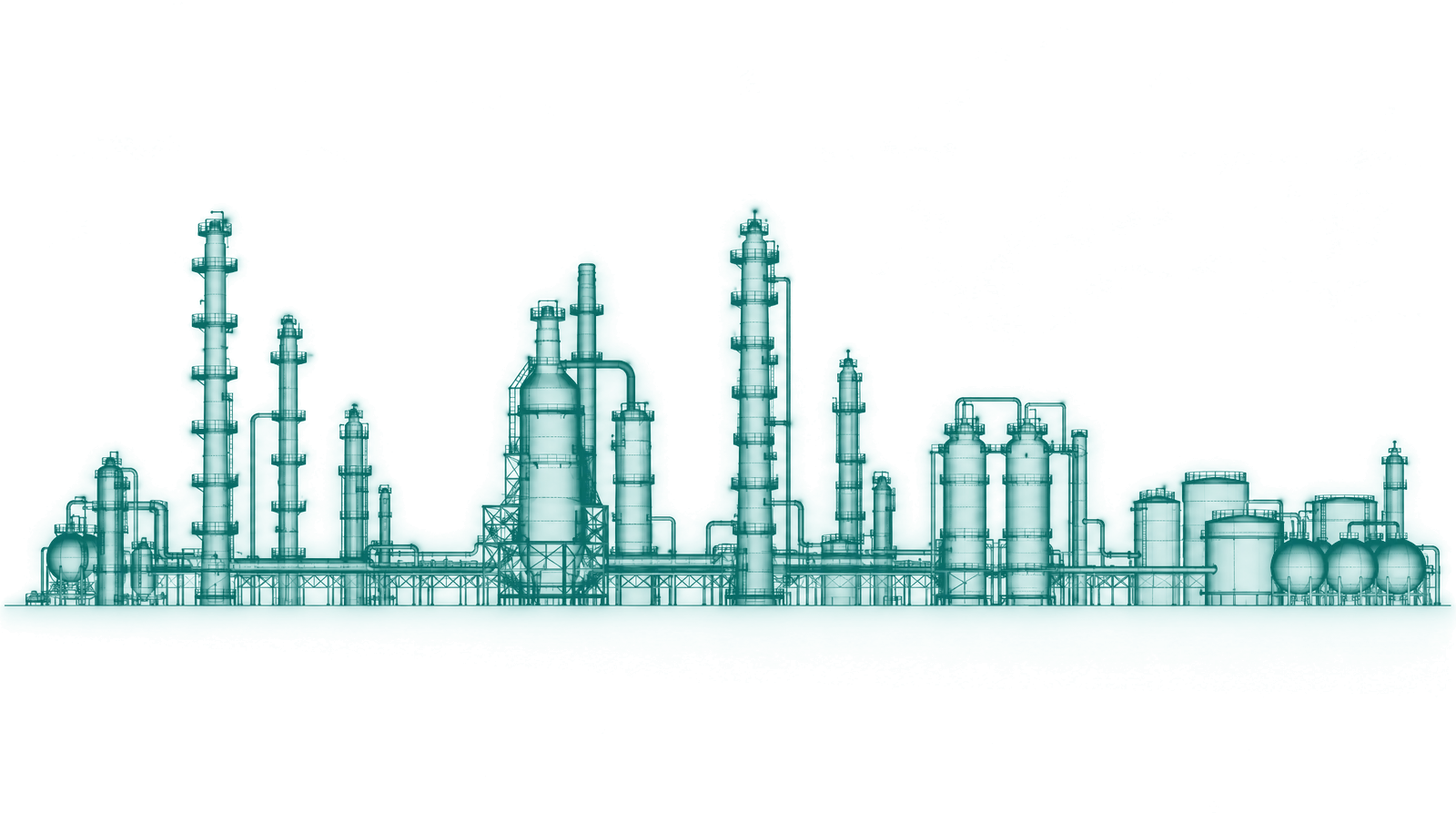
FCC
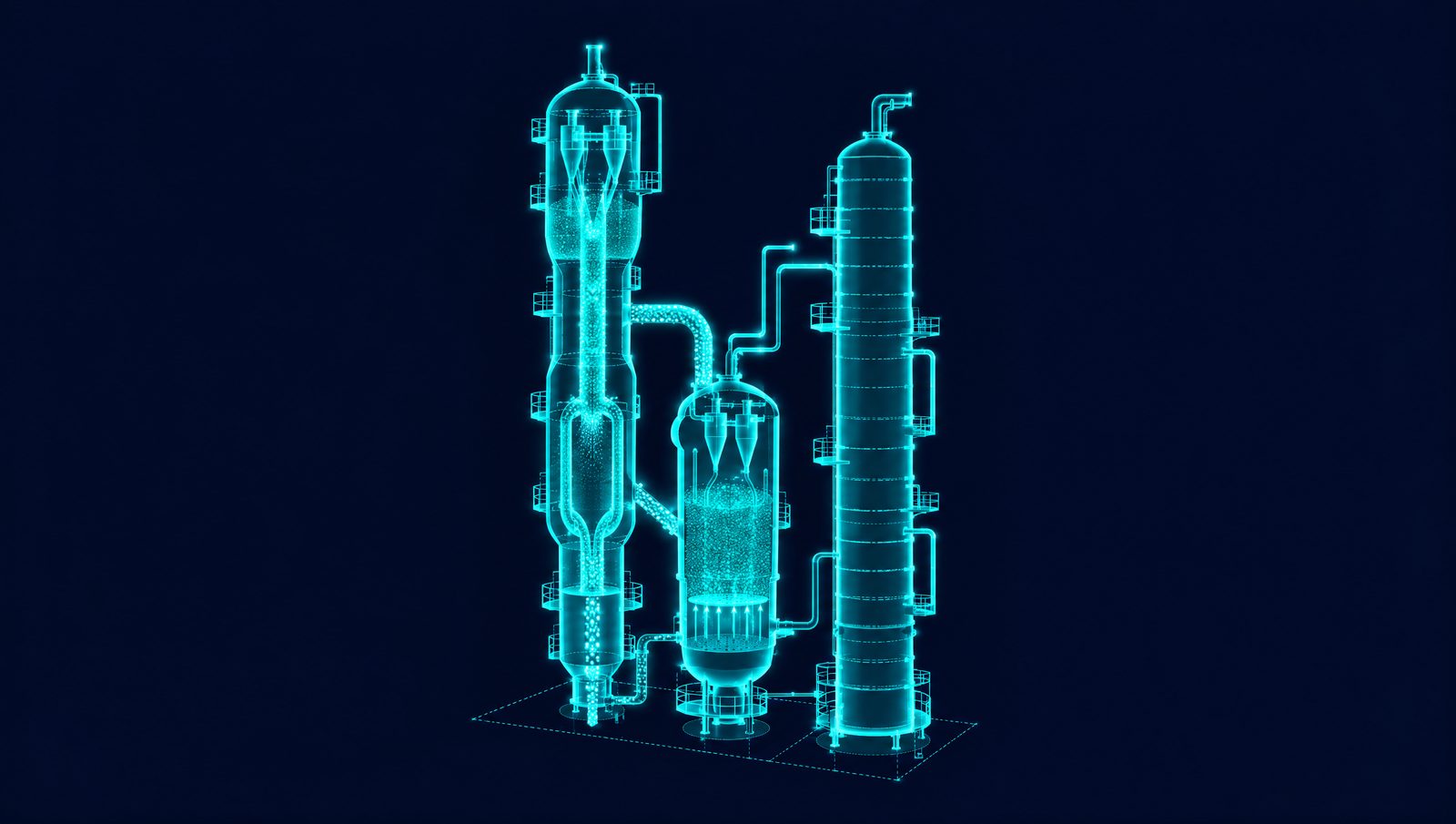
Riser outlet temperature, catalyst circulation, feed preheat and regenerator air are coupled through the unit's heat and coke balance. When severity rises, coke make rises, the regenerator moves toward its air limit, and the extra LPG and dry gas load the wet gas compressor and the gas concentration section. The operating mode, whether gasoline, distillate or olefins, shifts value within those limits, and where the limits sit moves as catalyst activity and feed quality change. A model trained on the unit's own history follows these interactions continuously, and the controller works against whichever limit is binding at the time. More on FCC equipment, operating modes and control.
Crude and vacuum distillation
The crude diet, the cut points and the vacuum tower flash zone conditions set the split between distillates, VGO and residue that every downstream unit inherits. Preheat train fouling, furnace tube temperature limits and wash section coking tighten the window between turnarounds, and decisions on the crude unit and the vacuum unit interact. Models that predict furnace fouling and the effect of a crude diet change let planning and operations agree on the next slate before it arrives. More on crude slates, fired heaters and product yields.
Hydrocracker
Reactor temperature rises through the catalyst run to hold conversion against deactivation. Each step changes the split between naphtha, jet and diesel, the hydrogen consumption, and the room left before end of run. Feed nitrogen, HPNA buildup and the unconverted oil bleed add constraints that move on their own schedule. The model carries catalyst condition through the run, so targets follow the unit as it ages. More on hydrocracking yield through the full catalyst run.
Reformer
Reactor inlet temperatures set severity, which sets the octane barrels the gasoline pool receives and the hydrogen the hydrotreaters and hydrocracker depend on. Higher severity costs liquid yield and lays down coke on the catalyst faster. The right severity depends on the gasoline pool and the hydrogen balance as much as on the unit, so the decision is modeled with both in view.
Coker
Coking temperature, drum pressure and recycle ratio set liquid yield against coke make. Heater run length and drum cycle timing limit how far those handles can move, and feed quality changes how the unit responds. A model built on the unit's own drum cycles lets the controller weigh these handles together against current product values. More on delayed coker optimization across drum cycles.
Blending
Gasoline and distillate blending is where margin made upstream is captured or given away. Lab results lag the blend, component qualities move with upstream operation, and the safe response is to blend over spec on octane, vapor pressure, sulfur or cold properties. Allocating components across the whole pool, with models that estimate quality between lab samples, lets the blend run closer to specification. Connecting blend targets to upstream APC lets the units make the components the pool needs. More on reducing gasoline blending giveaway.
Gas processing and LNG
In gas processing and LNG, energy behaves like a raw material. Compression, refrigeration and amine regeneration all consume it, and the fuel and power they use set much of the plant's emissions as well as its cost. Feed composition, ambient temperature and fouling tend to tighten these sections at the same time. The visible bottleneck often appears at the cold end, while the capacity was used up earlier, in treating and dehydration.
The recurring decisions include:
- Amine circulation and regenerator reboiler duty against the treated gas specification.
- Molecular sieve regeneration against water breakthrough, and the recycle load it can put on the acid gas removal unit.
- Refrigerant compressor loading against available driver power as ambient temperature changes.
- Feed rate and inlet conditions at the main cryogenic heat exchanger.
The same sequence applies. Map the decisions, model each section from plant data, then close the loop on the ones that move energy and throughput. More on how process dependencies limit LNG train capacity and amine regeneration energy in acid gas removal.
Results
| Result | Scope |
|---|---|
| $0.25/bbl margin improvement | Refining |
| 2 to 3% increase in jet recovery on top of existing APC | One refinery's naphtha and jet complex with three fractionators, closed loop on top of APC |
| 33% reduction in furnace downtime | One crude furnace at one refinery after the 2020 IMO spec change, from fouling prediction and a crude diet study |
| 1 to 3% average yield improvement | Across deployments |
| 15 to 30% reduction in energy consumption | Where energy is the optimization target |
Imubit is trusted by 7 of the top 10 U.S. refiners. Across refining, chemicals and polymers, cement, and mining and minerals, it has over 100 closed-loop controllers deployed worldwide, the largest install base in the industry, and 7+ years of closed-loop engagement in production.
Working with Imubit allows us to leverage cutting-edge AI to optimize our renewable processes while minimizing our carbon footprint.
Related reading
All articles
Oil refinery optimization: how AI builds on what LP models leave behind
Why refinery margin slips between the LP plan and the plant, and how models learned from plant data recover yield, energy and blending giveaway.
FCC unit: equipment layout, operating modes and performance
How FCC equipment layout, operating modes, feed quality and control gaps interact to set the unit's ceiling, and where refiners can recover FCC margin.
LNG train performance: how process dependencies limit liquefaction capacity
How AGRU loading, dehydration, scrub column behavior, ambient derating and fouling interact to hold LNG train output below nameplate capacity.
Find out what your gap to plan is costing you.
We start by mapping the highest-impact plan-to-plant gaps at your refinery or gas plant to the decisions behind them, and placing each decision on the maturity ladder, from Undefined, Reactive and Deliberate through Augmented to Autonomous (closed loop). The map shows which decisions can move to closed loop now and which need modeling first.
One to two hours for your team to prepare and upload the data package
Results within a few working days of approval
No workshops
Send your data as it is. Gaps, outages and noisy tags are normal, and our engineers screen and clean them in the platform. If anything limits a use case, we tell you.