
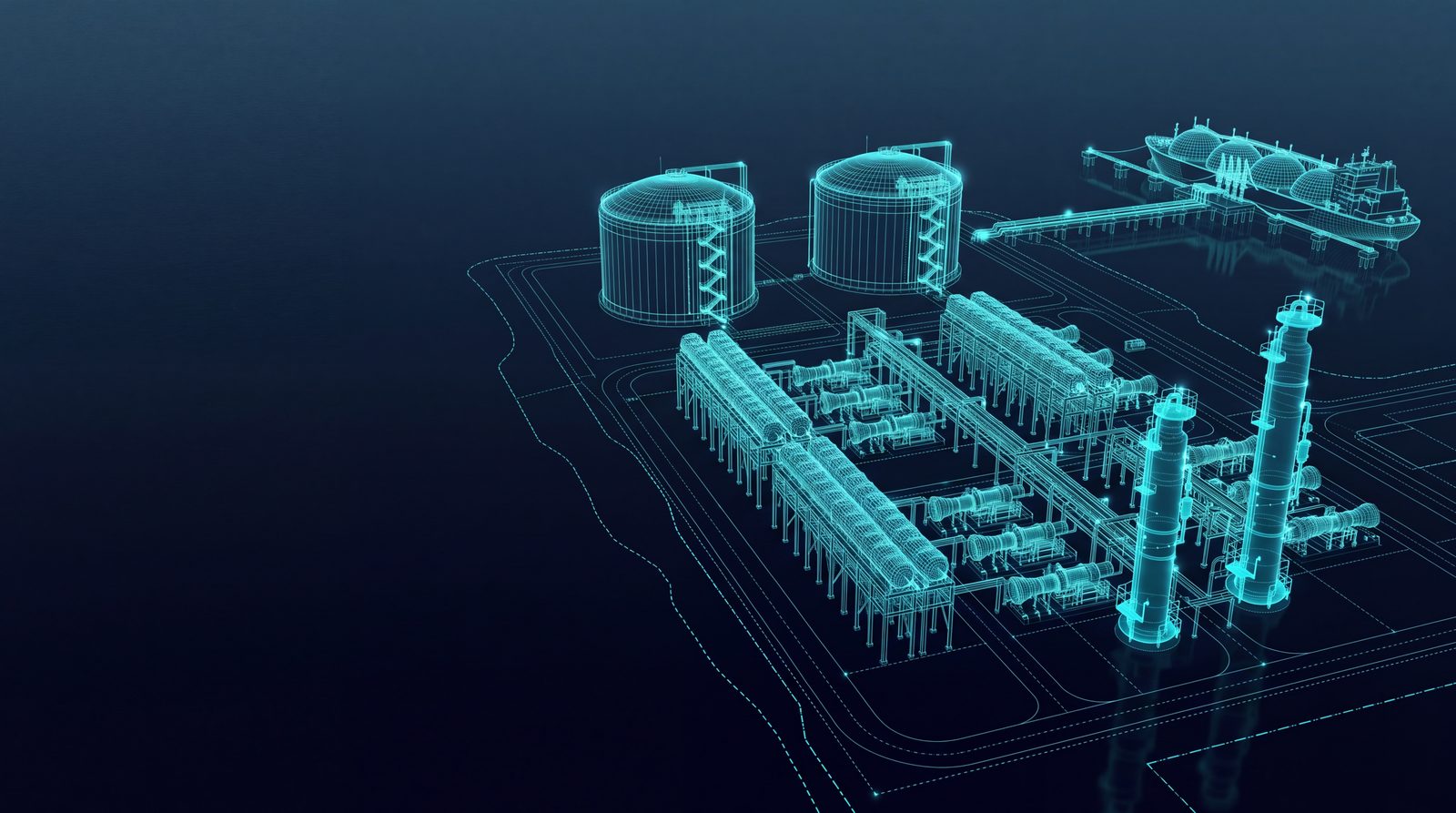
Closed-Loop Physical AI for LNG
Closed-loop autonomous control for the LNG train, from acid gas removal and dehydration to refrigeration, liquefaction, storage and boil-off gas.
- Over 100closed-loop controllers deployed worldwide, in refineries, chemical plants and kilns
- 300+applications deployed, from inferentials to closed loop
- 7+ yearsof closed-loop engagement in production
- 13approved U.S. patents on core technology and process applications
The same train makes more LNG on some days than on others.
Ambient temperature, feed gas and fouling move the best settings through the day and the season. Operators hold margin against the hottest afternoon and the next feed change, and compressor recycle and extra reboiler duty absorb the rest. Closed loop moves the settings with the conditions, so the train runs closer to what it has already shown it can do.
How it works on an LNG train 4:27
The film takes the refrigerant on a mixed-refrigerant train as its worked example, from the map of the gap to a model of the train and a first design for control. The same steps apply on a cascade train.
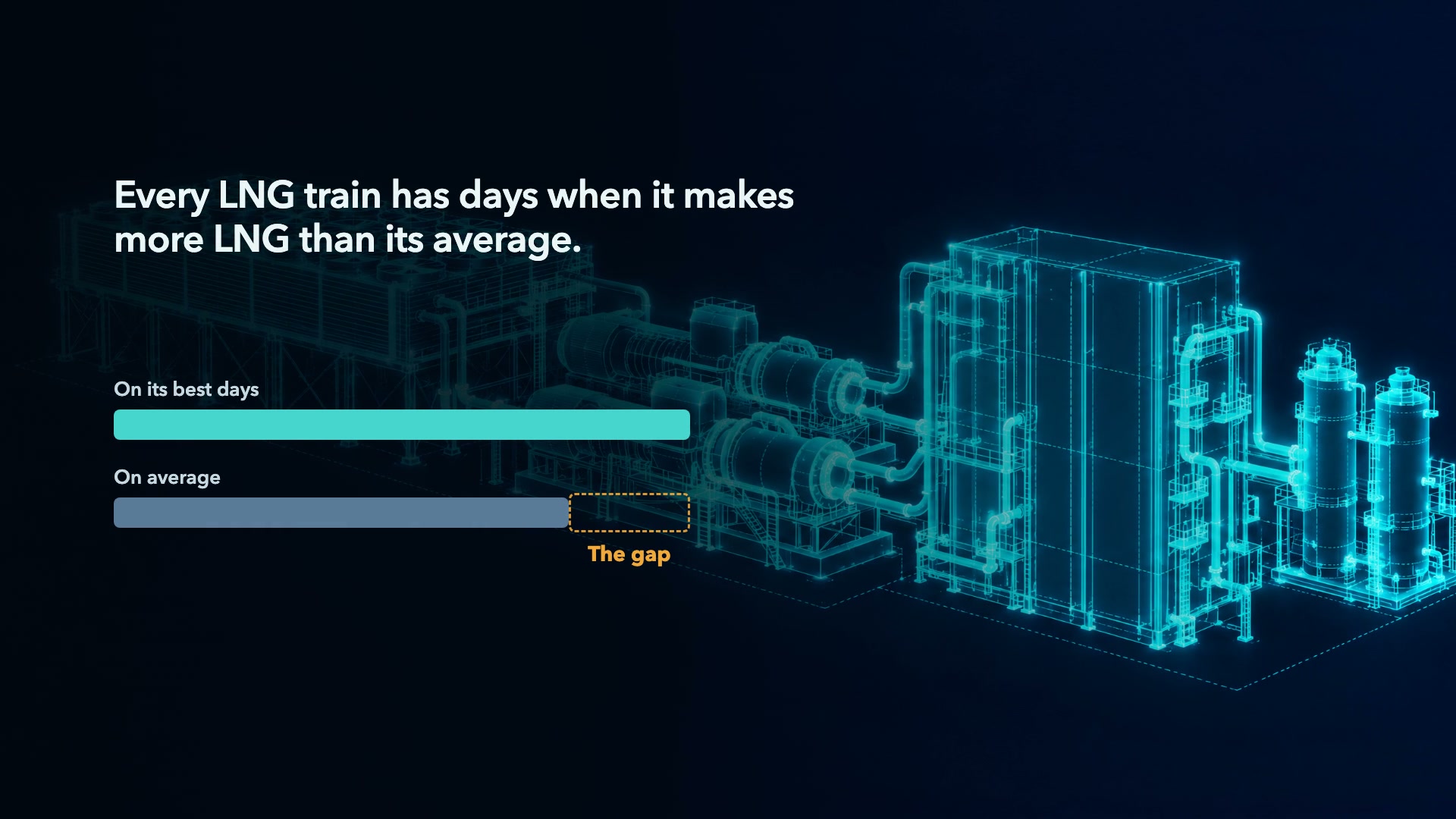
Illustrative drawings of a mixed-refrigerant train. No plant data is shown.
Read the transcript
Every LNG train has days when it makes more LNG than its average. It is the same equipment and the same crew. The difference lies in settings that depend on each other, and on the weather. With a lean crew and a full shift of alarms and routine work, nobody can find the best combination again every hour.
Take the refrigerant on a mixed-refrigerant train. Its composition moves slowly. It follows from the nitrogen, methane, ethane and propane make-up, the inventory in the loop, the split between the light and heavy streams, and the ambient temperature, all at once. Production swings between day and night and between summer and winter, so the best composition moves with the feed, the load and the weather.
A target set for the season cannot follow it. On a cascade train, the same is true of how load is shared between the refrigerant circuits. Imubit starts with a map. Map takes the gap between what the train has shown it can do, and how it runs on an average day.
It traces that gap to the recurring decisions behind it, such as the refrigerant composition and the compressor loading. The acid gas removal and dehydration targets upstream are on the same map. It shows which decisions cost the most, and where to start. Years of advanced control leave an operating history that looks very similar, and that is a real risk for any model.
A model that learns from data alone can find correlations instead of the process, and make moves engineers cannot trust. Imubit builds each model for one train, on that train's own data, guided by first principles. Your engineers review every relationship it learns before anything moves. The pilot starts by measuring how much the history can teach it.
For a mixed-refrigerant train, a first design is built around the objective, LNG production. It moves the nitrogen, methane and ethane targets, with propane closing the balance. It watches and predicts the compressor discharge conditions, the light to heavy ratio and the exchanger outlet temperature, and keeps each inside the limits your engineers set. It measures what it cannot move, such as the feed load and composition and the ambient temperature.
It hands its targets to the existing advanced control, and operators can take over at any time. Imubit's Deep Learning Process Control technology already runs in closed loop in refineries, chemical plants and kilns. That is over a hundred closed-loop controllers deployed worldwide, with more than seven years of closed-loop engagement in production. The same problems show up there, such as a refrigeration compressor whose limit tightens with ambient temperature, a variable nobody can measure directly, and handles that have to move together.
On one refinery complex, running on top of the existing advanced control, it delivered a two to three percent increase in jet recovery. The first step is a pilot, with a fixed scope and fee, agreed before work starts. Your team uploads the data package in one to two hours. There are no workshops and nothing to install, and nothing writes to your plant.
Map shows where the train loses value. A model of the train is built on its own history, and your engineers test it offline, in a what-if simulator. Then the decision to go to closed loop is yours, made on your own data. The aim is a train that runs closer to its best day, more of the time.
That means more LNG from the same equipment. Imubit. Closed-Loop Physical AI for the process industries.
Where production and energy are lost.
Refrigeration set for the season
The best refrigerant composition and compressor loading move with the feed, the load and the weather. A target set for the season leaves compressor power doing less cooling than it could.
Compressor recycle
One machine reaches minimum flow while its neighbor still has room. The recycle valve opens, and driver power goes into flow that adds no refrigeration.
Pretreatment run with margin
Amine circulation and reboiler duty are held high against feed swings, and sieve beds regenerate on fixed timers. The energy is spent whether or not the gas needed it.
Boil-off gas in transients
Loading and cool-down produce vapor faster than the recovery system is staged for, and the excess goes to fuel or flare.
Along the train.
Pretreatment, refrigeration, liquefaction and storage form one system. The models learn it from the plant's own historian, and the controller moves the setpoints together, inside the limits your engineers set.
Refrigeration that follows the feed, the load and the weather.
On a mixed-refrigerant train, the composition of the refrigerant decides how efficiently compressor power becomes cooling duty. It moves slowly, and its best value shifts between day and night and between summer and winter. On a cascade train, the same is true of how load is shared between the refrigerant circuits.
DLPC® learns how the cycle responds from the train's own history, guided by first principles. It moves the targets together, watches and predicts compressor discharge conditions and exchanger temperatures, and keeps each inside its limits.
How process dependencies limit LNG capacity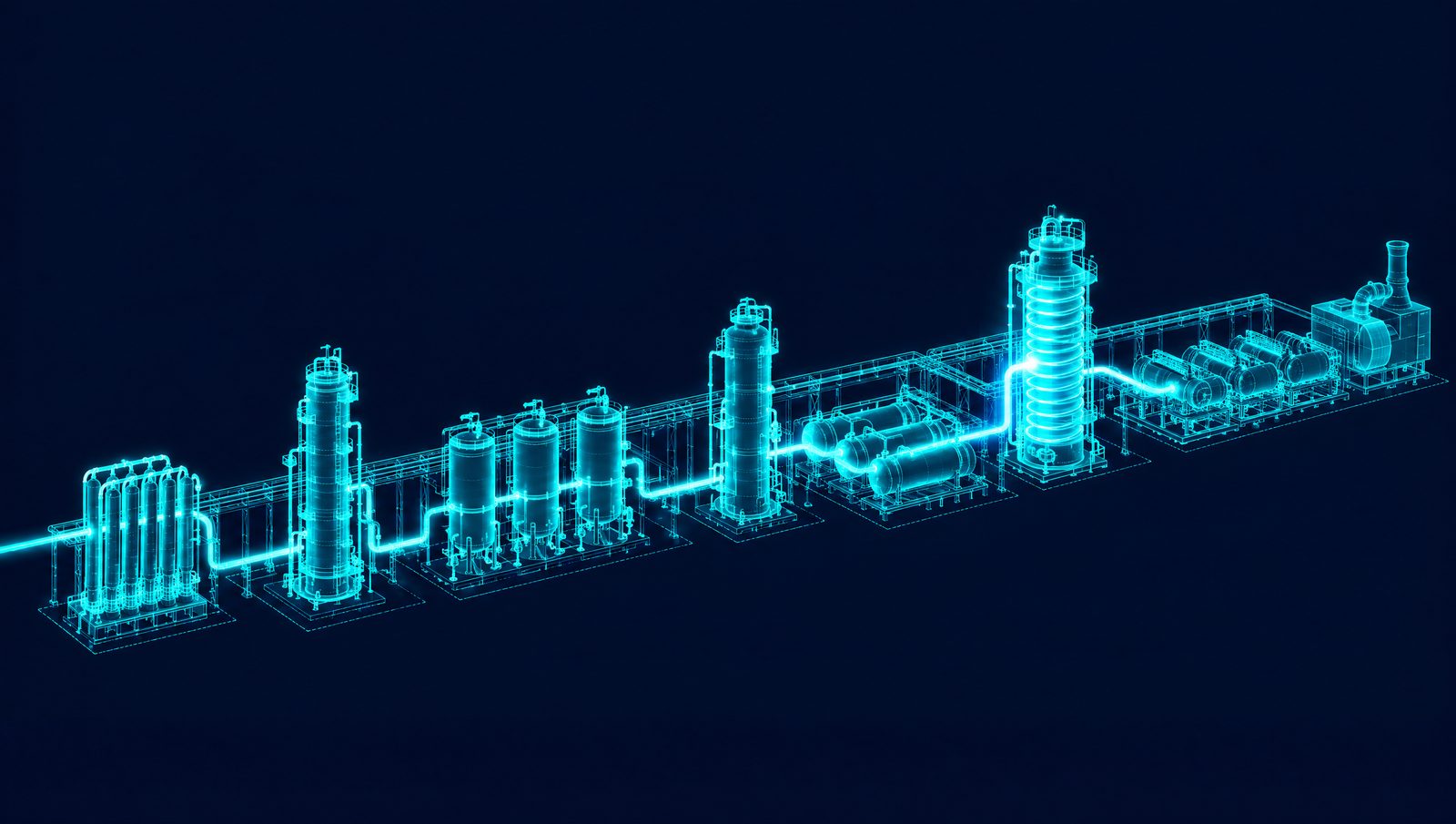
Less recycle, and capacity kept where the train binds.
Parallel machines drift apart with fouling and wear. One approaches surge and opens its recycle valve while its neighbor still has room, and production looks steady while the train absorbs extra megawatts.
DLPC® shares load across the refrigeration system as a whole, above the dedicated anti-surge protection, which keeps its role.
Refrigerant compressors in LNG plants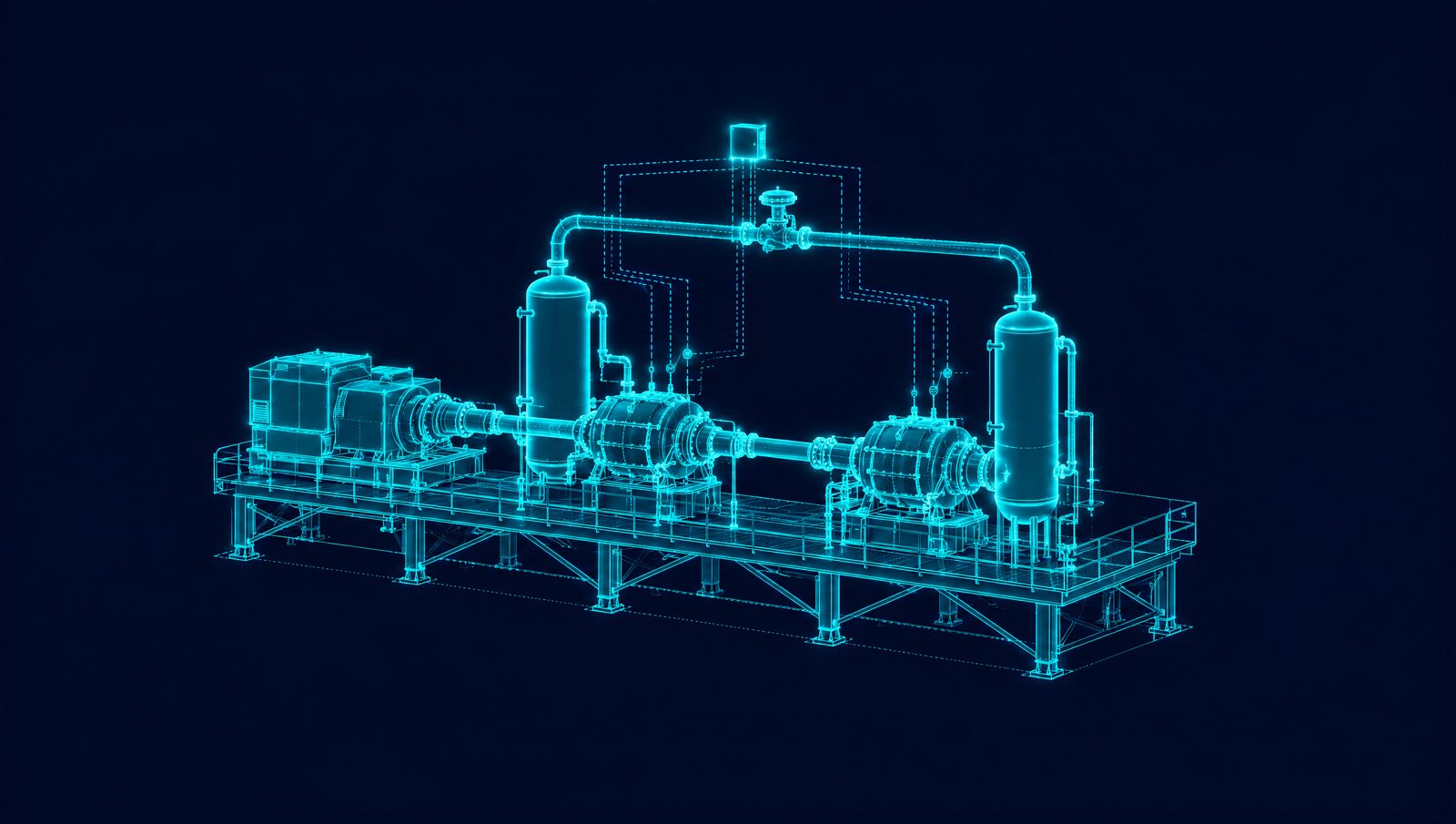
Treated gas on specification at lower reboiler duty.
Circulation rate, reboiler duty and lean amine temperature are set with margin against feed swings and foaming, and the regeneration energy is spent every hour.
A learned model of the absorber and regenerator trims that margin toward the lowest reboiler duty that still holds the carbon dioxide specification the cold section needs.
Acid gas removal for LNG and gas processing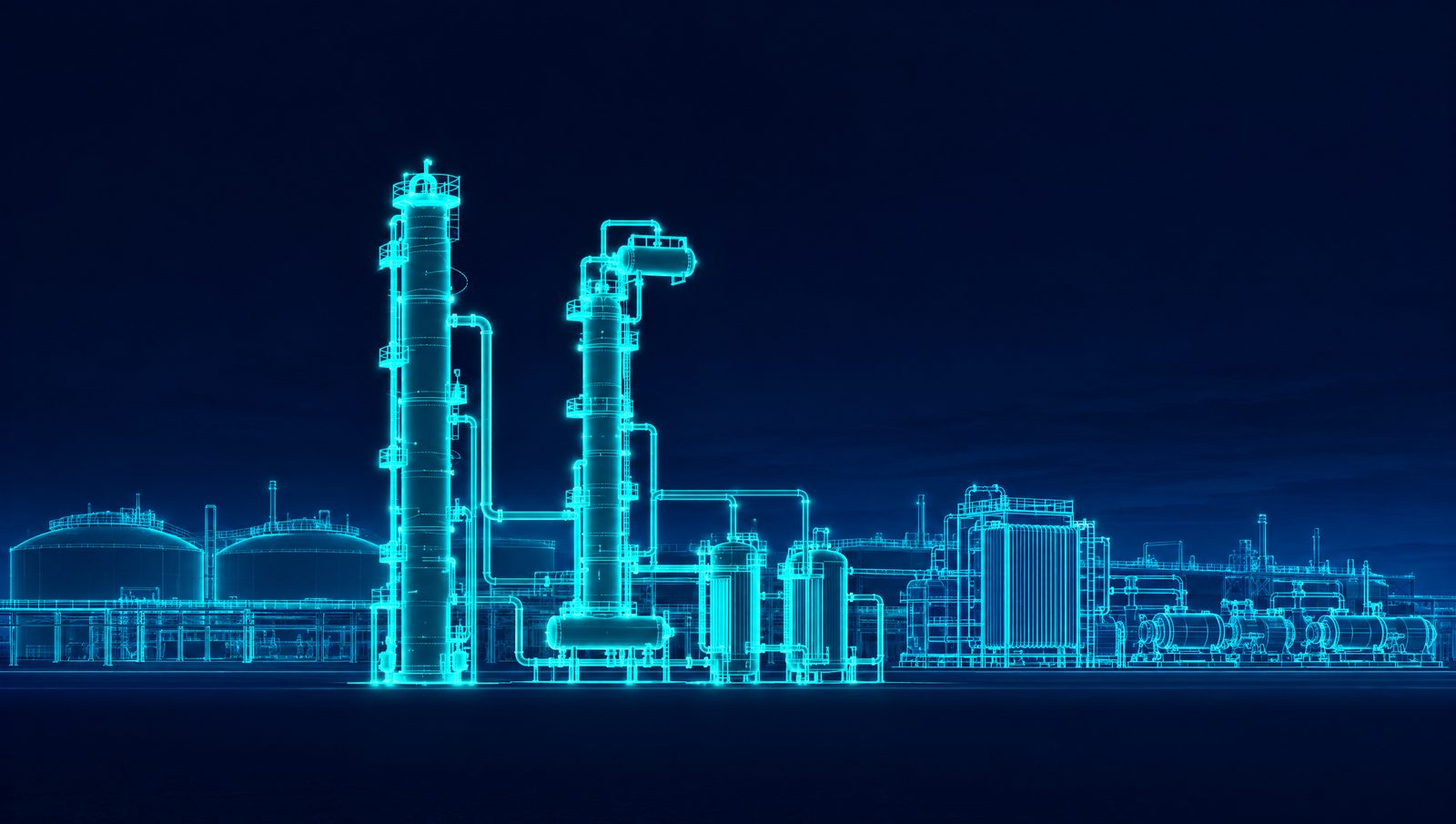
Beds switched on their condition.
Molecular sieve beds dry the gas ahead of the cold section, and guard beds remove mercury. Fixed cycle timers regenerate beds that still have capacity, at a cost in fuel and adsorbent life.
A model of bed behavior, and of its links to the treating section upstream, supports switching by condition and steadier regeneration.
Molecular sieve dehydration in LNG operations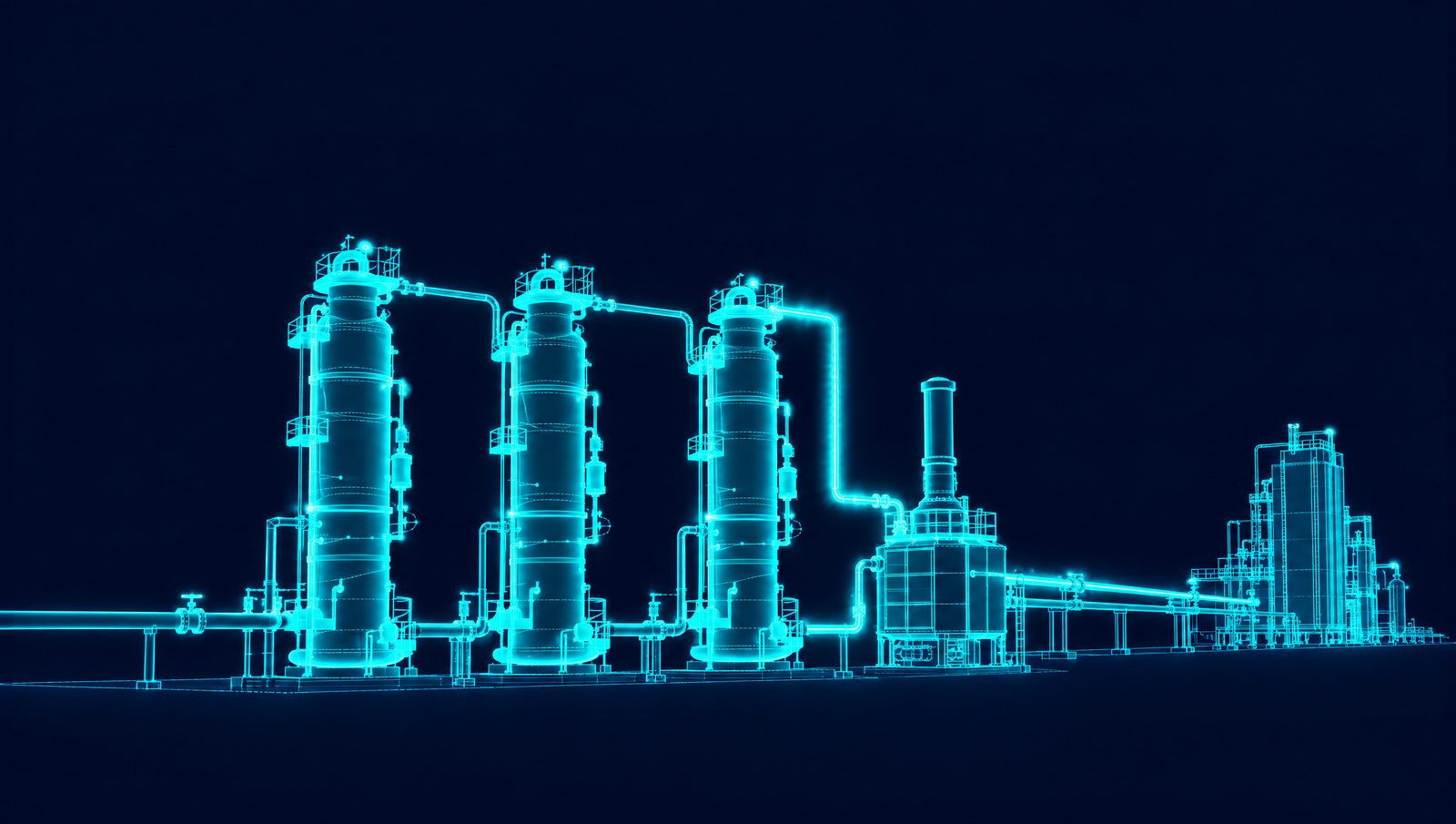
Tank pressure steady through a loading.
Tank pressure, boil-off gas compressors, the recondenser and the loading line respond to each other through every operating mode, and loading produces vapor faster than a fixed staging plan expects.
Coordinating compressor staging and tank pressure targets through the loading recovers more vapor and sends less to flare.
Reducing boil-off gas losses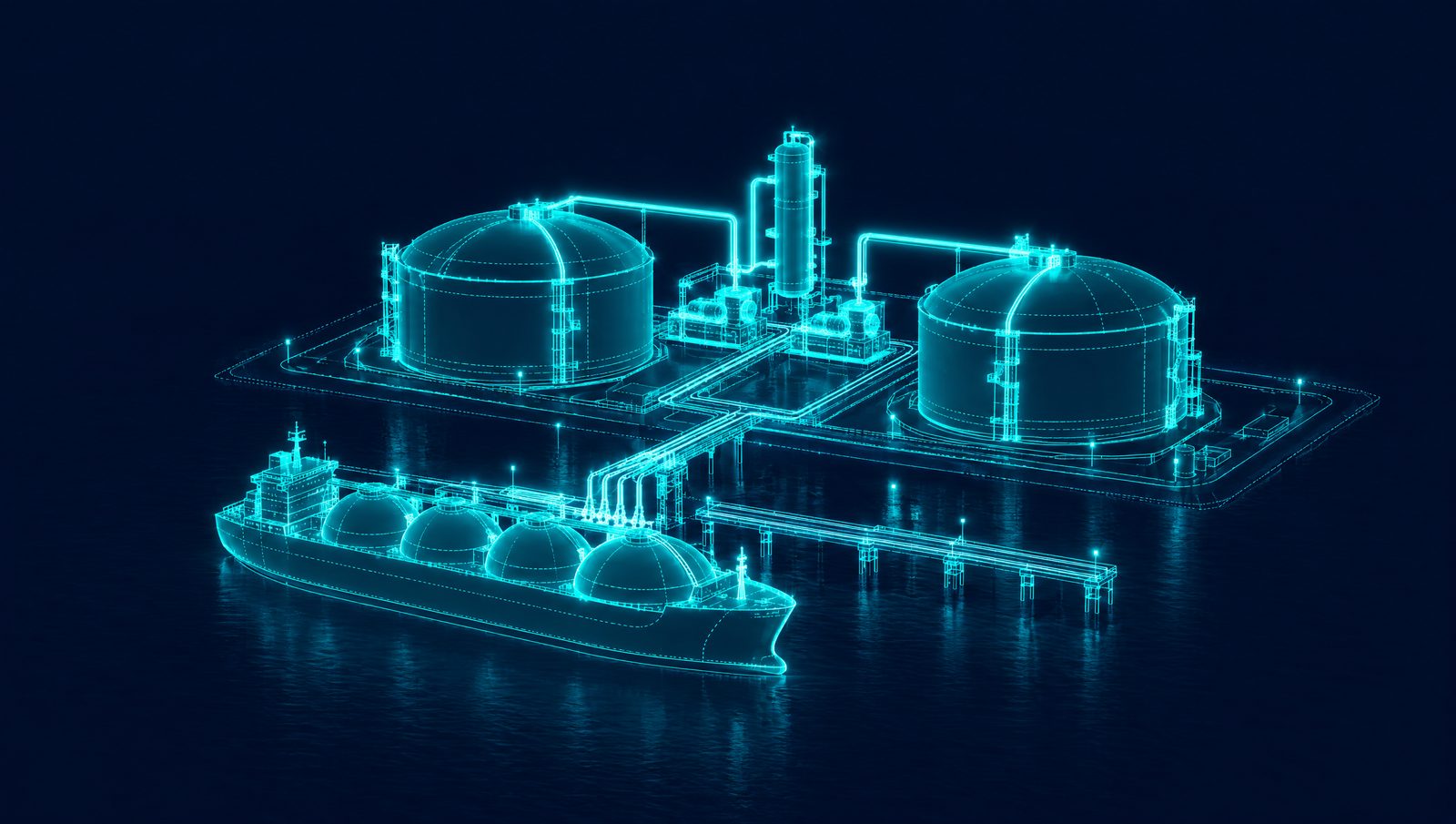
Map, Model and Control.
Map
Traces each gap to the recurring decision behind it, such as the refrigerant composition target or how load is shared between compressors.
How Map worksModel
Process engineers build the models in DLPC® Builder from the train's own historian, guided by first principles, with no Python and no machine-learning background.
How Model worksControl
A controller trained by reinforcement learning writes setpoints to the APC or DCS minute by minute, inside the envelope your engineers set, and operators can take over at any time.
How Control works
Where the record comes from.
Imubit has over 100 closed-loop controllers deployed worldwide, in refineries, chemical plants and kilns, backed by 7+ years of closed-loop engagement in production.
An LNG train poses problems those units already pose. A refrigeration compressor reaches its limit sooner as ambient temperature rises. A composition cannot be measured fast enough to steer by. Handles have to move together to hold a limit.
At one refinery's naphtha and jet complex, with three fractionators, closed loop on top of existing APC delivered a 2 to 3% increase in jet recovery.
Where to start.
Five problems a plant can bring us, and the step where each one starts.
Production that falls short of the train's best days when the weather turns
Map the gap traced to the decisions behind it
Refrigerant composition held at a seasonal target
Model the cycle's response learned from the train's own history
Compressor recycle open while a parallel machine has room
Model, then Control load shared across the machines together
Reboiler duty and amine circulation held high against feed swings
Control duty trimmed against the treated gas specification
Boil-off gas flared during loading
Model tank pressure and vapor handling seen together
Where does Imubit run in closed loop today?
In refineries, chemical plants and kilns, with over 100 closed-loop controllers deployed worldwide and 7+ years of closed-loop engagement in production. An LNG train poses the same kinds of problem, and a pilot on your own data shows what your train's history supports before anything writes to the plant.
Does it apply to both mixed-refrigerant and cascade trains?
Yes. On a mixed-refrigerant train the main handles are the refrigerant composition and the compressor loading. On a cascade train they are how load is shared between the refrigerant circuits and how each compressor is loaded. Each model is built for one train on its own data, whichever process it uses.
Does it replace our APC or the anti-surge controls?
No. Where you have APC, Imubit runs on top of it; where you don't, it writes setpoints directly to your DCS. Anti-surge protection, regulatory loops and the safety systems keep their roles, and operators can take over at any time.
Our train has run under tight control for years. Is there enough in the data to learn from?
That is a real risk for any model that learns from data alone. Each model is guided by first principles as well as the train's history, your engineers review every relationship it learns, and the work starts by measuring how much the history can teach it. Where the history is held too tight, it says so.
How does a pilot start?
You choose the problem you most want solved, and we agree one success test with you. After a discovery conversation, your team uploads the data package in one to two hours. No workshops, nothing to install, and nothing writes to your plant.
In depth
Where production and energy are lost between the plan and the train
Every team on an LNG train makes sound decisions against its own constraint. Operators hold margin against the hottest afternoon, the treating section runs extra reboiler duty to stay clear of the carbon dioxide limit, dehydration beds switch on a timer set for the worst case, and compressors carry recycle to stay away from surge. Each call is reasonable on its own. Together they hold the train below what it has already shown it can produce, and the losses concentrate in a few places.
- Refrigeration that does not follow the conditions. On a mixed-refrigerant train, the best composition of nitrogen, methane, ethane and propane moves with the feed, the load and the weather, while the target is often set for the season. On a cascade train, the same is true of how load is shared between the refrigerant circuits.
- Compressor recycle. Parallel machines drift apart with fouling and wear. One reaches minimum flow and opens its recycle valve while its neighbor still has room, and driver power goes into flow that adds no refrigeration.
- Pretreatment run with margin. Amine circulation and reboiler duty are held high against feed swings, and molecular sieve beds regenerate on fixed timers. The energy is spent whether or not the gas needed it, and regeneration gas couples the two sections.
- Upstream conditions that reach the cold end. A small shift in acid gas loading or scrub column separation shows up later as a wider temperature approach in the main cryogenic heat exchanger, where its cause is hard to see.
- Boil-off gas in transients. Loading, cool-down and mode changes produce vapor faster than the recovery system is staged for, and the excess goes to fuel or flare.
The same gap shows up across safety, reliability, margin, compliance and competency. Compressor trips and moisture breakthrough are reliability exposures, fuel gas and flaring set the emissions per tonne of LNG, and the judgment that keeps a train steady through a hot afternoon sits with a small number of experienced board operators.
How Map, Model and Control apply to an LNG train
Map
Map traces each gap to the recurring decision behind it: who makes it, how often, against which KPI and with what information. On an LNG train these include the refrigerant composition target, how load is shared between compressors, the rundown temperature, amine circulation and reboiler duty, the timing of dehydration bed switches, and tank pressure targets through a loading. The result shows which gaps carry the most impact and which decisions are ready to model.
Model
The models are built with Deep Learning Process Control® (DLPC®). Process engineers build them in DLPC® Builder from the plant's own historian, with no Python and no machine-learning background. A Deep Learning Predictor learns a nonlinear dynamic model of each section from its history, guided by first principles.
Years of process control leave a train with an operating history that looks much the same from one month to the next, and that is a real risk for any model that learns from data alone. Each model is built for one train on that train's own data, guided by first principles, and your engineers review every relationship it learns before anything moves. Where the history is held too tight to learn from, the work says so.
Operations, planning, maintenance and process engineering then work from the same model, so a composition change or a new rate target can be judged on its predicted effect before anyone commits to it. DLPC® Sim App runs the controller offline, so a move can be tested without touching the plant. See the result of a change before you make it.
Control
A Deep Learning Controller, trained by reinforcement learning across millions of simulations, learns the control policy for the section. It runs on-premise and writes setpoints to the APC or DCS minute by minute, inside the envelope your engineers set. The DCS, and the APC where there is one, keep handling regulatory control and stabilization, and anti-surge protection and the safety systems keep their roles. The controller recalculates the targets above them as ambient temperature, feed and equipment condition change.
Operators can take over at any time. Plants typically start in advisory mode, comparing recommendations with their own calls, and move to closed loop as the model earns trust.
Where it applies along the train
Liquefaction and refrigeration
Refrigeration sets the output of the train. On a mixed-refrigerant train, the composition of the refrigerant decides how efficiently compressor power becomes cooling duty in the main cryogenic heat exchanger. The composition moves slowly, it follows from the make-up, the inventory in the loop and the split between the light and heavy streams, and its best value shifts between day and night and between summer and winter. A model of the cycle moves the composition targets and the compressor loading together, watches and predicts compressor discharge conditions and exchanger temperatures, and keeps each inside its limits.
On a cascade train, each refrigerant is a single component, and the question becomes how the load is shared between the circuits and how each compressor is loaded as ambient temperature and feed change. The method is the same. See how process dependencies limit LNG capacity.
Refrigerant compressors
Recycle is the clearest loss in refrigeration service. When a recycle valve opens, the compressor keeps consuming driver power while the recirculated flow adds no refrigeration. The best loading pattern keeps the whole system away from avoidable recycle while keeping capacity where the train is most likely to bind, even if individual machines carry unequal loads. The controller works above the dedicated anti-surge protection, which keeps its role. See refrigerant compressors in LNG plants and compressor surge.
Acid gas removal
The treating section has to hold carbon dioxide and hydrogen sulfide in the treated gas below the limits the cold section can accept. Circulation rate, reboiler duty and lean amine temperature are usually set with margin against feed swings and foaming. A learned model of the absorber and regenerator trims that margin toward the lowest reboiler duty that still holds the specification. See acid gas removal for LNG and gas processing and amine treating in LNG service.
Dehydration and mercury removal
Molecular sieve beds dry the gas ahead of the cold section, and guard beds remove mercury. Fixed cycle timers regenerate beds that still have capacity and spend fuel and adsorbent life doing it. A model of bed behavior, and of its links to the treating section upstream, supports switching by condition and steadier regeneration. See molecular sieve dehydration in LNG operations and mercury removal and guard bed management.
Storage, boil-off gas and loading
Tank pressure, boil-off gas compressors, the recondenser or reliquefaction, and the loading line respond to each other through every operating mode. Coordinating compressor staging and tank pressure targets through a loading recovers more vapor and sends less to flare. See LNG storage tank pressure and boil-off gas and reducing boil-off gas losses.
Where the record comes from
Imubit has over 100 closed-loop controllers deployed worldwide, in refineries, chemical plants and kilns. That is the largest install base in the industry, backed by 7+ years of closed-loop engagement in production, and it sits beside 300+ applications deployed, from inferentials to closed loop.
An LNG train poses problems those units already pose. A refrigeration compressor reaches its limit sooner as ambient temperature rises. A composition cannot be measured fast enough to steer by. Handles have to move together to hold a limit. At one refinery's naphtha and jet complex, with three fractionators, closed loop on top of existing APC delivered a 2 to 3% increase in jet recovery. See proof from production.
Related reading
All articlesLNG train performance: how process dependencies limit liquefaction capacity
How AGRU loading, dehydration, scrub column behavior, ambient derating and fouling interact to hold LNG train output below nameplate capacity.
Refrigerant compressors in LNG plants: efficiency and load optimization
How recycle, exchanger fouling, ambient swings and refrigerant drift raise LNG compressor specific power, and why system-level loading recovers capacity.
Acid gas removal optimization for LNG and gas processing
Why regeneration energy, amine circulation and feed variability set AGRU cost in LNG plants, and how a learned model targets minimum reboiler duty.
Find out what your gap to plan is costing you.
We start by mapping where each of your plant's operating decisions sits today on the path to autonomous operation, and which refrigeration, treating and storage decisions are worth taking to closed loop first.
One to two hours for your team to prepare and upload the data package
Results within a few working days of approval
No workshops
Send your data as it is. Gaps, outages and noisy tags are normal, and our engineers screen and clean them in the platform. If anything limits a use case, we tell you.