Conservative acid gas removal operation wastes energy through excess amine circulation and regeneration duty, while feed variability and delayed lean loading visibility push operators toward costly safety margins. This article explores why regeneration economics drive AGRU costs, where conventional control falls short in nonlinear amine systems, and how AI models trained on plant data can anticipate feed changes and target minimum reboiler duty under current conditions. These capabilities help LNG and gas processing plants reduce energy consumption, protect treated gas quality, and maintain stable liquefaction throughput.
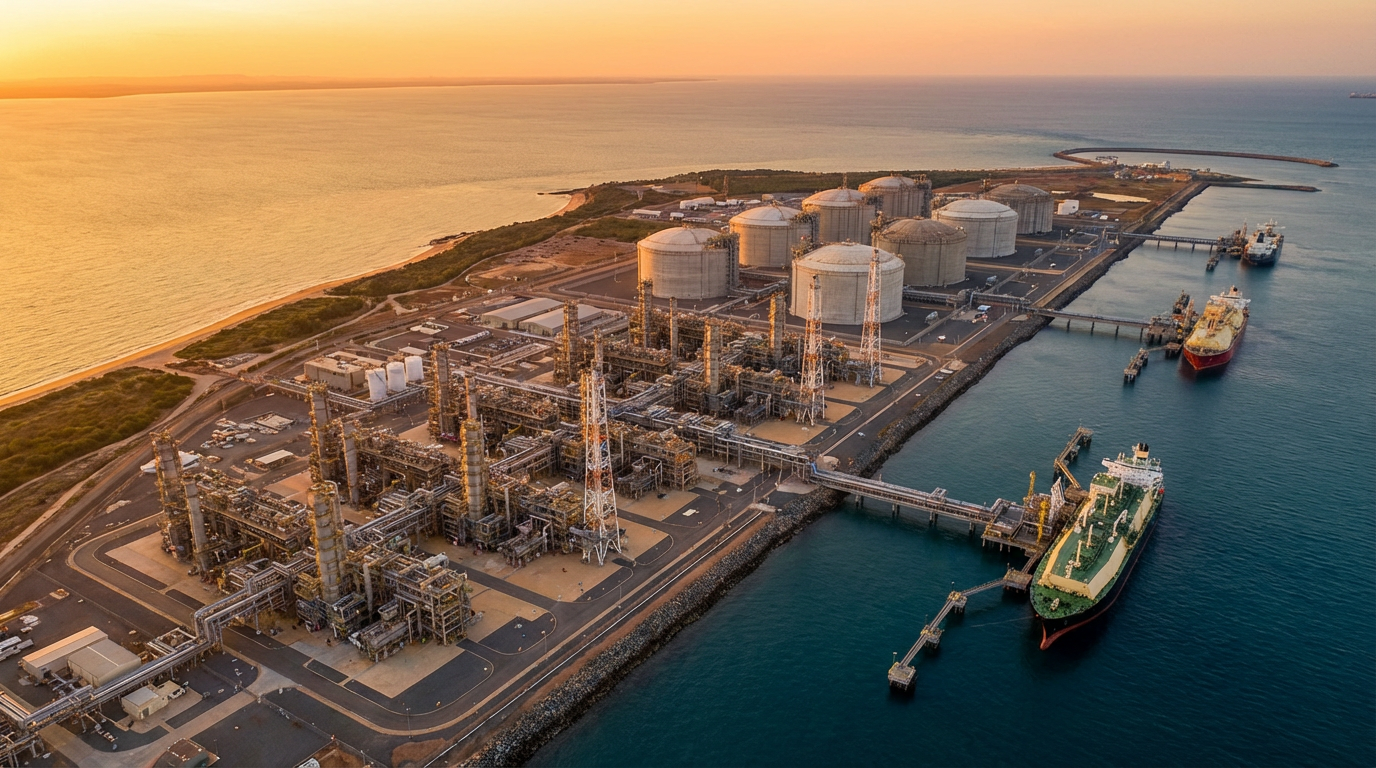
Conservative acid gas removal operation protects treated gas quality, but it also raises amine circulation and regeneration duty every hour the train runs. When CO₂ slip rises, cryogenic equipment and plant throughput both come under pressure. With nearly 300 bcm of new LNG liquefaction capacity expected to come online by 2030, more amine gas treating systems are entering service while existing facilities face tighter margins and more variable feed gas.
The gap between where most AGRUs operate and where they could operate has less to do with absorber capacity than with how well regeneration, circulation, and feed variability are managed together. Most LNG plant challenges trace back to that coordination problem.
AGRU performance in LNG plants depends more on regeneration energy and lean amine condition than on absorber capacity. Feed variability pushes operators toward conservative margins that raise steam use and limit throughput.
The sections below explore where those limits appear and what changes when optimization keeps pace with the process.
Operations teams naturally focus on the absorber, where treated gas quality is measured and foaming events are most visible. But in any gas sweetening system, the economic burden sits largely in solvent regeneration.
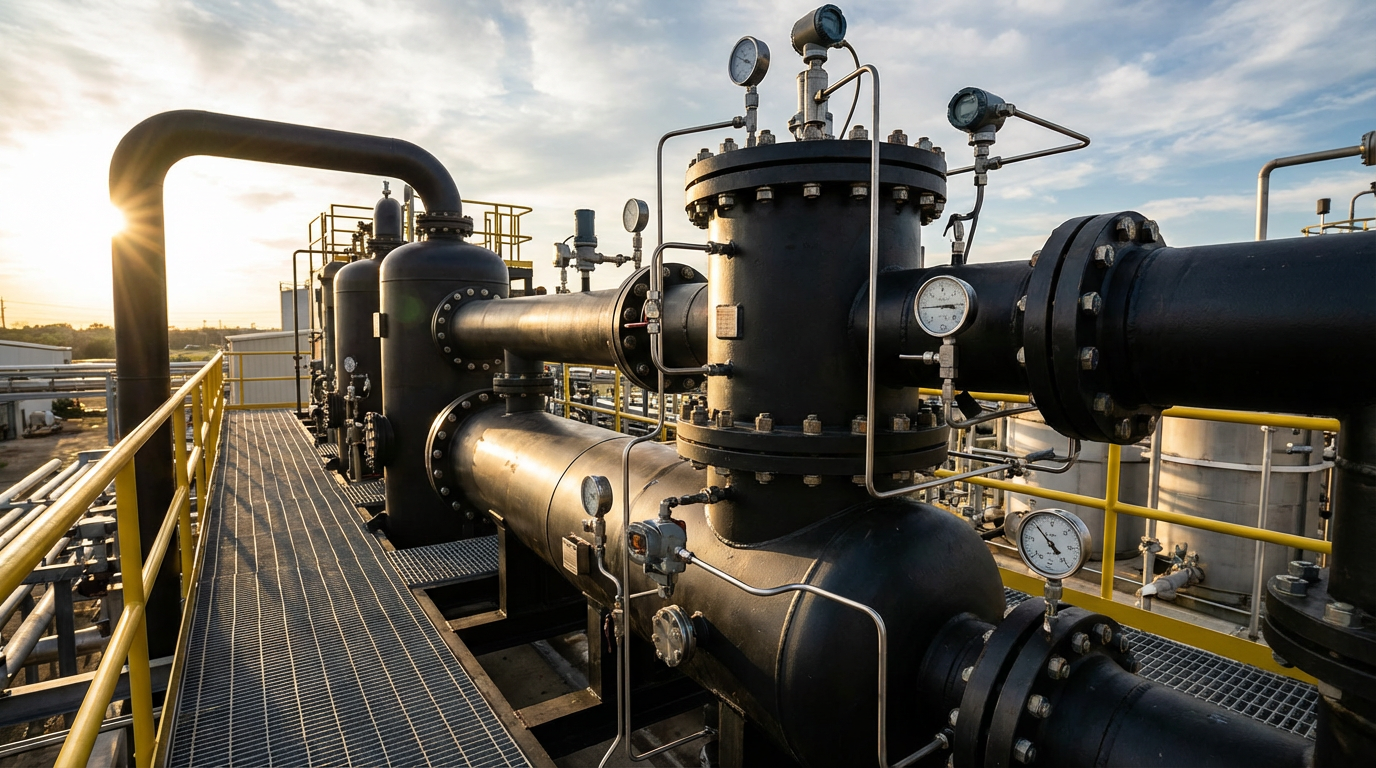
The reboiler is the dominant energy consumer and the hottest point in the amine circuit. It can also be a throughput rate constraint. When reboiler duty is too low, lean loading climbs. CO₂ slip to treated gas follows, and solvent condition can deteriorate over time.
For LNG operations, the consequence chain is severe. Poor regeneration raises the risk of CO₂ slip into cryogenic service. When that happens, the AGRU becomes a plant-wide constraint, not just a gas treating problem. Operators may be forced to reduce train throughput to protect the main cryogenic heat exchanger, and at that point the cost of conservative regeneration practice is no longer just energy: it is lost production.
Amine circulation rate is one of the most important economic variables in acid gas treating. Higher circulation means more solvent to regenerate, more reboiler steam, and more cooling duty. Even a small persistent overshoot in circulation compounds into measurable energy efficiency losses across a full operating year.
Feed gas composition varies continuously. U.S. Gulf Coast terminals draw gas from multiple producing basins, each with distinct CO₂ and H₂S profiles that shift over supply contract lifetimes.
As new liquefaction capacity enters service, facilities that encounter unexpected acid gas composition during startup or ramp-up can face capacity limitations and foaming incidents. Foaming events in particular can force rapid throughput cuts and trigger extended recovery periods that affect production schedules across the facility.
Operators usually respond by maintaining high lean amine flow as a buffer against feed changes. The extra flow protects against off-spec risk, but it forces the downstream stripper to run harder and consume more energy. Some facilities hold treated gas targets far more conservatively than the actual specification limit to accommodate sudden acid gas spikes. The margin between actual CO₂ content and the specification limit can be substantial, sometimes several times what current conditions demand.
That conservatism reflects the tools available, not poor judgment. When the only confirmation of lean amine quality arrives hours after conditions change, building in extra margin is the rational response. But it still carries a cost: conservative setpoints push circulation and regeneration duty above what current conditions require, and that excess energy spend persists until operators manually readjust.
For operations leaders watching plant operations margins tighten, the question is whether the tools have caught up with the complexity.
Advanced process control (APC) is present in most major LNG facilities, but the AGRU exposes limitations that standard multivariable controllers struggle to address.
Standard model predictive control implementations rely on linear process models, yet amine systems show strongly nonlinear behavior across their operating envelope. MDEA selectivity for H₂S over CO₂ can diminish under high-pressure, high-temperature, and highly sour conditions. When that happens, the controller model may be inaccurate across part of the operating range.
A separate limitation compounds the model problem. Many plants still rely on laboratory analysis to confirm lean amine loading, the primary indicator of regeneration quality. By the time degraded lean amine condition is verified, the absorber may have been producing marginal gas for much of a shift.
Plants that maintain better data historian practices can close some of that gap, but inferring lean loading from available measurements in real time is still difficult with conventional tools.
Conventional controllers also struggle to adapt to progressive condition changes. Real amine systems accumulate heat stable salts, degradation products, and hydrocarbon contamination that alter absorption kinetics and reduce effective capacity. A controller built on steady-state assumptions can't reliably track those shifts.
Process engineers periodically re-tune or update models, but between updates the controller drifts further from actual process behavior. And because the AGRU feeds directly into dehydration and cryogenic liquefaction, a fixed treated-gas specification may not reflect the best operating point when downstream conditions shift.
Rather than setting reboiler steam for worst-case conditions, AI optimization of amine units can target the minimum duty needed to maintain product specifications under current conditions. Models trained on actual plant data learn the nonlinear relationships between circulation rate, reboiler duty, lean loading, and treated gas quality across a range of feed compositions and solvent conditions.
Treating feed gas CO₂ as a disturbance variable lets the system adjust circulation and regeneration before the disturbance fully propagates through the absorber column. That anticipatory response matters in facilities with variable feed: by the time a conventional controller detects the change in treated gas quality, the absorber has already been absorbing at the wrong rate.
When a single model captures both the AGRU and downstream units, optimization decisions can reflect how regeneration conditions affect dehydration performance and liquefaction stability.
No AI system replaces the pattern recognition that comes from decades at the board. The model won't capture every instinct behind a veteran operator's judgment call, but it can preserve the observable relationships between process states and the actions that produced good outcomes. That's particularly valuable during shift changes, when the operator leaving has built up context that doesn't fully transfer in a handover.
And as solvent condition shifts over weeks and months through normal operation, the model adjusts to those changes without requiring manual re-tuning.
Most deployments begin in advisory mode, where the AI recommends setpoint adjustments while operators retain full control authority. Engineers and board operators compare those recommendations against their own instincts and the unit's behavior. Trust builds from repeated exposure to plant-specific decisions, not from a software demonstration.
From there, teams can keep the system in advisory mode or move into supervised execution, where recommendations are validated under operator oversight before progressing toward closed loop control. Each stage builds on the one before it, and teams move at a pace that matches their confidence in the model and their comfort with the operating envelope it covers.
Advisory mode also changes the relationship between experienced and newer operators. Senior operators can test whether the recommendations reflect the logic they've learned over years of upset handling, while newer operators gain a clearer reference point for what good response looks like under changing conditions.
When operations, process engineering, and planning share a single model of AGRU behavior, conservative targets give way to evidence-based alignment on energy versus throughput trade-offs. Planning can see when a conservative treated-gas target is consuming unnecessary regeneration duty.
Process engineering can test whether a suspected regeneration bottleneck is real or whether operators are compensating for a different constraint. Operations can compare the cost of extra circulation against the current risk to downstream stability.
That shared view speeds agreement on what the unit is actually constrained by at any given moment, and it matters more as gas processing plants face tighter margins and more variable feed.
Across LNG and gas processing facilities, operations leaders face a clear constraint: tighter specifications, variable feed gas, and margin pressure demand more from amine systems than conventional control can reliably deliver. Closing the gap between conservative operating margins and what the process can actually sustain requires optimization that adapts to changing conditions in real time.
For LNG operations leaders seeking tighter AGRU control under variable feed conditions, Imubit's Closed Loop AI Optimization solution learns from plant data and writes optimal setpoints to control systems in real time. Plants can start in advisory mode, continue through supervised execution under operator oversight, and progress toward closed loop control as confidence builds.
Get a Plant Assessment to discover how AI optimization can reduce AGRU energy consumption while protecting treated gas quality and liquefaction throughput.
Lean loading is the primary indicator of regeneration quality, yet many plants still confirm it through lab analysis hours after conditions change. By the time degraded lean amine condition is verified, the absorber may already have been producing marginal gas for much of a shift. That delay makes it harder to balance treated gas quality against energy use in real time. Models trained on historical plant data can infer those condition changes from available measurements.
Regeneration conditions in the AGRU directly influence dehydration performance and cryogenic stability downstream. When lean amine quality shifts, the impact can propagate through the entire processing train. A treated-gas target set without visibility into downstream conditions may drive unnecessary conservatism or miss real constraints. Evaluating regeneration and downstream response together gives teams a clearer basis for setting current reboiler duty and circulation targets.
Yes. AI optimization sits above existing DCS and APC layers, working with the control infrastructure already in place rather than replacing it. Most deployments begin in advisory mode, where operators evaluate recommended setpoint changes against unit behavior before moving toward supervised or closed loop action. That approach builds trust around the current control structure and demonstrates measurable improvements under plant-specific conditions.