
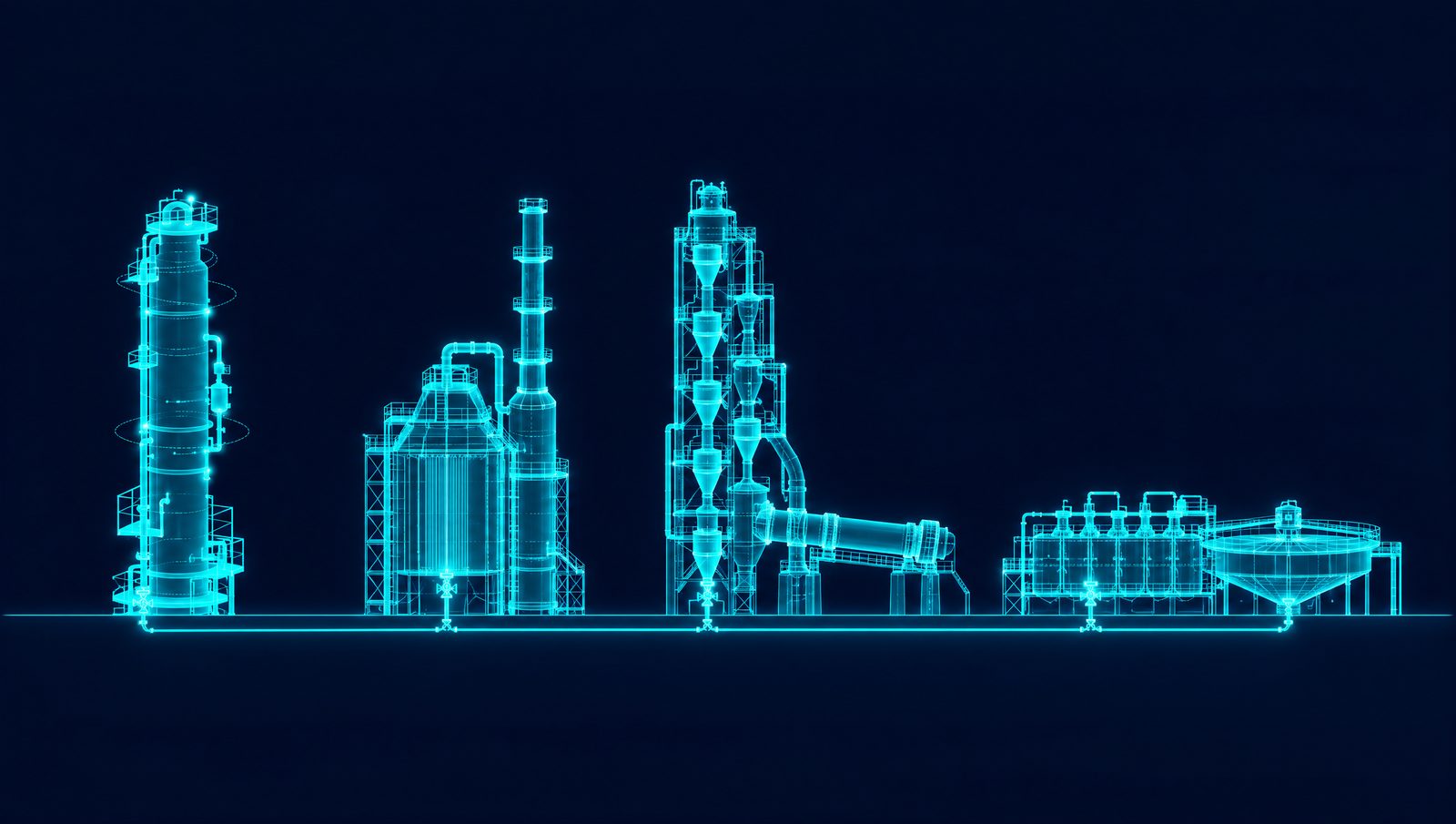
Closed-Loop Physical AI for the process industries
How Imubit closes the gap between plan and plant in refining, chemicals and polymers, cement, and mining and minerals, with closed-loop control.
- Over 100closed-loop controllers deployed worldwide
- 7+ yearsof closed-loop engagement in production
- 1 to 3%average yield improvement across deployments
- 15 to 30%reduction in energy consumption where energy is the optimization target
Every industry has the same gap between plan and plant.
A refinery, a cracker, a cement kiln and a concentrator all run on recurring decisions made by different people every shift. The plan assumes one operating point; the plant drifts from it as feed, equipment and weather change. Closed loop makes those decisions the same way, at the best point, every minute.
By industry.
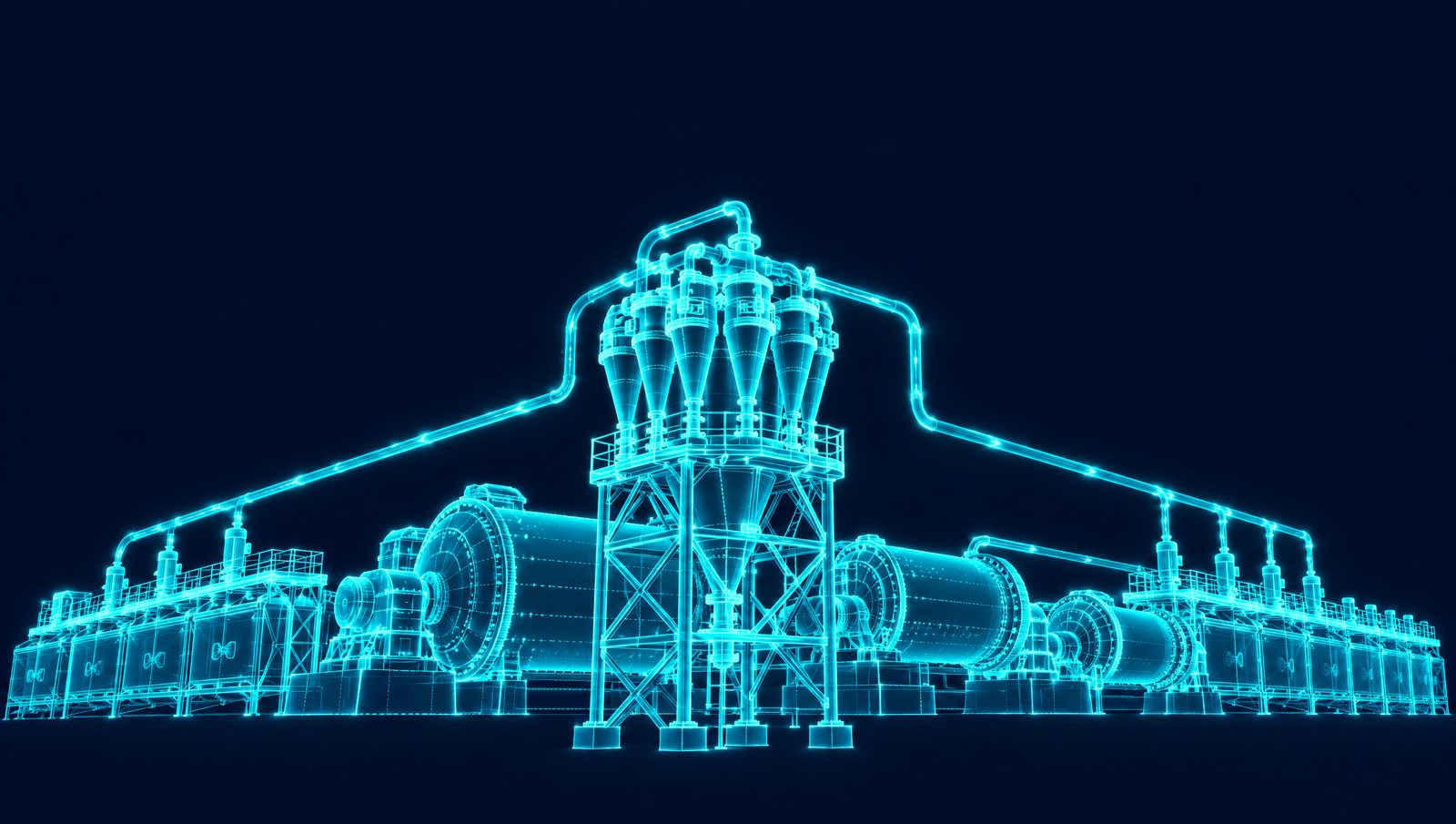
The decisions differ by unit. The method is the same: map the gap, model the unit from its own history, and close the loop inside the limits your engineers set.
Conversion, cut points and blends against moving limits.
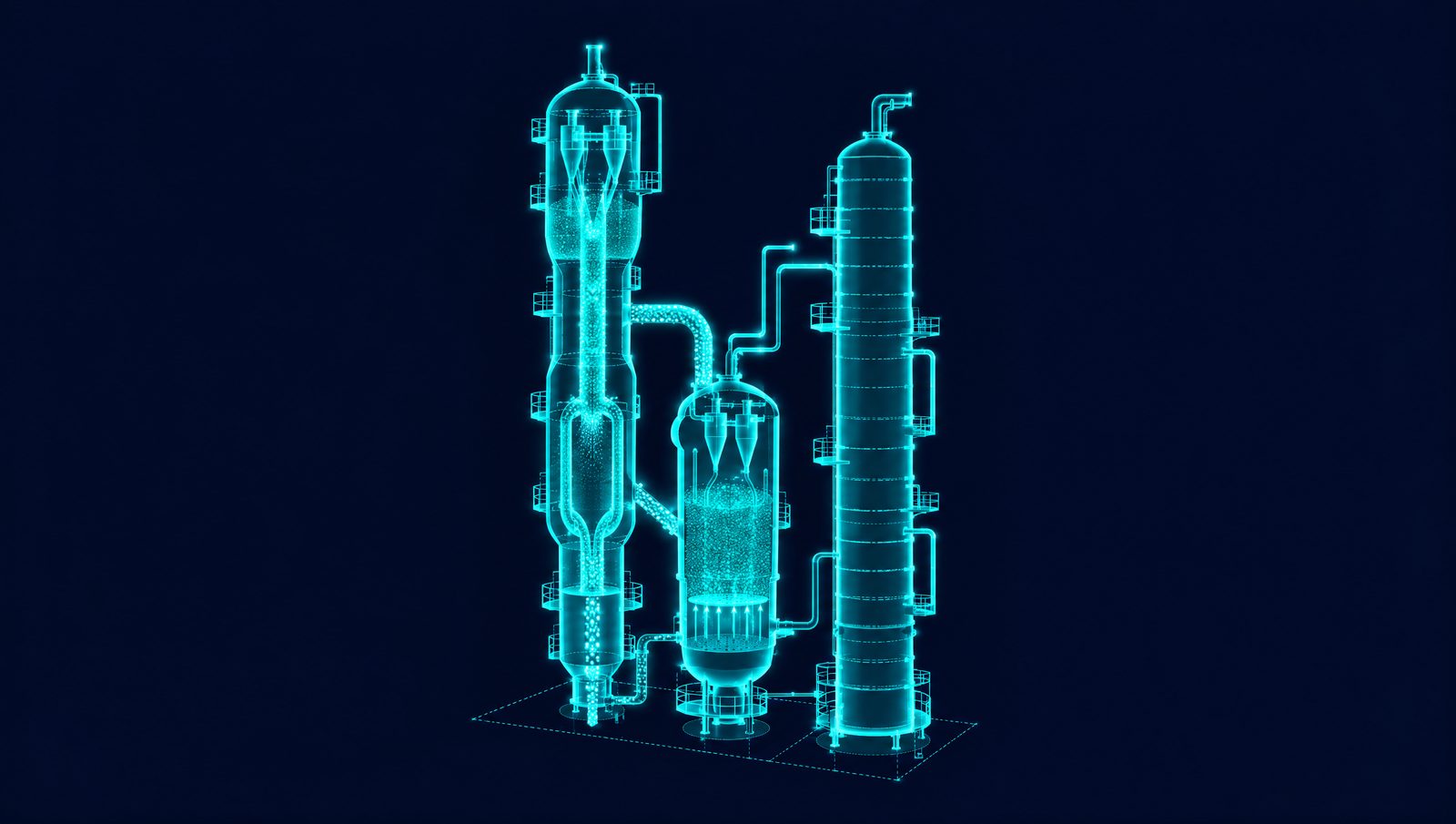
Margin depends on how each unit is run as crude diets, product prices and equipment condition change between planning cycles: the FCC against its regenerator and compressor limits, the crude unit against fouling, the blend against its specifications.
Severity, conversion and quality as catalyst and feed change.
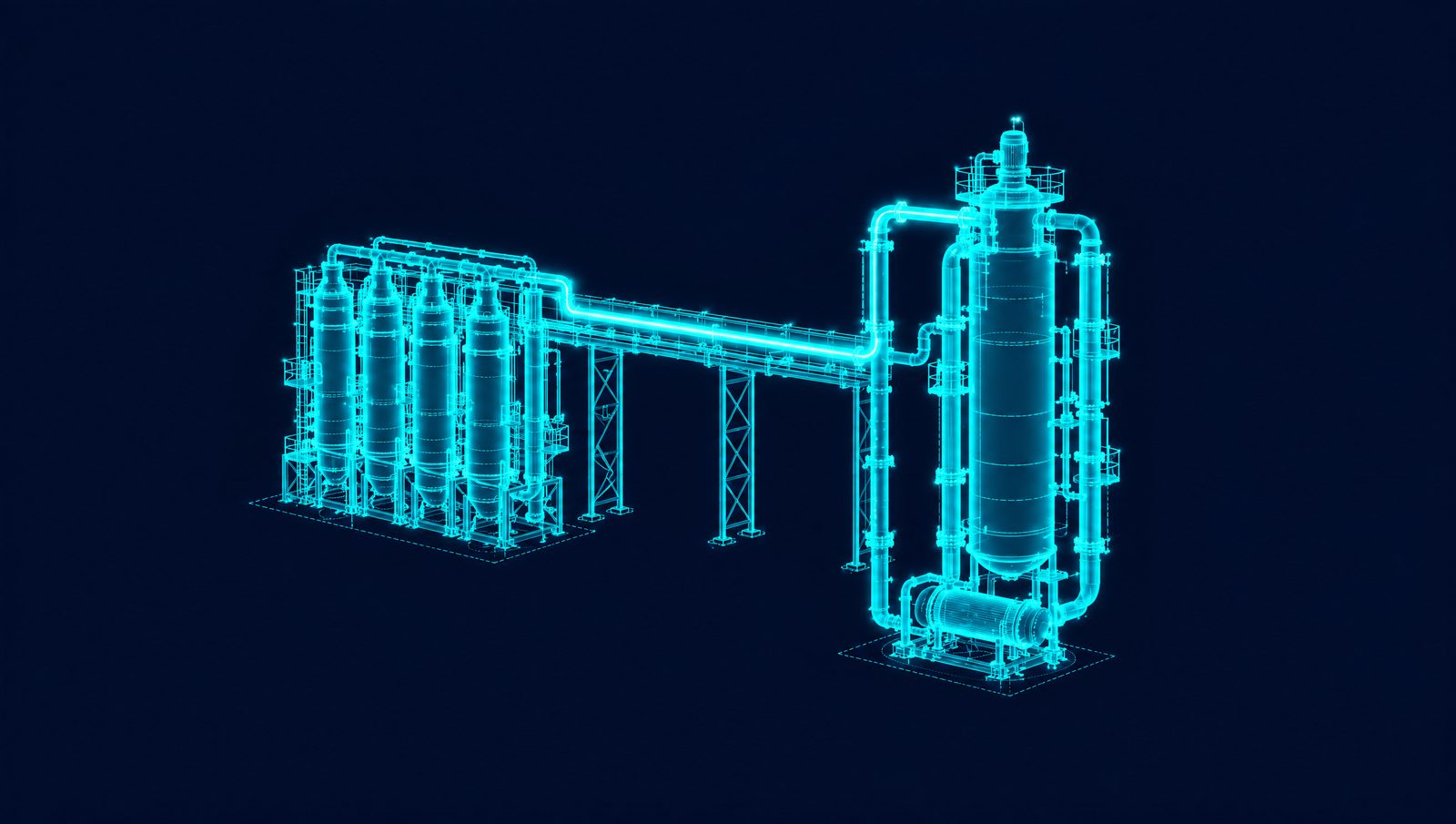
Crackers balance severity against coking and run length, reactors balance conversion against catalyst activity and heat removal, and separation holds purity at an energy cost.
Burning zone, cooler and mills as one system.
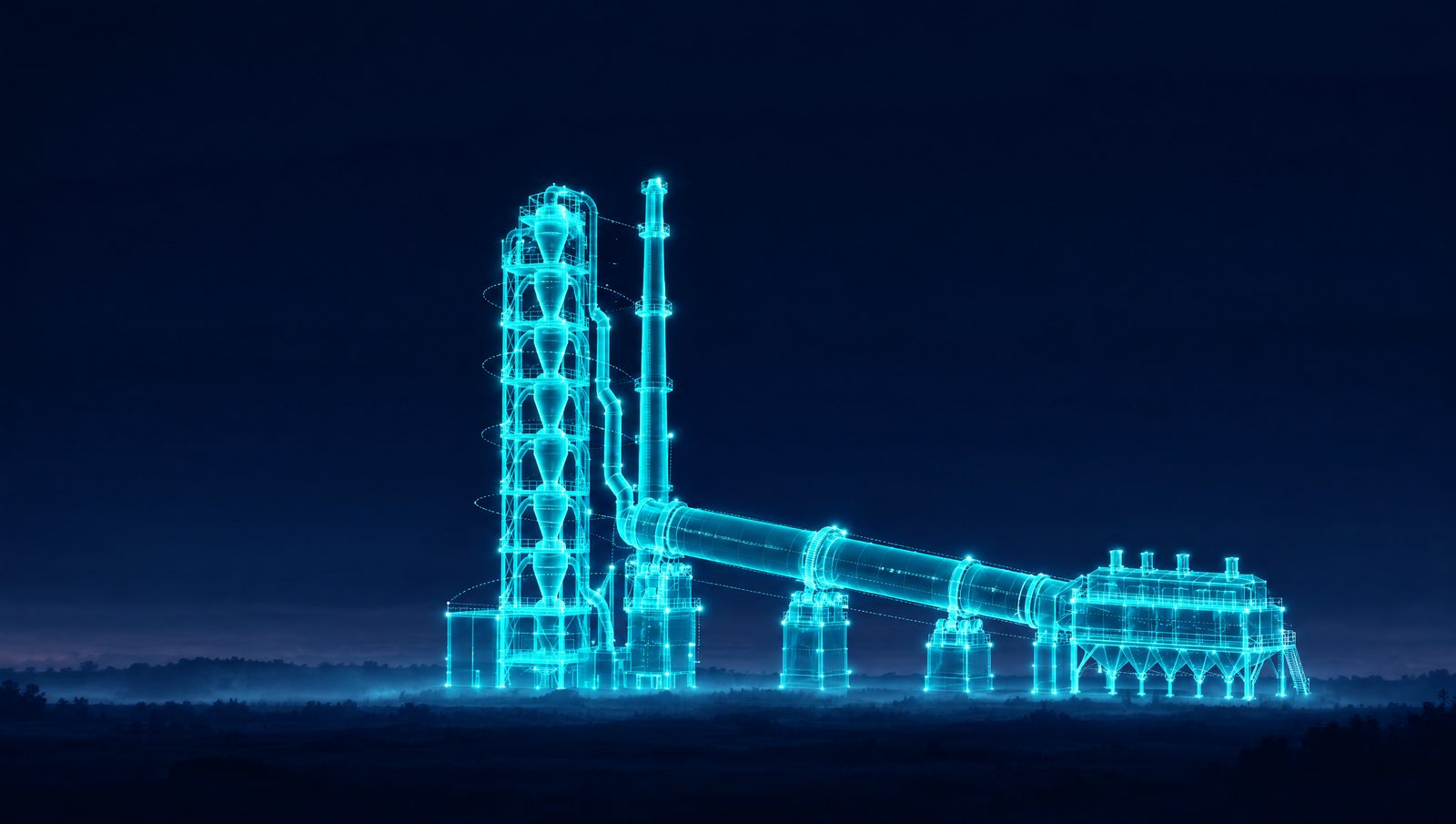
Kiln operators burn hotter against late free lime results, alternative fuels destabilize the flame, and finish mills grind finer than target to cover the lab delay.
Throughput, grind and recovery across the circuit.
Grinding runs below the mill's power limit without a real-time grind measurement, and flotation settings that worked one shift rarely hold for the next as the ore changes.
What the same model supports.
Energy and emissions
A unit held closer to its optimum, with fewer upsets, uses less energy per unit of product, and the model gives a firmer basis for debottlenecking.
Operator training
Newer engineers and operators can learn how the unit responds to a move before they make it on the board.
Planning
What the model learns about how each unit actually behaves can inform the planning tools, so the plan starts closer to the plant.
Process insight
Nonlinear, multivariate relationships that other tools miss become visible to the process engineer.
Running in closed loop.
Oxbow, a global producer of calcined petroleum coke, runs its rotary kiln operations in closed loop with Imubit. At Oxbow, that has meant a 1 to 3% yield improvement and a 15 to 30% reduction in natural gas consumption, while the kiln meets product specifications.
Read the Oxbow storyWe have these younger, newer engineers that are coming in place of 30 year employees, who no longer have to wait 30 years to acquire that experience. With Imubit, they have an opportunity to come in and make their mark on the organization.
Kris Kissel-Weir, VP, Manufacturing Systems & Data Analytics, Oxbow
In depth
The gap between the plan and the plant
Plant performance depends on how well the operating strategy is carried out at each unit. That strategy is executed by planning, operations, process engineering and maintenance. Each team works in its own systems, against its own KPIs and at its own rhythm. The planning model is rerun on a schedule, the APC holds the limits it was commissioned with, and the console operator responds to whatever changed in the last hour.
So even when everyone does their job well, the plant behaves inconsistently and reactively. Leaders feel it as a gap between what the plan assumed and how the plant ran. That gap shows up across safety, reliability, margin, compliance and competency.
Your plan depends on recurring decisions, made every shift by different people with different information. The gaps between the plan and the plant come from there.
In margin terms, the losses tend to come from the same places:
- Quality and yield giveaway. Product is made better than the specification requires, because the unit cannot be held closer to the limit with confidence.
- Conservative targets. Units run set back from equipment and quality constraints to leave room for disturbances.
- Off-spec material. Product is downgraded or reworked while a unit recovers from a feed change, a grade change or an upset.
- Energy. Fuel and power are spent running a unit away from its optimum, which raises the energy used per barrel or tonne of product.
- Slow response to economics. Prices and constraints move faster than the plan is updated, so the plant keeps running to targets set for conditions that have passed.
More data and more dashboards have not closed this gap. It sits in how recurring operating decisions are made and coordinated across teams, and that is where Imubit works. Process modeling and the gap between planning targets and the plant covers why LP, APC and simulator models drift from the running unit.
Where margin is lost in each industry
The units differ by industry. In each one, a small number of recurring decisions, made against constraints that keep moving, carry much of the margin.
Refining
Margin depends on how each unit is run as crude diets, product prices and equipment condition change between planning cycles.
- FCC: conversion and product slate against regenerator temperature, air blower and wet gas compressor limits, as feed quality shifts.
- Crude and vacuum units: cut points and furnace firing against heater limits, exchanger fouling and a changing crude slate.
- Hydrocracker: conversion and distillate selectivity across the catalyst cycle, within reactor temperature and hydrogen limits.
- Reformer: octane and hydrogen yield against severity and catalyst coking.
- Coker: drum cycle timing, heater run length and liquid yield.
- Blending: giveaway on octane, vapor pressure and sulfur when blends are built to conservative targets.
See refining and gas processing, and FCC unit equipment layout, operating modes and performance for one unit end to end.
Chemicals and polymers
- Crackers: severity and coil outlet temperature against coking and run length between decokes, with feed that changes.
- Reactors: conversion and selectivity against catalyst activity, temperature and heat-removal limits.
- Distillation: product purity against reflux, reboiler duty and energy.
- Grade transitions: the time and off-spec material produced while a polymer line moves between grades, and holding properties such as melt flow index on target once it arrives.
See chemicals and polymers, and polymer reactor types and constraints for the reactor side.
Cement
- Kiln and pyroprocess: burning-zone temperature, fuel and air against clinker quality, free lime, and coating and refractory stability.
- Clinker cooler: heat recovery and the hot secondary and tertiary air returned to the kiln and calciner.
- Raw and finish mills: throughput against fineness and specific power.
- Alternative fuels: substitution rate against variable calorific value and moisture, and the stability of the flame.
See cement, and cement manufacturing: process, constraints and where AI helps.
Mining and minerals
- Grinding: circuit throughput against grind size, mill load and energy per tonne.
- Flotation: recovery against concentrate grade, through air, level and reagent dosing as the ore changes.
- Leaching: recovery against reagent consumption and residence time.
- Smelting: energy use, slag chemistry and metal lost to slag.
See mining and minerals, and how mineral processing works and where AI changes it.
Map, Model, Control
The Imubit Platform applies the same three steps in every one of these industries.
Map
Trace each plan-to-plant gap to the recurring decision behind it: which variable is moved, by whom, how often, against which KPI and with what information. In a refinery that might be FCC reactor temperature or a vacuum cut point. In a cement plant it might be kiln fuel rate and ID fan speed, and in a concentrator, mill feed rate and flotation air. The result is a short list of the decisions worth taking further.
Model
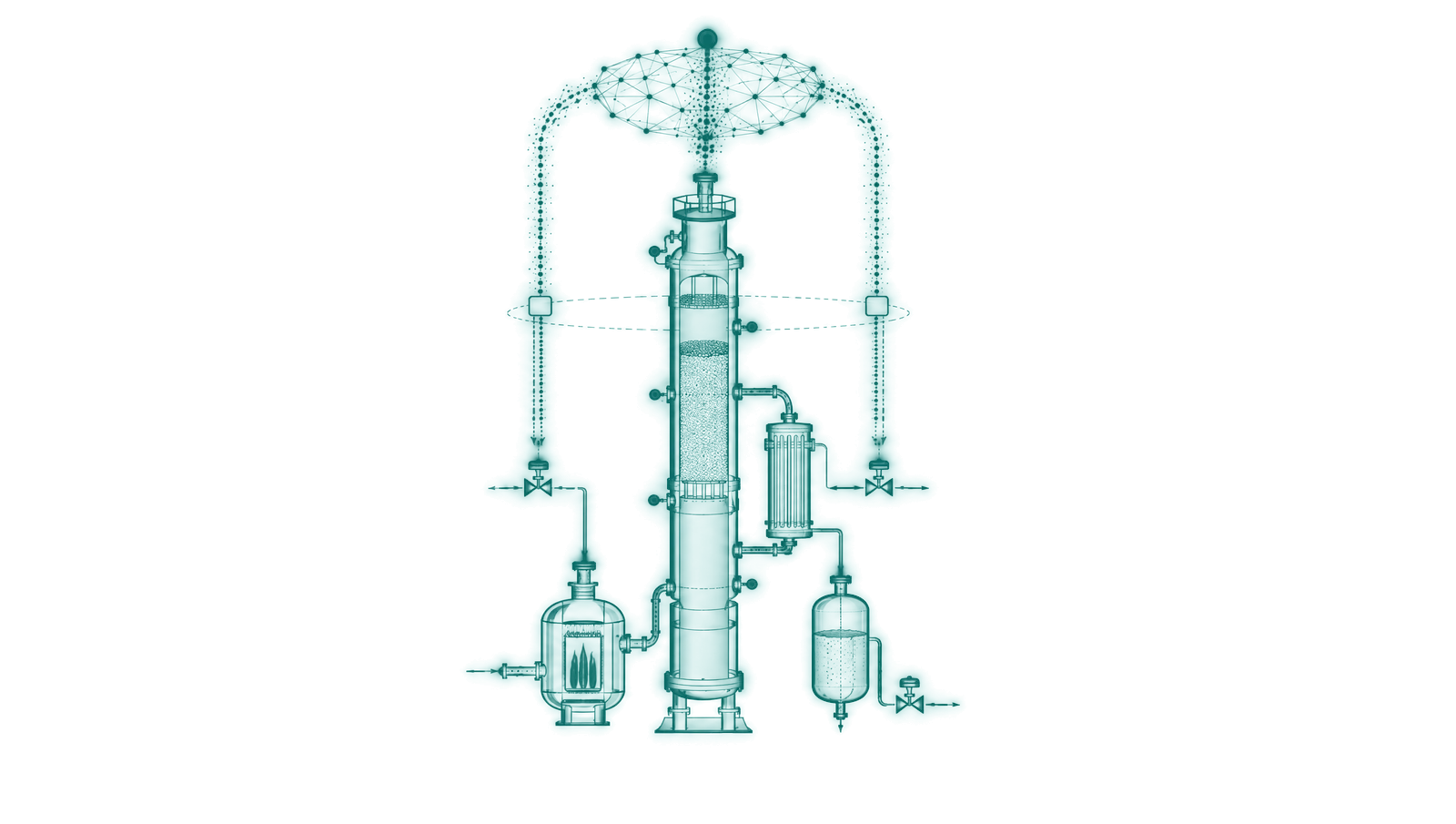
Model the causality with learning process models. Deep Learning Process Control® (DLPC®) learns a nonlinear dynamic model of each unit from the plant's own history, guided by first principles. It captures relationships between variables that first-principles and linear models struggle to represent.
Process engineers build and validate these models in DLPC® Builder, with no Python and no machine-learning background. DLPC® Sim App simulates the controller offline, so the team can see the result of a change before they make it, without affecting the site.
Control
Take the critical decisions to autonomous execution, inside the envelope your engineers set, on top of APC where there is one, or directly on the DCS. A Deep Learning Controller, trained by reinforcement learning across millions of simulations, learns the control policy for the unit. It runs on-premise and writes targets to the existing APC or DCS minute by minute, as feed, constraints and economics change.
The operator stays in charge. ARC Advisory Group describes this as "human-on-the-loop": the AI calculates and executes, and the operator moves from manual controller to high-level supervisor. Imubit complements the APC and DCS already in place. What each plant automation layer does and where value leaks explains how the layers fit together.
What the same model supports
A process model accurate enough for closed-loop control is accurate enough for other work, with little modification.
- Energy and emissions. The model learns how operating strategy drives energy use. A unit held closer to its optimum, with fewer upsets and less downtime, uses less energy per unit of finished product, and the same model gives a firmer basis for justifying future debottlenecking projects.
- Operator training and onboarding. Newer engineers and operators can learn how the unit responds to a move before they make it on the board.
- Planning. What the model learns about how each unit actually behaves can inform the planning tools, so the plan starts closer to the plant.
- Process insight. Nonlinear, multivariate relationships that other tools miss become visible to the process engineer.
Results
Imubit has over 100 closed-loop controllers deployed worldwide, the largest install base in the industry. Imubit also has 7+ years of closed-loop engagement in production, holds 13 approved U.S. patents, and is trusted by 7 of the top 10 U.S. refiners.
Each result below carries the scope it applies to.
| Area | Result | Scope |
|---|---|---|
| Refining | $0.25/bbl margin improvement | Refining only |
| Refining | 2 to 3% increase in jet recovery on top of existing APC | One refinery naphtha and jet complex, three fractionators, closed loop on top of APC |
| Refining | 33% reduction in furnace downtime | One crude furnace at one refinery, after the 2020 IMO spec change, from fouling prediction and a crude diet study |
| Chemicals | 0.5 to 1% increase in yield, reducing feed costs, across multiple sites | A multi-site chemical manufacturer, one critical unit with a dozen operating regimes, at the Model step |
| Kiln | 20 to 30% reduction in process variability | One customer's kiln pyroprocess, closed loop |
| Mining and minerals | 1 to 3% metal-recovery improvement | Mining, minerals and metals |
| Mining and minerals | 5 to 10% grinding-energy savings | Mining, minerals and metals |
| Mining and minerals | 2 to 5% throughput increase | Mining, minerals and metals |
| All industries | 1 to 3% average yield improvement | Across deployments |
| All industries | 15 to 30% reduction in energy consumption | Where energy is the optimization target |
Oxbow: closed-loop control in petroleum coke calcining
Oxbow, a global producer of calcined petroleum coke, runs its rotary kiln operations in closed loop with Imubit. The controller anticipates volatility in the kiln and adapts its operation. At Oxbow, that has meant a 1 to 3% yield improvement and a 15 to 30% reduction in natural gas consumption, while meeting product specifications. Oxbow's SmartKiln® petroleum coke calcination decarbonizes through that yield improvement, producing more calcined coke from the same kiln.
We have these younger, newer engineers that are coming in place of 30 year employees, who no longer have to wait 30 years to acquire that experience. With Imubit, they have an opportunity to come in and make their mark on the organization.
Read the Oxbow case study.
Related reading
All articles
Process modeling and the gap between planning targets and the plant
Why LP, APC and simulator models drift from the plant, how modeling approaches differ in upkeep, and how continuously learning models narrow the gap.
What each plant automation layer does and where value leaks
How the DCS, APC, RTO and planning layers divide plant decisions by timescale, where each one's reach ends, and how a learned closed-loop layer fills the gaps.
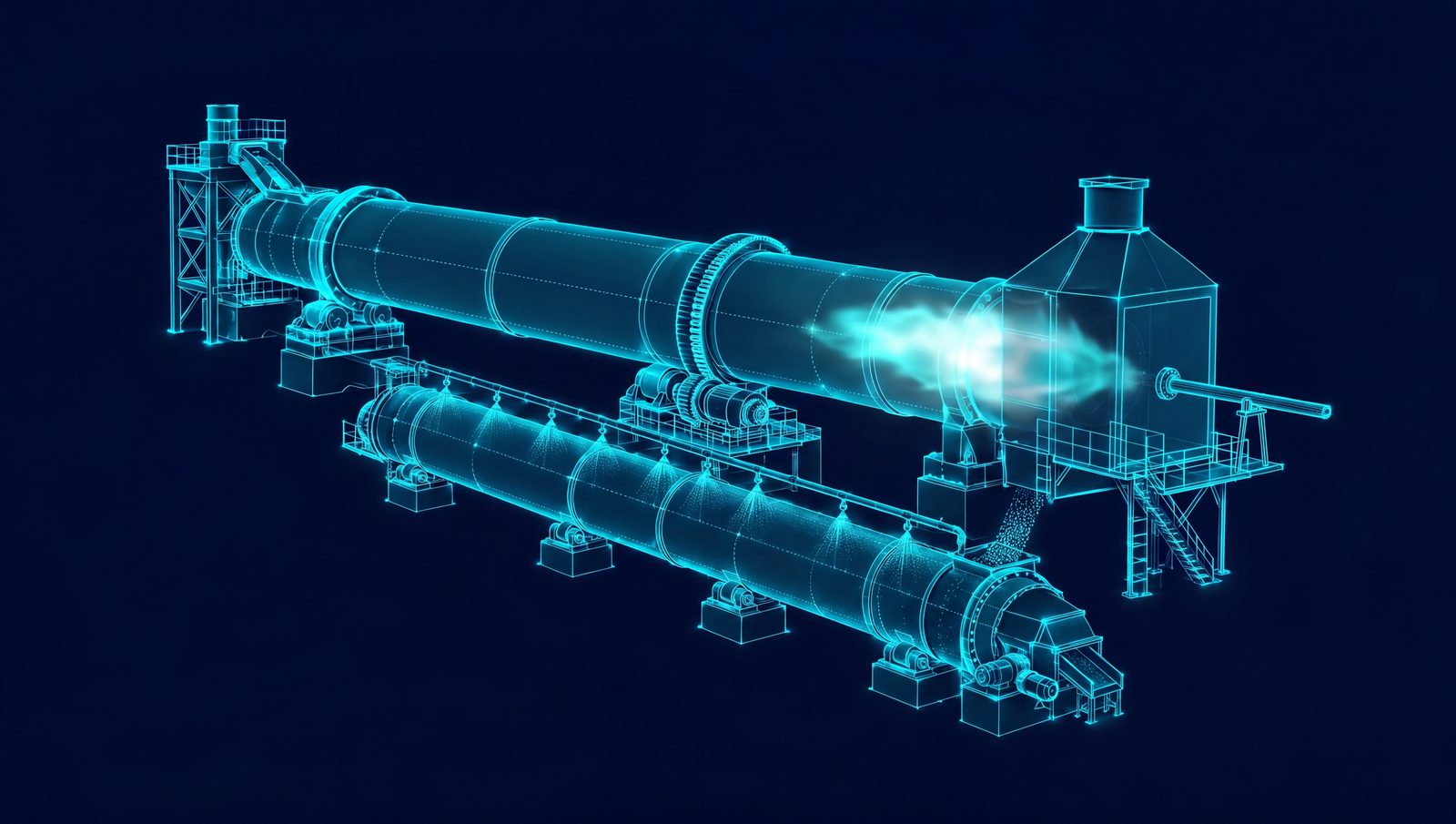
Oxbow runs petroleum coke calcining in closed loop
Oxbow runs its rotary kiln operations for petroleum coke calcining in closed loop with Imubit, raising yield and cutting natural gas use within specification.
Find out what your gap to plan is costing you.
We start by mapping where each unit sits today on the maturity ladder: Undefined, Reactive, Deliberate, Augmented and Autonomous (closed loop). It also shows which plan-to-plant gaps cost the most, and the order in which to take the decisions behind them through Map, Model and Control.
One to two hours for your team to prepare and upload the data package
Results within a few working days of approval
No workshops
Send your data as it is. Gaps, outages and noisy tags are normal, and our engineers screen and clean them in the platform. If anything limits a use case, we tell you.