Delayed cokers lose run time primarily due to heater fouling, which is accelerated by heavier crudes. To extend operation, refineries should focus on balancing flow and heat across all heater passes and avoiding counter-productive duty spikes. Implementing predictive monitoring and AI-powered automation helps manage fouling proactively, allowing for planned maintenance and increasing overall refinery profitability by protecting margins.
Every day a delayed coker stays online, it protects millions in margin by converting low-value residuum into naphtha, gas oils, and other products that keep downstream units fed. But as crude slates trend heavier and feedstock quality shifts, many refineries are watching heater run lengths shrink.
McKinsey research suggests reliability-related lost profit opportunities can range from $20–50 million per year for mid-size refineries, with unplanned outages among the largest contributors. Coker heater fouling is one of the most common and expensive causes of those unplanned shutdowns.
Still, run length is not fixed by equipment design. It responds to operational discipline, monitoring strategy, and increasingly, AI-driven optimization that learns from actual plant behavior. Here's what limits delayed coker run length and what refinery teams can do about it.
Heater fouling is the dominant constraint on delayed coker run length, and extending decoking intervals requires both operational discipline and smarter control strategies.
The following sections break down what drives premature fouling and the proven approaches for keeping heater runs on track.
When a coker heater fouls early, the impact cascades well beyond the coking unit. It starves hydrocrackers and catalytic cracking units of feed, forces the crude unit to cut rates or divert residuum to lower-value outlets, and limits the refinery's ability to capture heavy-light differentials.
Every week lost means an earlier turnaround and less total conversion from the barrels the refinery processed that cycle.
That exposure is growing. The IEA's medium-term outlook projects continued supply growth led by producers in the Americas, including Canada. More heavy barrels on the market means more demand on conversion capacity for high-residue feeds. Refineries that can reliably extend coker run length squeeze more margin from every cycle, especially when processing the heavy crude slates that competitors avoid.
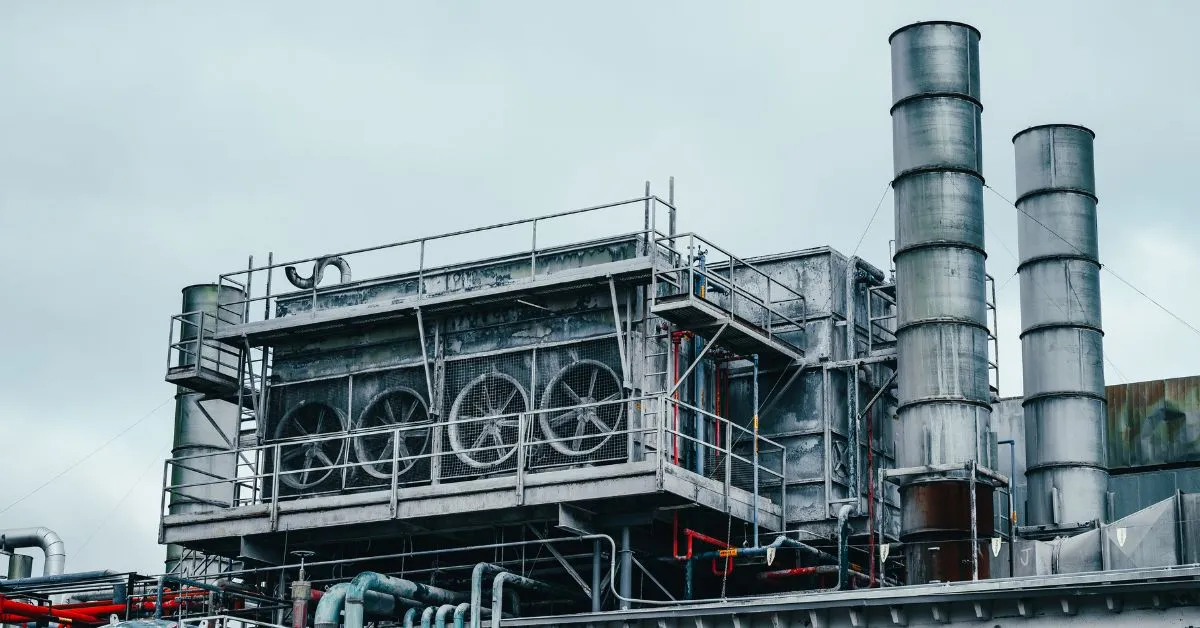
Heater fouling is the primary run-length constraint in nearly every delayed coker. As vacuum residuum flows through the furnace tubes, rising film temperatures destabilize asphaltenes in the feed. These heavy molecules precipitate onto tube walls, dehydrogenate into hard coke, and progressively restrict flow. The relationship between film temperature and fouling rate is exponential, not linear: even a small increase in tube-wall temperature can accelerate coke formation sharply.
Contaminants like sodium (typically from upstream desalter upsets or crude unit caustic injection) and iron compounds make it worse. The result is rising pressure drop across the coils, spiking tube-metal temperatures, and eventually a forced shutdown for cleaning.
Three operational factors most commonly accelerate the timeline:
None of these fouling drivers are mysterious; they're well understood. The constraint is that managing them simultaneously, across multiple heater passes, shifting crude slates, and three shifts of operators, exceeds what manual oversight can reliably sustain.
Extending heater run length starts with three foundational practices that don't require new technology, just disciplined execution.
Pass balancing is the highest-value intervention. Comparing pressure drop across every coil at the start of each shift reveals emerging imbalances before they create emergencies. When a deviation appears, adjusting orifice plates or slide valves to equalize flow keeps tube-metal temperatures converging rather than diverging.
Uniform heat flux keeps velocities high enough to scrub nascent deposits from tube walls. That alone can buy additional days on the run. Plants that embed automatic ΔP alerts in their DCS catch imbalances faster than manual monitoring alone.
Weekly audits of tube-metal temperature spreads across all passes, not just averages, confirm whether balancing efforts are holding or whether slower-fouling passes are masking a problem coil.
Predictive fouling monitoring turns raw data into an early-warning system. The key variables, pressure drop per pass, tube-metal temperature trends, heater firing rate progression, and calculated fouling rate (expressed as degrees of TMT rise per day), already exist in most plant data systems. Surfacing them as a composite fouling index, tracked shift to shift, gives process engineers visibility into how fast the heater is degrading and how much run time remains.
A heater fouling at 1 °F per day has fundamentally different economics than one fouling at 3 °F per day, but without consistent tracking, both look the same until the shutdown alarm fires. That's why fouling still surprises plants: the right indicators aren't watched together.
Upstream coordination prevents the coker from absorbing instability it didn't create. Locking in CDU cut points, maintaining consistent vacuum furnace coil-outlet temperature, and managing feed contaminant levels keep the coker heater's operating window stable. When upstream variables stay flat, heater firing can run lower, tube-metal temperatures drop, and fouling slows.
A cross-functional team spanning operations, process engineering, and maintenance is what makes this coordination sustainable rather than episodic.
Traditional advanced process control handles coker heaters reasonably well under stable conditions. But when feed quality shifts, or when multiple variables interact in nonlinear ways, static linear models lose accuracy. The heater needs continuous recalibration that manual adjustments and conventional controllers can't sustain across an entire crude-switch cycle.
AI optimization built on reinforcement learning fills that gap differently than traditional approaches. Models trained on a plant's own historical data learn the complex relationships between feed properties, firing patterns, steam-to-oil ratios, and fouling progression. Rather than relying on static correlations, these models update as conditions change. They adapt to new crude slates and evolving equipment behavior without manual retuning.
Even before closed loop control, advisory mode delivers real value on its own. The model flags emerging fouling trends days before they'd show up on a standard monitoring screen. That lead time gives engineers a window to intervene before a trend becomes a crisis. What-if analysis means teams can test alternative firing strategies or steam injection rates against the model's predictions before committing to a move.
And because every shift references the same model, cross-shift variability in heater management drops, one of the most practical and immediate improvements plants see.
As operators gain confidence, the model writes setpoints directly to the DCS, continuously adjusting duty, steam rates, and recycle to keep every pass within its safe operating window. That continuous optimization means the heater can run closer to its actual constraints rather than the conservative margins that manual operation requires. In practice, that often adds days of run time without increasing risk.
Decades of operating experience give board operators pattern recognition that AI can't replicate. But continuously managing dozens of interacting variables in real time, across an entire shift, exceeds what any individual can sustain. Operators set the boundaries, and the model optimizes within them.
That division of work shows up in longer intervals between decoking outages, steadier downstream feed, and lower energy intensity per cycle.
For refinery leaders seeking to extend delayed coker run length and protect margins, Imubit's Closed Loop AI Optimization solution offers a data-first approach grounded in actual plant operations. The technology learns from historical and live data to write optimal setpoints in real time, with plants starting in advisory mode and progressing toward closed loop control as trust builds.
Across 90+ successful applications, this approach has helped refineries recover lost production while reducing emissions and maintenance costs.
Get a Plant Assessment to discover how AI optimization can extend your delayed coker run length and improve refinery profitability.
Heavier crudes carry higher concentrations of asphaltenes, metals, and Conradson carbon residue, all of which accelerate coke deposition on furnace tube walls. As film temperatures rise to crack these heavier molecules, deposits insulate the tube. Wall temperatures rise further, and the cycle becomes self-reinforcing. Monitoring feed quality changes and adjusting heater parameters in response can slow this progression.
Yes. AI optimization layers on top of existing APC infrastructure without replacing it. The AI model handles the nonlinear, multi-variable interactions that static APC models miss, particularly during feed quality transitions and complex fouling dynamics. Plants can run both systems in parallel, with the AI model operating in advisory mode to validate its recommendations before progressing to direct control.
At minimum, plants need consistent process data covering heater pass temperatures, pressure drops across coils, flow rates, and firing patterns. Feed quality data from lab results and upstream unit conditions strengthens the model. Perfectly structured data isn't a prerequisite; AI models can begin learning from existing plant data while data infrastructure improves in parallel.