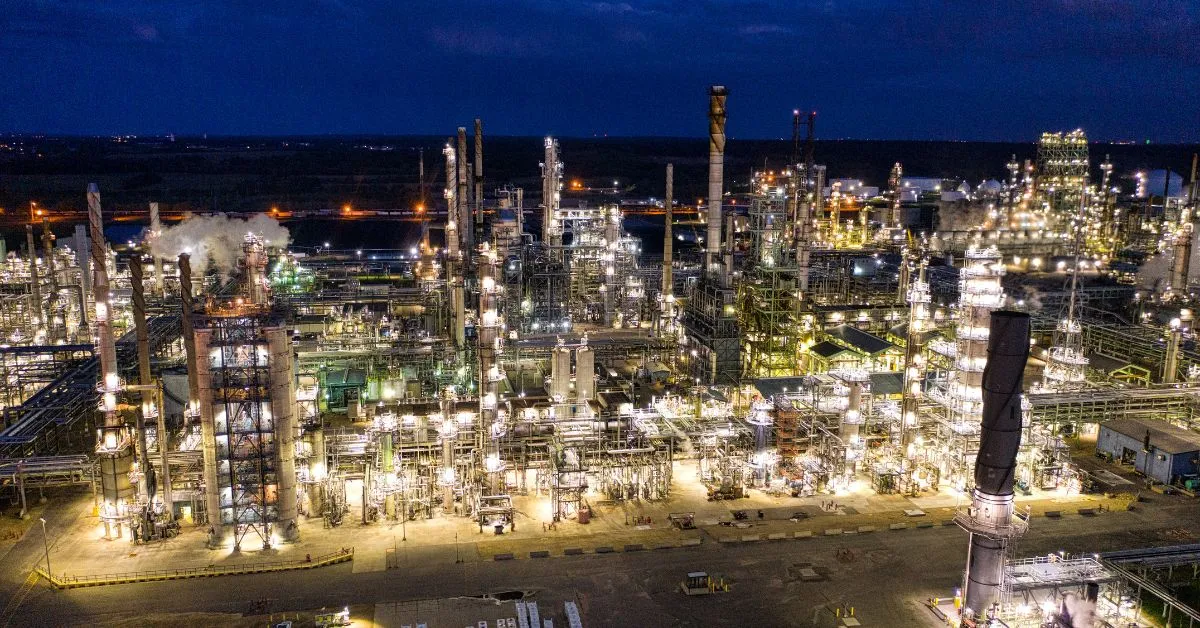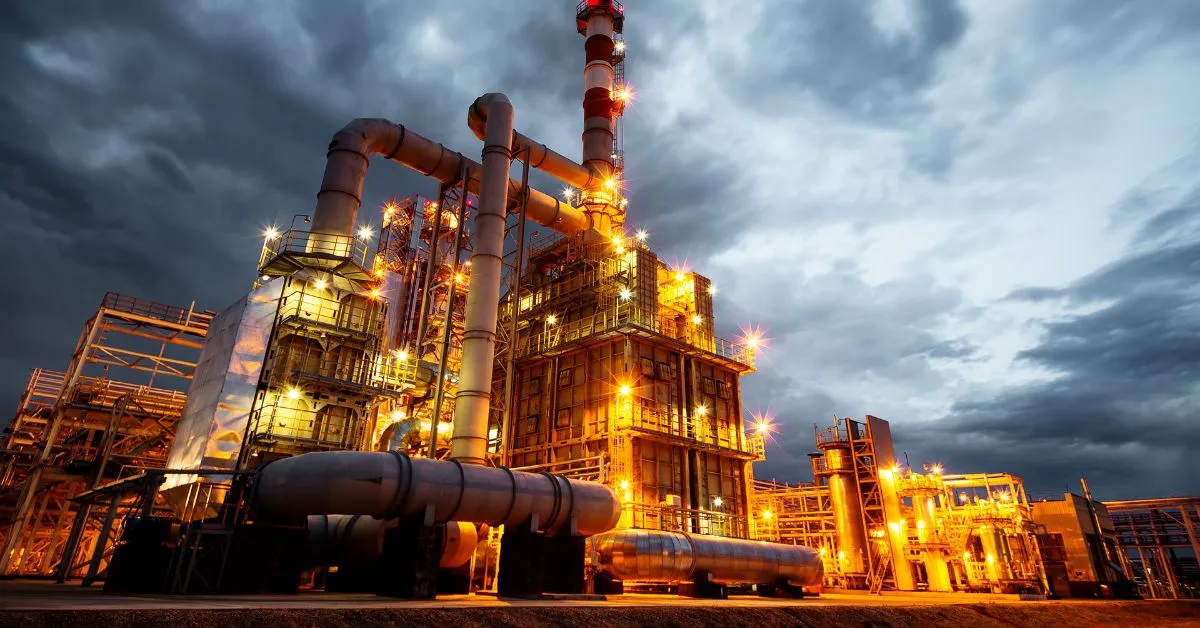
Unplanned furnace shutdowns in refineries can cost up to $15 million per event. This article identifies five common practices—like pushing equipment too hard when fouling begins or ignoring weak signals—that compromise crude and vacuum heaters. By adopting disciplined operations and AI-driven optimization, refineries can prevent these failures, extend equipment run lengths, improve efficiency, and ensure higher profitability through continuous, proactive management.
Every barrel of crude processed in a refinery passes through at least one fired heater before it reaches a distillation column, a hydrocracker, or a reformer. Process heating accounts for roughly two-thirds of fuel use in petroleum refining. That makes fired heaters the single largest energy consumers on site.
When a furnace underperforms, the effects ripple across the entire plant: fuel costs climb, throughput drops, tube-metal temperatures rise toward creep limits, and unplanned shutdowns can cost tens of millions annually in lost margin for mid-size refineries alone.
Yet many refineries still operate furnaces reactively, addressing fouling, imbalanced flows, and degraded efficiency only after performance has visibly declined. A more effective path combines disciplined operating practices with AI-driven optimization that detects problems early and adjusts firing in real time.
Fired heaters are a refinery's largest energy consumers. Their performance is a direct lever on profitability and run length.
Here's how they work, what degrades them, and how modern optimization approaches are extending their operational life.
A refinery furnace, also called a fired heater or process heater, raises the temperature of hydrocarbon streams to levels required for downstream separation or reaction. Crude distillation, vacuum distillation, hydrocracking, catalytic reforming, and coking all depend on fired heaters to deliver precise outlet temperatures.
The furnace operates through two primary heat transfer zones. In the radiant section, burners combust fuel gas or refinery gas, and flames transfer energy primarily through radiation to process tubes lining the firebox walls. Tube-metal temperatures in this zone are the highest anywhere in the heater, which makes this section the most vulnerable to damage from overheating or coke accumulation.
Above the radiant section sits the convection section, where hot flue gases transfer residual heat to additional tube banks before exhausting through the stack. Finned tubes in this zone recover energy that would otherwise be lost. In well-maintained units, overall thermal efficiency typically reaches 85–92%. Between these two zones, bare shield tubes protect the convection section from direct flame radiation.
Draft controls, excess air management, and burner tuning all influence how efficiently fuel converts to useful process heat. Even small deviations in these parameters, such as excessive air infiltration or uneven burner flames, can reduce efficiency by several percentage points and compound fuel costs over the course of a run.
Furnace degradation rarely stems from a single dramatic event. It accumulates through daily operating habits that gradually erode heat transfer, raise tube-metal temperatures, and shorten the interval between turnarounds. A few patterns account for most premature failures.
When outlet temperature drifts or dampers creep open, the instinct is to increase firing to maintain production throughput. This floods already-compromised tubes with more heat. Coke growth inside the coils and ash deposits on the fireside accelerate in response. Even a thin deposit layer can degrade heat transfer enough to push tube-metal temperatures toward alloy creep limits.
The result is a feedback loop: more fuel burned to hit the same target, higher stack temperatures, and faster degradation. Plants that trend skin-thermocouple data and schedule cleaning based on fouling indicators rather than calendar intervals tend to break this cycle before it shortens a run.
Multi-pass furnaces depend on balanced flow distribution to maintain uniform heat transfer. When one pass becomes restricted, whether from worn orifice plates, fouling, or post-maintenance misalignment, the remaining passes absorb disproportionate heat. Tube-metal temperatures spike locally, and coking accelerates in the restricted pass.
These imbalances often hide behind steady aggregate outlet temperatures, so they're invisible without per-pass monitoring. Re-calibrating flow instruments during turnarounds and alerting on pass-to-pass deviations outside normal bands are among the more reliable ways to catch these early.
Slight increases in pressure drop, a one-degree drift in outlet temperature, or a slow rise in stack temperature often appear days or weeks before severe fouling develops. But a furnace involves hundreds of interacting variables, and the correlations between feed composition, draft, excess air, and downstream conditions are where fouling signatures actually develop.
Traditional trend charts tracking individual readings can't detect these multivariate patterns amid normal operational noise. By the time a hot spot shows up on a thermal scan, tube damage is already underway. Rate-of-change alarm logic can surface individual parameter drifts, but the cross-variable correlations that drive degradation typically exceed what manual monitoring approaches can sustain.
A crude or vacuum heater's stability depends on steady feed properties, balanced downstream draw, and consistent combustion conditions. When a distillation column suddenly cuts rates or a downstream unit goes off-spec, the heater absorbs rapid swings in flow and firing demand.
These abrupt transitions drive tube-metal temperatures above safe limits and encourage coking. The root cause is often organizational: operators optimize their own unit without visibility into plantwide constraints elsewhere in the refinery.
Consistency across operating shifts compounds the detection problem. Each crew interprets furnace data differently, setpoints drift between handovers, and institutional knowledge erodes as experienced staff retire. Documented procedures help, but no human team can realistically maintain that level of vigilance across every shift while managing dozens of variables per heater.
Traditional advanced process control (APC) addresses part of this gap by automating setpoint adjustments within predefined models. But conventional APC was designed around linear assumptions that hold well for steady-state operations.
Those assumptions weaken as fouling progresses and process conditions drift from design parameters. A model tuned for a clean heater early in a run may underperform months later when coke deposits have altered heat transfer characteristics.
Retuning these models mid-run is rarely practical, so operators often override controller recommendations and return to manual adjustments as conditions drift. The nonlinear, time-varying dynamics of furnace degradation require a different modeling approach.
AI models trained on actual plant operating data can capture those nonlinear relationships because they learn from the heater's own history, not from idealized physics. Rather than relying on static correlations, these models learn how specific combinations of feed rate, firing intensity, pass flow distribution, and ambient conditions affect tube-metal temperature and fouling progression in a particular unit.
In advisory mode, AI presents recommended setpoints alongside confidence levels so plant operators can see why a particular firing adjustment makes sense. This transparency builds trust incrementally.
Even before any setpoint is automated, advisory mode delivers standalone value through fouling trajectory forecasts that inform cleaning schedules, what-if analysis for different crude slates, and consistent recommendations that reduce shift-to-shift variability. Operators remain in charge while gaining a data-driven reference that monitors every variable continuously across every shift.
When teams share a single AI model of the furnace's behavior, cross-functional coordination improves. Planning teams can evaluate how different crude slates affect fouling rates, and operations can see how downstream rate changes will propagate into heater duty. Maintenance teams can time cleaning interventions based on predicted degradation rather than fixed schedules.
This shared visibility reduces the finger-pointing that often accompanies furnace-related shutdowns and speeds up decision-making when conditions change.
AI doesn't replace the judgment that comes from decades of experience reading a furnace. But it can handle the complexity that even experienced operators struggle with: tracking hundreds of variables simultaneously, detecting faint signals of emerging imbalances in normal noise, and maintaining consistent performance across every shift.
As trust builds, organizations can progress from advisory recommendations to closed loop control, where AI writes optimized setpoints directly to the distributed control system (DCS). This progression typically reduces fuel intensity, extends tube campaigns, and captures margin improvements that compound over months and years of continuous operation.
For refinery operations leaders looking to extend furnace run length, reduce energy costs, and prevent unplanned shutdowns, Imubit's Closed Loop AI Optimization solution learns from actual heater data, writes optimal setpoints in real time, and coordinates firing across interconnected units. Plants can start in advisory mode and progress toward closed loop optimization as confidence builds.
Get a Plant Assessment to discover how AI optimization can extend your furnace run length and reduce fuel costs.
Fouling deposits on tube walls act as insulation, reducing heat transfer from flame to process fluid. The furnace compensates by burning more fuel to reach the same outlet temperature, which raises stack temperature, increases tube-metal stress, and accelerates further coke formation. Even modest fouling can increase fuel consumption measurably and shorten the interval between required cleaning or turnaround maintenance.
AI optimization typically layers on top of existing advanced process control (APC) and control system infrastructure rather than replacing it. The AI model handles the nonlinear, time-varying dynamics that conventional controllers struggle with, such as predicting how fouling progression will shift optimal setpoints over weeks. Existing control loops continue to execute low-level regulation while the AI adjusts higher-level targets based on evolving conditions.
Results depend on the specific furnace, data availability, and the constraints being addressed. Many implementations begin delivering measurable improvements in energy efficiency and operational consistency within months of deployment, starting in advisory mode. The AI model continues learning over time, so benefits typically compound as the model captures more operating scenarios and seasonal variations in feed quality and ambient conditions.