By Allison Buenemann, Imubit
Process engineers who see closed-loop AI for the first time often ask how it differs from the real-time optimization (RTO) their plant already runs or has tried. The answer starts with the model and carries through to how the controller makes decisions and how a site team comes to trust it.
The model starts with the plant's own data
A conventional RTO needs a complete, rigorous process simulation before it can optimize anything. That model is built on first principles, or on a table of response vectors that engineers specify by hand.
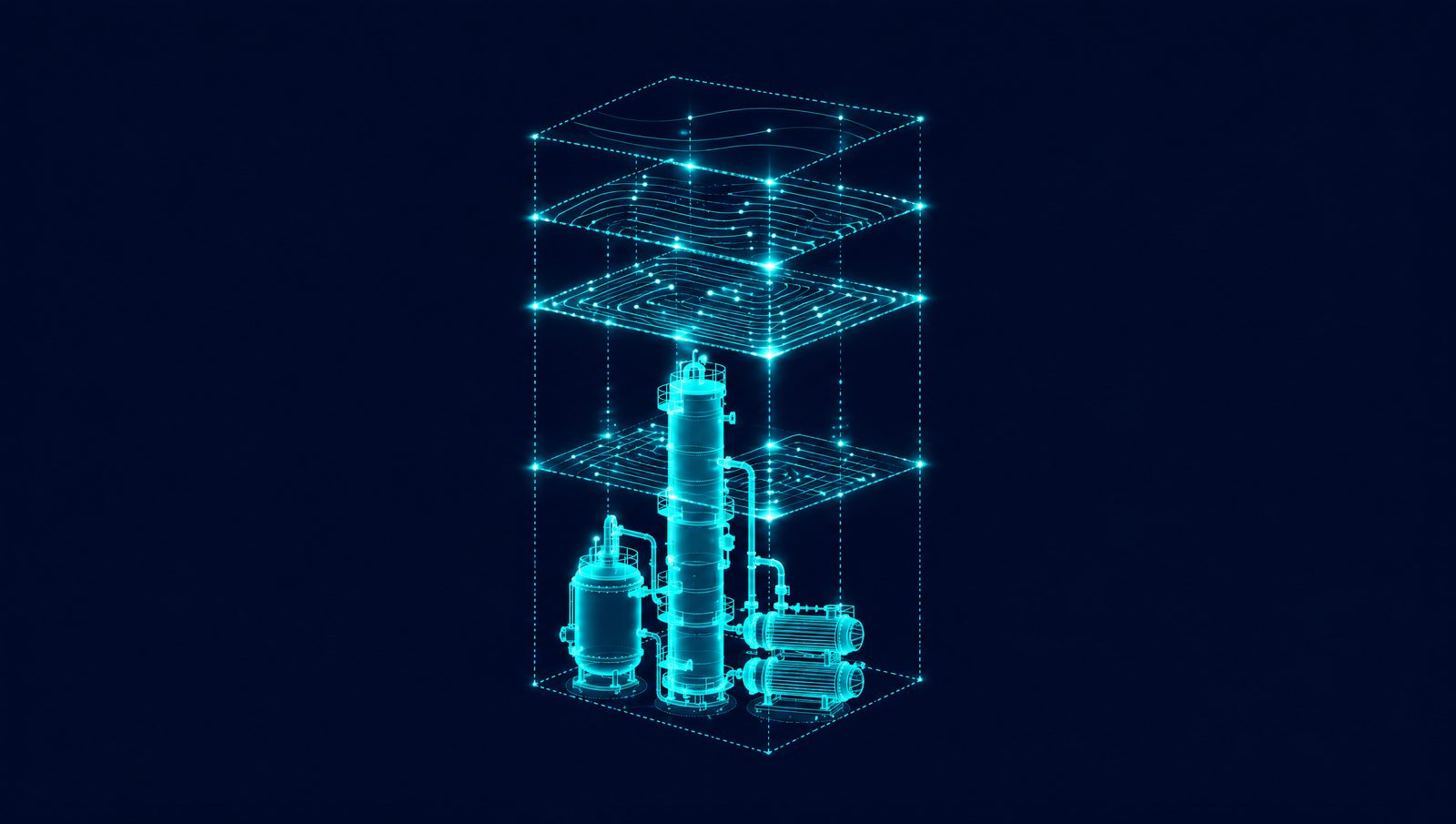
A learned controller does not need that simulation as a prerequisite. A deep learning model is trained on years of the unit's own operating data from the historian and the lab systems. The model is specific to that plant, with its configuration, its environment and the conditions it actually runs in. In Deep Learning Process Control® (DLPC®), this is the Deep Learning Predictor, which learns a nonlinear dynamic model of the unit from its own history. Process engineers build it in DLPC® Builder, with no Python and no machine-learning background required.
First principles still shape the model. Domain experts review its results and retrain it with what they know about the process. That keeps its predictions consistent with physics while placing fewer limiting assumptions on the model.
The controller decides without a real-time solver
Once the model behaves as expected across a wide range of test scenarios, the next step is to train the optimizing controller with reinforcement learning. The most important difference from RTO follows from that step. Because the controller is trained offline, it makes control decisions in real time without solving an optimization problem at run time.
That matters because of how a real-time solver works. To converge on a solution, it assumes its underlying prediction is accurate. When the model and the plant diverge, the condition known as model mismatch, that assumption can produce unexpected or wrong results.
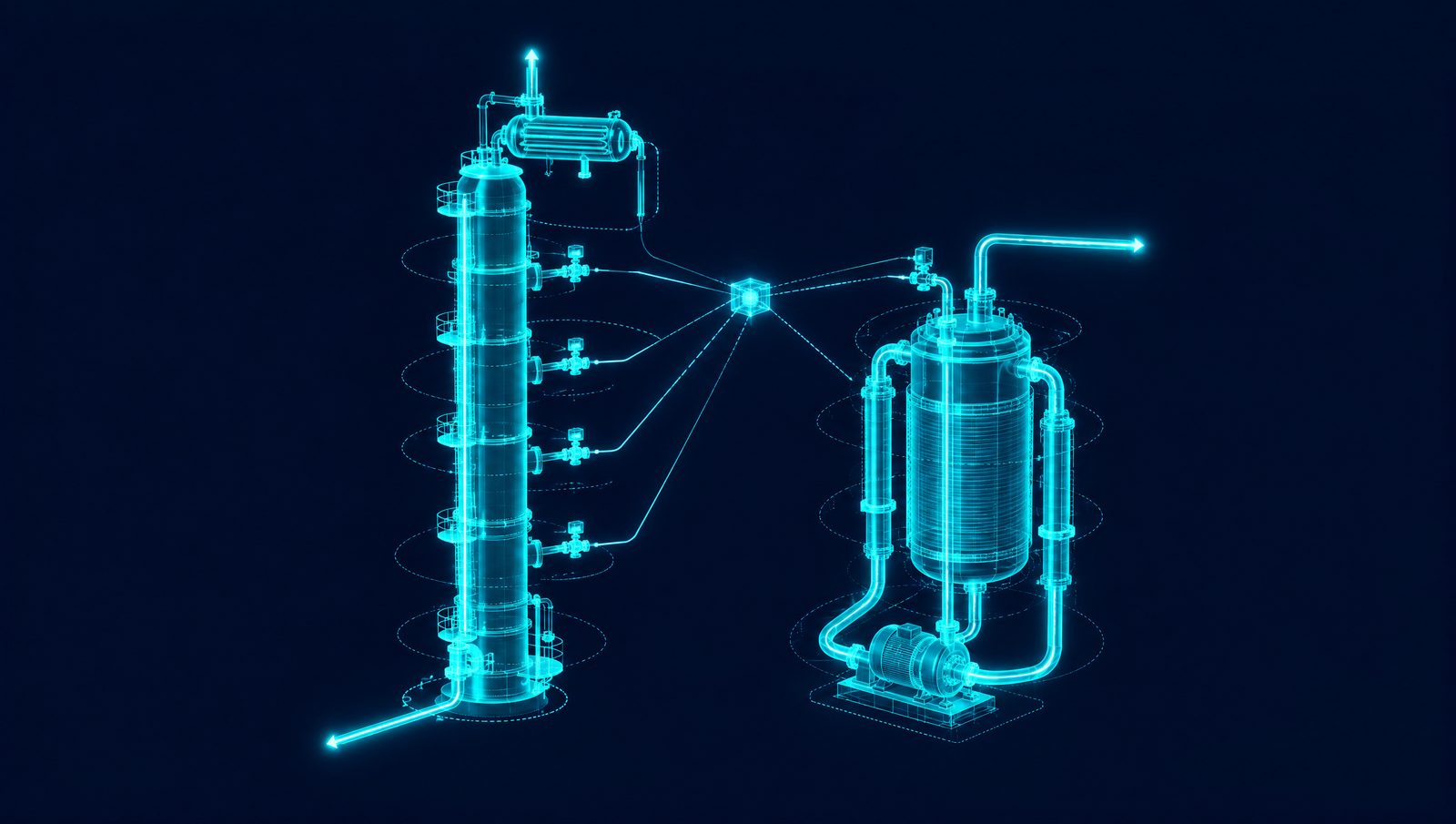
Reinforcement learning trains the controller to decide which moves to make, given the state of the unit, current prices and the active constraints. It learns by trial and error in an offline environment, working through millions of simulations that combine different process conditions, prices and constraints. The controller learns how to act across the conditions in the plant's history and how to respond when the unit moves beyond them. In DLPC®, this is the Deep Learning Controller. In closed loop it writes setpoints to the existing APC or DCS minute by minute, inside limits set by plant engineers.
Trust comes before closed loop
After a quality or regulatory upset, a plant manager needs a better explanation than "the AI did it." Operators do not need to understand the mathematics of a neural network, but they are required members of the team that evaluates and trains the model. Building credibility for the process model, and an understanding of it across the site team, is a core part of preparing a unit for closed-loop control.
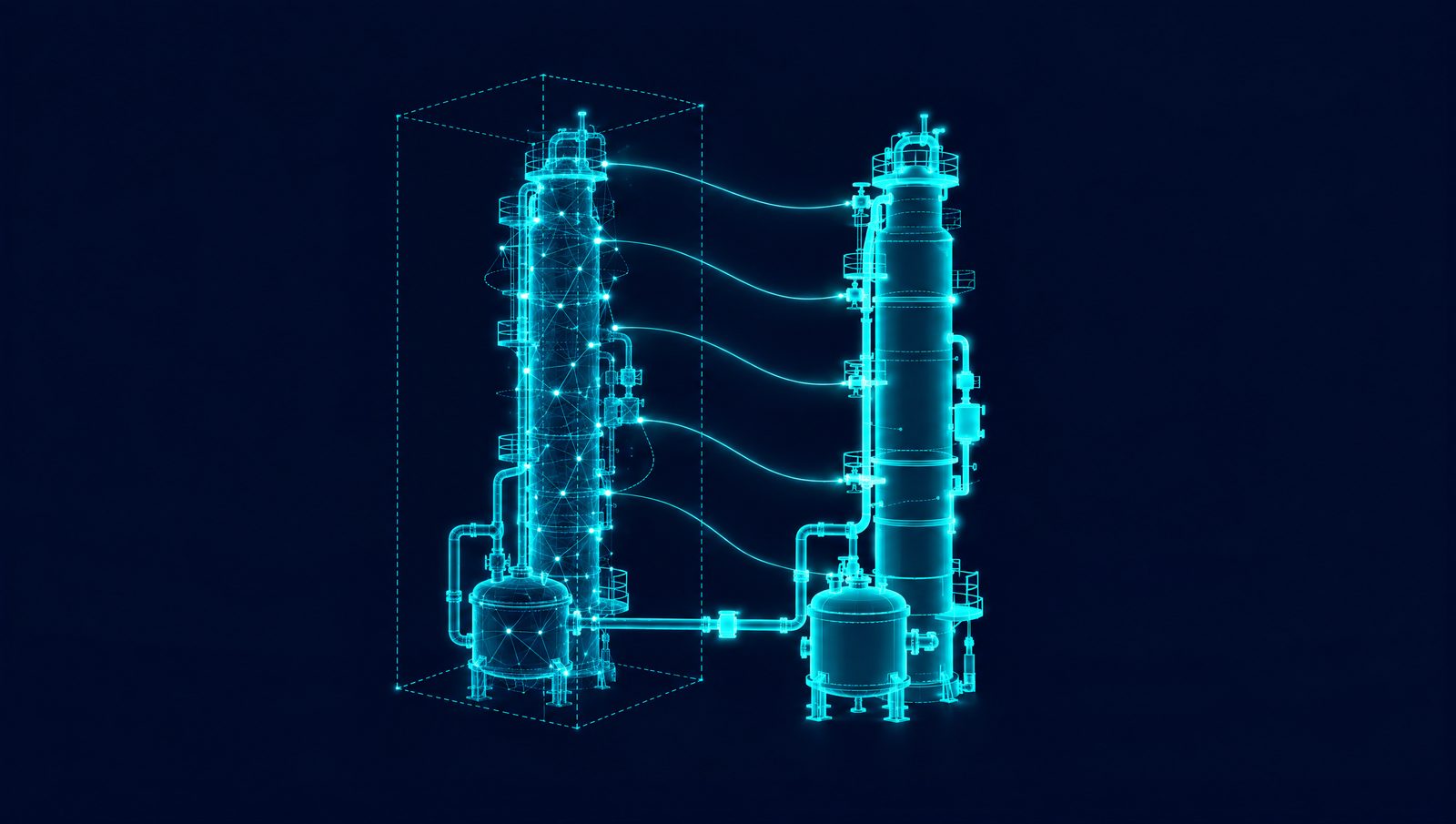
Because the model used to train the controller sits offline, it is a safe place to test how the controller would respond to disturbances or to changed constraints. In DLPC® Explorer, engineers and operators can change an input and watch the predicted response, so they see the result of a change before they make it, without needing to be APC or RTO specialists. Working through disturbances the team already knows well shows them whether the controller will take an appropriate action when that disturbance reaches the unit.
The same approach applies across refining, chemicals and polymers, cement, and mining and minerals. DLPC® runs on-premise and complements the APC and DCS already in place, with operators in charge of the unit.