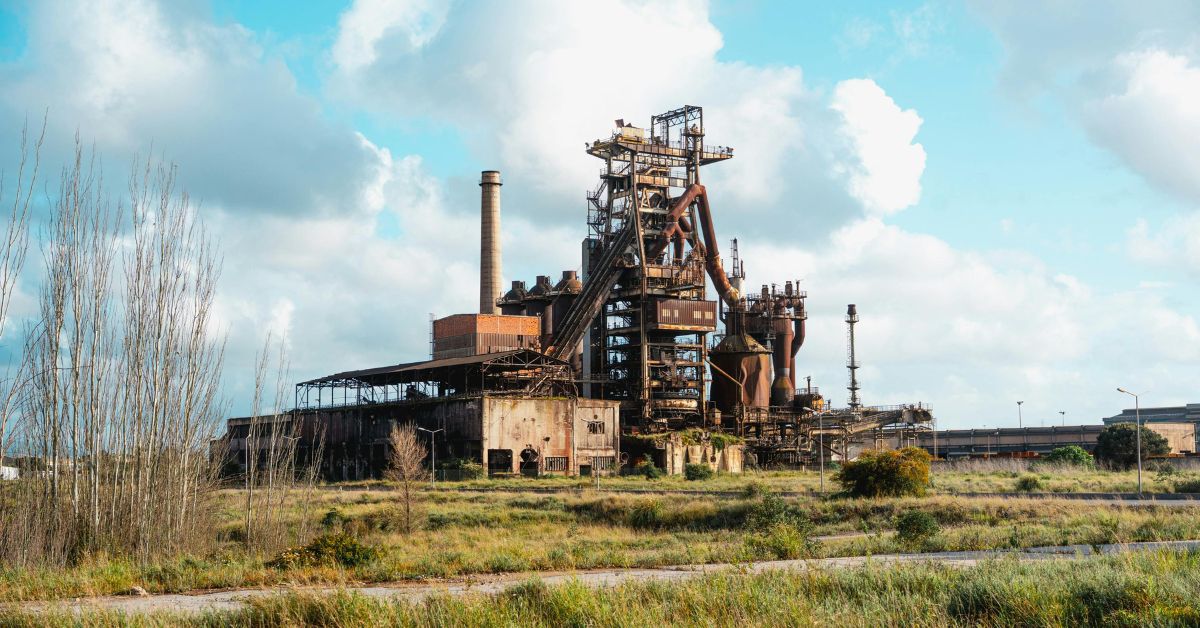
Aging control systems that drift out of tune create a cascade of problems: manual adjustments multiply, optimization targets slip further from reach, and efficiency improvements erode shift by shift. Aging infrastructure limits visibility into process performance, leaving teams to react to problems rather than prevent them. These constraints compound when operators fall back to manual control, unable to sustain optimal performance across multiple variables simultaneously.
The opportunity is substantial. According to McKinsey, operators that have applied AI in industrial processing plants have reported 10–15% production increases and 4–5 percentage point EBITA improvements. For operations leaders managing facilities built decades ago, AI optimization offers competitive performance without the capital burden of building new capacity.
Why Traditional Automation Falls Short in Existing Facilities
Brownfield plants face structural disadvantages that technology alone cannot solve. Many facilities were built 20–40 years ago and lack standardized automation architectures. This creates barriers that prevent plant-wide optimization even when individual systems perform well.
Data fragmentation compounds these barriers. Decades of incremental upgrades have created patchworks of incompatible systems: older PLCs that cannot communicate with modern sensors, historians that capture only a fraction of available process variables, and control loops tuned for conditions that no longer exist. This technological heterogeneity makes holistic optimization nearly impossible through traditional approaches, even when operators possess deep process knowledge. Many plants find that legacy systems create obstacles to capturing the integrated view that effective optimization requires.
The result is that valuable operational data remains siloed, preventing the plant-wide coordination that modern optimization demands. Conventional automation technologies have severe limitations handling complex, variable tasks across interconnected process units. The result is a productivity gap that incremental improvements cannot close.
How AI Optimization Addresses Brownfield Constraints
AI optimization transforms brownfield operations by delivering software-driven improvements that leverage existing infrastructure. Rather than requiring equipment replacement, these systems layer onto current control architectures to unlock performance that manual approaches cannot sustain.
Predictive operations analyze historical plant data to anticipate equipment issues and quality deviations before they affect production. This capability can deliver meaningful reductions in equipment downtime across various implementations, improving plant reliability without capital-intensive equipment upgrades.
Continuous optimization identifies optimal operating points across multiple variables simultaneously. This addresses a core process complexity constraint that manual approaches struggle to sustain without continuous human monitoring and adjustment.
Digital twin integration enables teams to test scenarios without production risk, validating changes before implementation. The World Economic Forum reports that leading manufacturing sites in its Global Lighthouse Network have achieved step-change improvements in downtime, conversion costs, and defect rates through AI-enabled optimization.
Adaptive learning allows systems to improve over time, capturing institutional knowledge that would otherwise retire with experienced operators. These systems enhance operator judgment rather than replacing it, providing recommendations that front-line teams evaluate against their process understanding.
Quantified Benefits for Existing Facilities
AI optimization delivers measurable improvements across the metrics operations leaders track most closely. What distinguishes brownfield applications is that these benefits emerge from existing assets, without the capital intensity of new construction or wholesale system replacement.
Margin and cost improvements show consistent results in legacy environments. Deloitte research indicates that early AI adopters in manufacturing often achieve meaningful cost and productivity improvements. For brownfield operations, these represent pure margin capture from assets already depreciated on the balance sheet.
Energy consumption reduction represents one of the most reliable value creation pathways in existing facilities. Aging equipment often operates with conservative setpoints established years ago, leaving efficiency on the table. AI optimization identifies tighter operating windows that reduce energy intensity without compromising safety margins. Multiple studies highlight that optimizing existing industrial assets represents one of the largest near-term opportunities for emissions reduction, especially when AI is used to reduce energy waste and improve efficiency.
Throughput improvements align with the 10–15% production increases that McKinsey has documented in industrial processing plants. In brownfield contexts, these improvements often come from debottlenecking constraints that operators have worked around for years. AI identifies interactions between variables that manual analysis cannot sustain, unlocking capacity hidden within existing equipment limits.
Quality consistency improves when AI compensates for equipment variability that accumulates in aging systems. Sensors drift, valves wear, and heat exchangers foul at different rates across a brownfield facility. AI models learn these patterns and adjust setpoints continuously, maintaining product quality that manual approaches struggle to hold steady.
The Brownfield Advantage
Counterintuitively, existing facilities possess strategic advantages that greenfield competitors lack. Understanding these advantages reframes AI adoption from a remediation effort into a competitive opportunity.
Decades of operational data provide the training foundation that AI models require. A brownfield plant with 15 years of historian data has captured process behavior across countless operating scenarios, feedstock variations, and equipment states. New facilities must accumulate this knowledge over time. Brownfield plants can deploy AI models that immediately leverage hard-won operational experience encoded in historical records.
Established control infrastructure provides the integration points that AI optimization requires. Brownfield plants have distributed control systems (DCS), control networks, and instrumentation already in place. AI layers onto this foundation rather than requiring parallel infrastructure. This dramatically reduces implementation complexity and cost compared to deploying AI in facilities where basic automation must be installed first.
Known equipment constraints enable targeted optimization. Operators in brownfield facilities understand their bottlenecks intimately. AI optimization can focus on these high-value constraints immediately, delivering rapid returns by addressing the specific limitations that constrain daily operations. In contrast, new facilities must discover their constraints through operational experience.
This “software over steel” approach means existing plants can achieve competitive performance improvements at a fraction of new-build costs. AI optimization augments existing systems rather than replacing them, reducing deployment risk and leveraging prior infrastructure investments.
Where greenfield projects require years of capital deployment before generating returns, brownfield AI implementations can deliver value within months by extracting more from assets already in place. For operations leaders evaluating capacity expansion, AI optimization offers an alternative path: extract more value from existing assets before committing capital to new construction.
A Progressive Path to Autonomous Optimization
Organizations can build autonomous optimization capability while capturing value at each stage, without requiring immediate full implementation.
Many plants begin in advisory mode, where AI models provide recommendations while operators retain full control. During this phase, systems analyze historical data and provide real-time guidance that teams evaluate against their process knowledge. Significant value accrues at this stage through improved visibility into optimization opportunities, faster troubleshooting of process deviations, and accelerated workforce development as newer operators learn from AI-captured institutional knowledge.
As teams build confidence in model accuracy and recommendation quality, they progressively enable supervised automation within validated operating envelopes. The AI implements changes within operator-defined safety boundaries, allowing organizations to validate AI-driven decision-making in real operational conditions.
Eventually, organizations can enable full autonomous optimization where systems operate continuously while maintaining human override capabilities. This progression typically spans 12–36 months depending on organizational readiness. The journey approach reduces implementation risk while capturing value at each step, addressing the execution gap that prevents most process industry organizations from scaling AI beyond pilots.
How Imubit Delivers AI Optimization for Brownfield Operations
For operations leaders managing existing facilities constrained by aging infrastructure and fragmented control systems, Imubit’s Closed Loop AI Optimization solution addresses the core limitations that traditional automation cannot resolve. The technology combines deep reinforcement learning with real-time process data to continuously optimize operations and improve performance over time.
Unlike conventional advanced process control (APC) solutions that degrade and require constant maintenance, Imubit learns directly from historical plant data and adapts to changing conditions automatically. The technology delivers value in advisory mode through enhanced visibility and operator decision support, then writes optimal setpoints to the control system when operating autonomously.
Get a Plant Assessment to explore how AI optimization can unlock hidden capacity in your existing facilities.