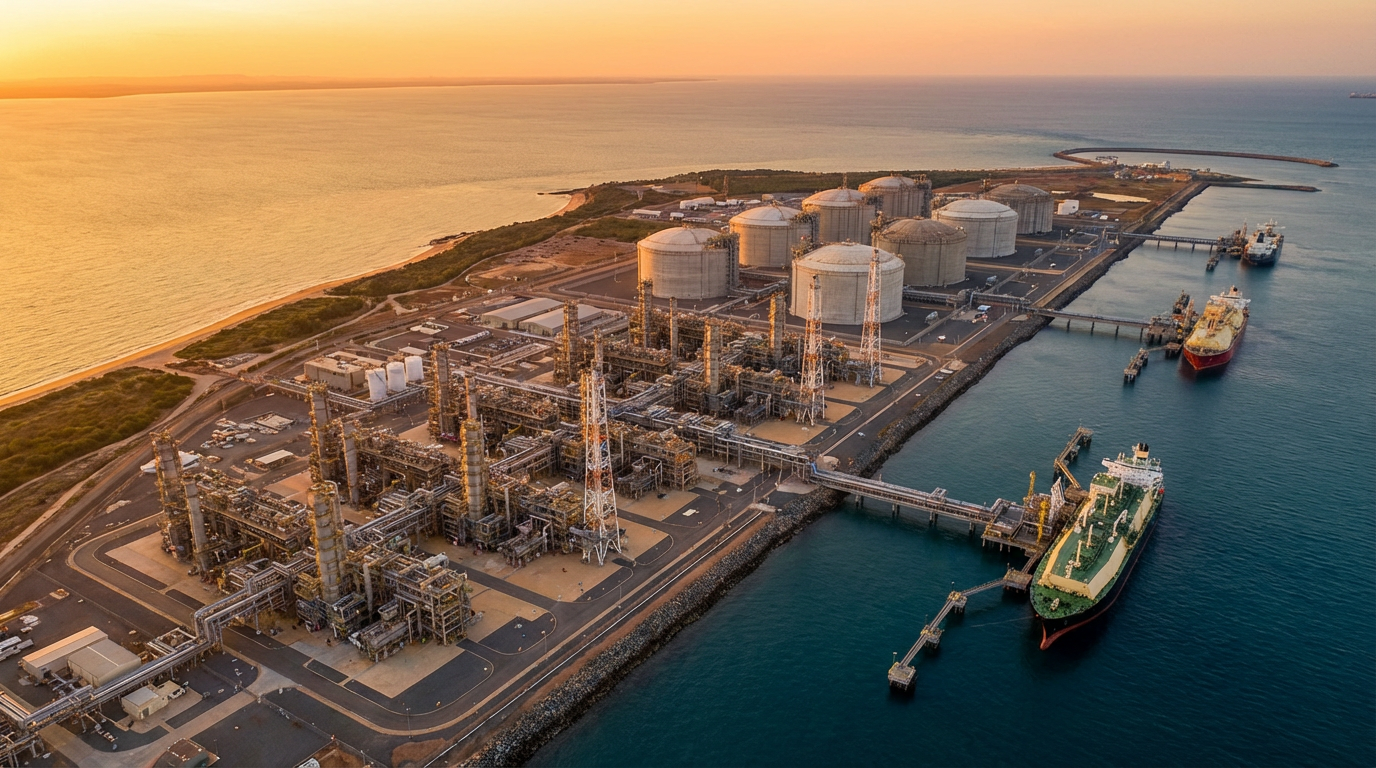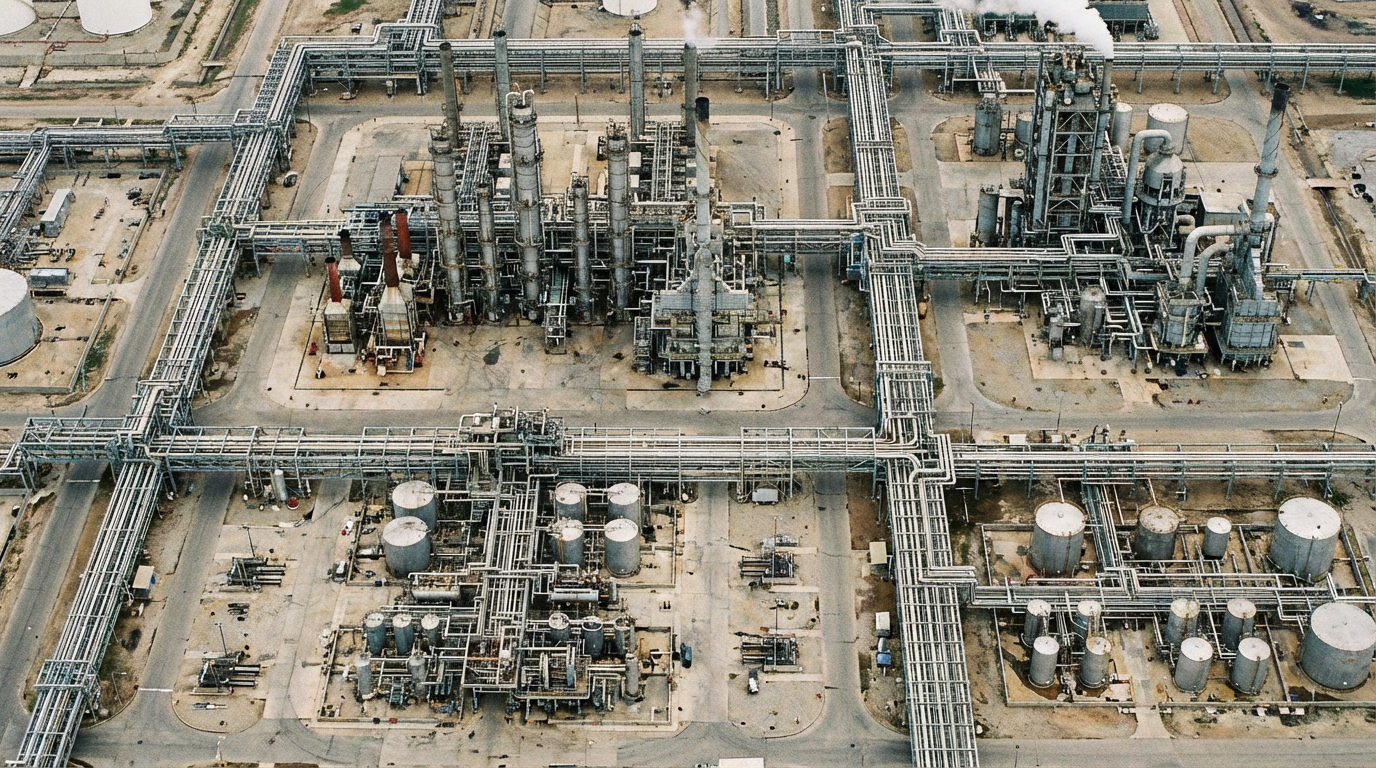
Process plants collect yield, energy, throughput, and quality KPIs but rarely connect them to margin impact in real time, allowing costly deviations to persist for weeks. This article examines how these four measures interact, where improvement gaps hide, and why most KPI frameworks stop at reporting instead of driving economic action. AI optimization closes that distance by linking process data to margin consequences as conditions change, helping teams rank deviations by cost and progress from advisory mode toward closed loop control.
Process plants rarely struggle to collect KPIs. The harder problem is turning those readings into better margin while the plant is running. Most plant operations teams can pull up yield, energy consumption, throughput, and quality metrics by shift, unit, or day. But knowing the numbers and knowing which deviation is costing margin right now are different things.
In naphtha steam cracking alone, the energy performance spread between best and worst performers can reach 58%. That kind of gap doesn't come from one big failure. It accumulates from dozens of small losses in yield, energy intensity, throughput, and product quality that reporting frameworks weren't designed to catch in real time.
AI optimization can close that gap by connecting current operating conditions to the margin effect of each deviation as it happens.
Manufacturing KPIs matter most when they show where margin is slipping while the unit is still running.
The sections below show where those KPI gaps appear and how to close the distance between measurement and margin.
In capital-intensive continuous operations, yield, energy intensity, throughput, and product quality have the clearest influence on financial performance. They connect directly to what the plant makes, what it consumes, and what it can sell.
These measures interact constantly. A plant can protect quality by running conservatively, then give up throughput or consume more energy than necessary. It can push for higher throughput, then lose margin if yield slips or more material falls off spec. The interplay means that optimizing one KPI in isolation almost always creates a hidden cost somewhere else.
Yield shows how much desired output comes from each unit of input. It appears in different forms across process industries, from conversion in a reactor to recovery in a separation train to saleable product from a blending operation. But the basic question stays the same. How much of what the plant feeds in comes out as something it can sell?
Energy intensity matters for cost, competitiveness, and emissions reporting. Many energy efficiency programs still rely on studies done months or years ago. When energy costs change, feed quality shifts, or the plant runs at different rates, actual intensity can drift away from the best achievable level without any clear signal to operators.
Throughput sets revenue capacity and fixed-cost absorption. Even small increases can improve production efficiency because the same fixed costs spread across more output. On-spec rate shows how much production meets specification without rework or discounting, and it ties directly to customer satisfaction and contract compliance.
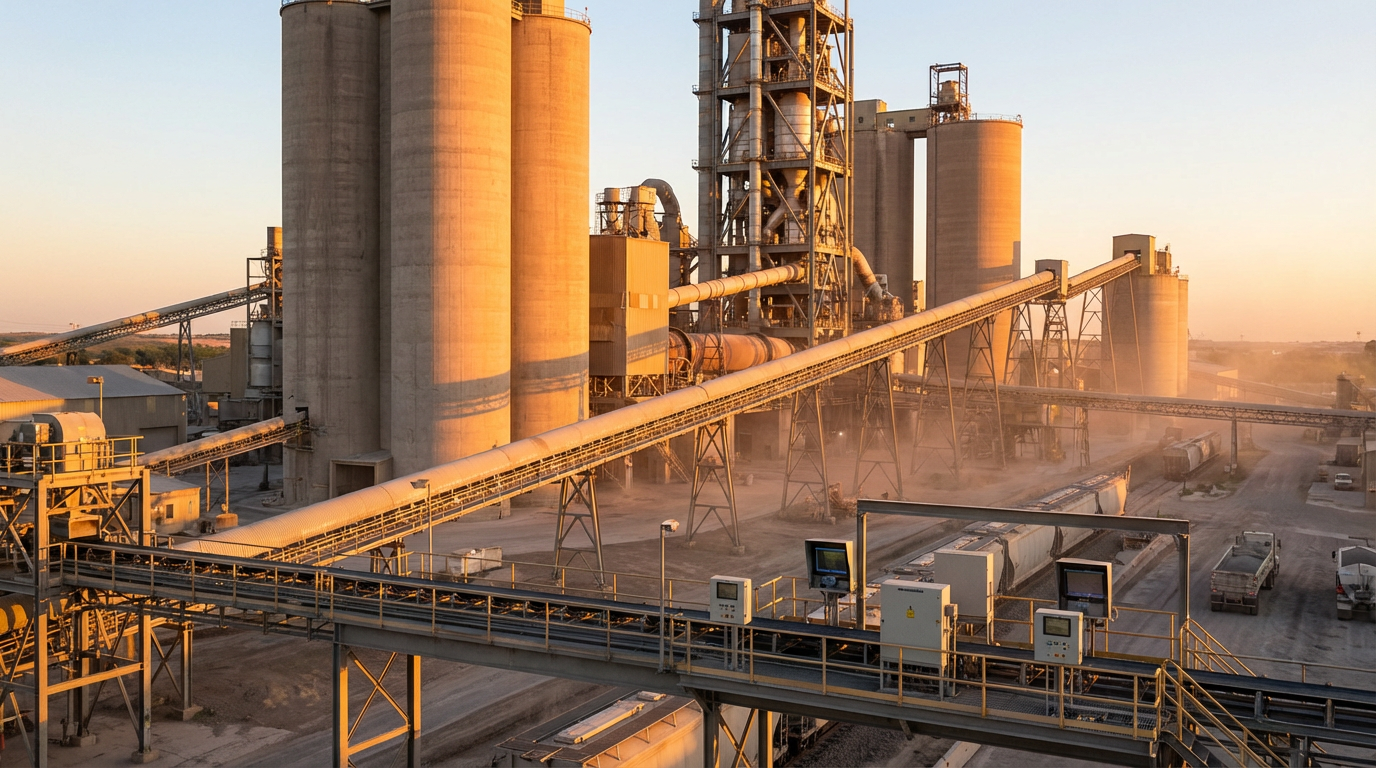
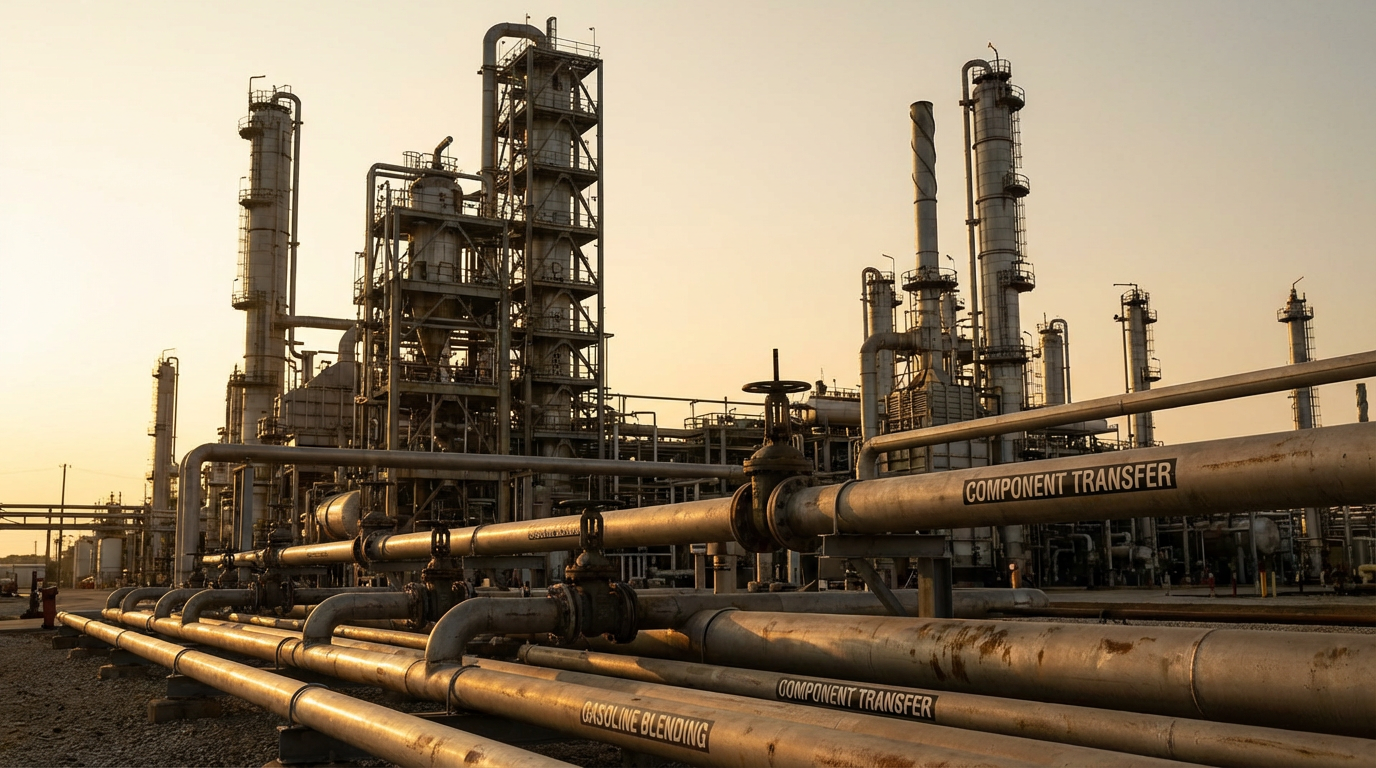
The priority among these four KPIs shifts by industry. A cement plant may weight energy intensity more heavily given fuel costs in pyroprocessing, while a petrochemical operation may focus on yield through a cracking furnace, and a mining operation may prioritize throughput through grinding circuits.
But in every case, these KPIs interact, and optimizing one without visibility into the others creates margin leakage that the KPI framework itself can hide.
The most useful benchmark for any plant isn't a number borrowed from another industry or peer facility. Thresholds developed for discrete manufacturing don't translate well to continuous operations. The more relevant comparison is the gap between current performance and what the plant's own equipment, feed conditions, and constraints can actually support right now.
That achievable envelope changes with feed quality, ambient conditions, equipment health, and dozens of other operating variables. A static benchmark can't capture those shifts, which is where the largest improvement gaps tend to open.
Energy remains one of the clearest examples. Plants can see total consumption, but that doesn't always reveal where current operation has drifted from industrial energy efficiency targets. The gap usually appears after feed conditions change, equipment performance shifts, or operators keep using setpoints based on older assumptions.
In complex units with dozens of interdependent heat exchangers, compressors, and fired heaters, the cumulative drift can represent real cost before anyone flags it.
The same pattern shows up in yield and throughput. Small changes in process conditions, temperature profiles, catalyst activity, or operator responses can erode returns long before monthly reports capture the effect.
Operations teams still manage many of these interdependent variables through experience and heuristics, which works well when conditions match past experience but struggles when they don't.
Quality losses hide in two directions. The obvious one is off-spec production: material that needs rework, blending, or discounting. The quieter one is excess quality margin, where operators hold conditions tighter than the specification requires to avoid a miss.
That conservative buffer can consume extra energy and higher-value inputs without clear manufacturing visibility into the margin cost.
Unplanned downtime is the easiest loss to see, but it isn't always the largest. A KPI framework should show downtime in the same economic context as the yield, energy, and quality losses that accumulate during normal operation. When it doesn't, teams can overweight downtime prevention while larger margin opportunities go unaddressed.
Most KPI frameworks report operating results without linking them to economic consequences in real time. That disconnect is the core problem.
When operators can't see the margin effect of a process deviation, they can't rank corrective actions effectively. The deviation that shows up as a red flag on a dashboard may cost less than the quieter drift happening two units upstream.
A single economic KPI, such as profit per hour, can give the executive suite and the control room a shared view of what's working and what's costing money. Building that view requires connecting process data, economic models, and constraint information in a way that updates as conditions change, not just when someone rebuilds a spreadsheet during the planning cycle.
Most plants still reconcile their KPIs to margin on a monthly or quarterly basis, which means the deviations that matter most for profitability can persist for weeks before anyone quantifies what they cost.
Workforce dynamics compound the problem. The U.S. manufacturing sector could face as many as 1.9 million unfilled positions through 2033 if current workforce challenges persist. As experienced operators retire, the pattern recognition that comes from decades at the board becomes harder to replace.
No AI replaces that depth of expertise, but models trained on actual plant data can preserve the observable relationships between process states and outcomes. That preserved context supports knowledge transfer so newer operators can see how process decisions connect to margin.
The plants that close the gap between measurement and margin treat their KPI architecture as a coordination problem, not just a reporting one. When maintenance, operations, planning, and engineering work from a shared model of plant behavior, they can trace a deviation back to its cause faster.
That matters when planning uses assumptions that no longer match actual throughput, when maintenance defers work that operations needs, or when engineering evaluates a capital project without seeing how the unit is already compensating for a constraint.
A shared model built from the plant's own operating data can serve as the manufacturing data integration layer that connects these functions. Instead of each group working from its own spreadsheet or quarterly report, everyone references the same dynamic picture of what the plant is doing and what it could be doing.
The trust-building path for this kind of integration usually starts in advisory mode. The model recommends actions, and operators decide whether to take them. That setup gives experienced operators room to compare the model's reasoning with what they know from the unit, while newer operators get a clearer view of how good decisions connect to operating conditions.
Advisory mode delivers real value on its own. It provides better visibility into margin drivers, what-if analysis for competing constraints, and improved cross-shift consistency so that the best operating approach doesn't leave with the shift that discovered it.
When operators can see the economic ranking of every deviation on their unit in real time, they spend less time on low-impact adjustments and more on the moves that shift margin. As confidence in the model builds, teams can move toward validated, supervised optimization at their own pace, with operators retaining full authority throughout.
For process industry leaders looking to connect KPI measurement to margin improvement, Imubit's Closed Loop AI Optimization solution offers a path that starts with plant data, not assumptions. The system learns from historical and real-time operations, builds a dynamic model of actual plant behavior, and writes optimal setpoints directly through existing APC and DCS infrastructure. Plants can begin in advisory mode, progress into supervised operation as recommendations prove out, and move toward closed loop optimization as trust develops.
Get a Plant Assessment to discover how AI optimization can connect your KPIs to real-time margin improvement.
Reset baselines around what current equipment and feed conditions can actually support, not around older studies or borrowed thresholds. After feed quality shifts or equipment performance changes, the useful comparison is the gap between current performance and the plant's own achievable envelope. Models built from actual operating data can update that envelope dynamically. That gives plant optimization teams a baseline that moves with the plant.
A shared model gives all four functions one view of plant behavior instead of separate assumptions. Planning may use outdated targets, maintenance may defer work that operations needs, and engineering may evaluate projects without seeing how the unit is already compensating. When teams reference one model, they can trace deviations faster and improve workforce development by making operating knowledge explicit rather than individual.
Excess quality margin becomes costly when operators hold conditions tighter than necessary just to avoid a spec miss. The product stays on spec, but the unit consumes extra energy and higher-value inputs without clear visibility into the margin cost. Better visibility into the relationship between process control settings and economic outcomes often starts in advisory mode, where operators compare recommendations against actual unit behavior before committing to changes.