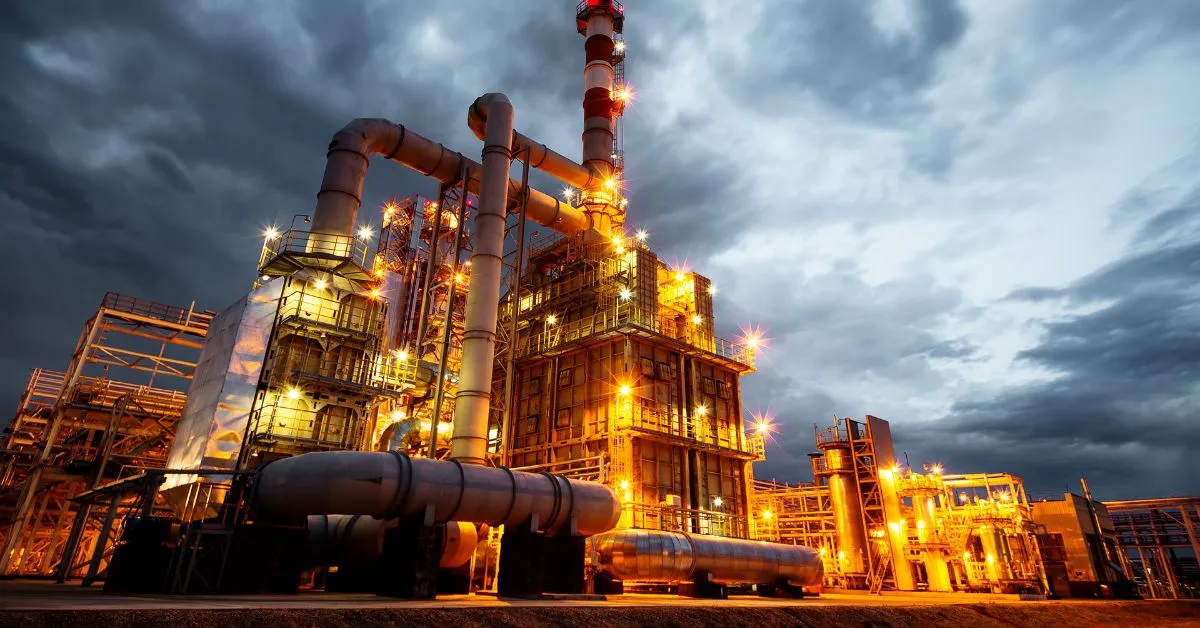
Polyethylene producers face pressure from rising costs and sustainability targets. This article details five ways Industrial AI helps safeguard margins and competitiveness. By optimizing furnaces, compressors, and catalyst activity, AI cuts fuel use and extends equipment life. It also minimizes off-spec production during transitions and stabilizes reactor conditions, delivering measurable profit improvements without costly equipment upgrades.
Rising fuel prices, volatile feedstock costs, and tightening sustainability targets have squeezed polyethylene margins across the globe, making every incremental improvement count. Inside the plant, energy-hungry furnaces and compressors alone can consume 20% to 40% of total production expenses, making energy efficiency a critical factor in profitability.
AI-enabled combustion tuning offers significant opportunities to optimize these energy-intensive systems and reduce operational costs. Quality losses present another challenge: during grade transitions and other transient conditions, production efficiency can suffer substantially, further eroding already tight margins.
Industrial AI is changing this calculus. By learning from historian and live sensor data, modern optimization models continuously adjust critical variables so you can safeguard margins without chasing every disturbance manually. What follows explores five high-impact optimization opportunities that help polyethylene producers meet today’s cost, competitiveness, and decarbonization constraints head-on.
Escalating energy prices leave little room for error in polyethylene operations, especially where steam-cracking furnaces and compressors consume the most fuel and power. Machine learning algorithms analyze years of sensor history to pinpoint the most efficient operating window for each heat-intensive asset.
By continuously trimming firing rates, coil outlet temperature, excess air, and compressor set points, these models cut natural-gas use in furnaces by 15-30 percent. Whenever fouling creeps up, the same analytics flag the coil for cleaning before efficiency starts to slip. They also balance throughput across parallel furnaces and minimize compressor recycling, resulting in fewer kilowatt-hours wasted on keeping gas in circulation.
Catalyst spend can reach tens of millions of dollars per polyethylene line, so every extra campaign day protects your margin. Intelligent optimization keeps that clock running by tracking catalyst activity in real time, learning how fast deactivation sets in, and suggesting set-point tweaks—such as temperature or hydrogen ratio—that can slow the decline. Instead of relying on infrequent lab checks, these techniques link sensor trends to catalyst performance, letting you see the loss of activity hours before conversion drops.
Virtual process models function like a digital twin, testing “what-if” scenarios against feedstock impurities and operating swings, revealing conditions that can stretch catalyst life without sacrificing throughput.
When fresh grades or co-catalysts are under evaluation, machine learning sifts through historical experiments and simulation data to predict activity and selectivity, cutting weeks from trial programs and narrowing the candidate list to the most promising options. This algorithmic approach can surface chemistries that traditional methods might overlook.
Because the same platform keeps learning from every batch, it continually refines reaction parameters, helping catalyst utilization stay high and off-spec product stay low—an immediate boost to EBITDA and a long-term hedge against volatile raw-material costs.
Grade changes are notoriously expensive because every minute of unstable conditions can push product off-spec and eat into margins. Advanced optimization shortens that unstable window by learning how your reactors, extruders, and pelletizers respond when density or melt index targets shift.
By streaming historian and live sensor data into machine learning models, the system correlates temperature, catalyst flow, and pressure patterns with downstream quality metrics. It then forecasts melt index or density minutes before lab sample results arrive, letting you adjust feed ratios or set points while material is still within spec — not after it hits the scrap bin.
Closed-loop optimization keeps updating those set points in real-time, handling disturbances that traditional advanced process control (APC) might miss. Pattern recognition also flags subtle multi-variable drifts that often precede an off-spec event, giving operators the chance to intervene early rather than firefight later.
Small temperature or pressure drifts inside a polyethylene reactor can push melt index or density outside customer specs, turning valuable resin into off-spec scrap. Modern optimization technology keeps the process within its narrow window by streaming historian and real-time sensor data into neural networks that learn the reactor’s nonlinear kinetics and predict future states.
Those predictions feed a reinforcement learning (RL) engine that searches millions of control combinations and automatically selects the settings most likely to hold quality targets while respecting safety limits — all in real-time. Because the models blend pattern recognition with established process knowledge, they function like a digital twin of the reactor, anticipating how any disturbance will propagate.
The result is a closed-loop control cycle that writes optimized setpoints back to the distributed control system (DCS) and continuously self-tunes. Advanced controllers handle unknown dynamics and equipment constraints, maintaining precise temperature and molecular weight control. This approach can deliver tighter quality distributions and measurable throughput improvements, helping plants protect margins while meeting strict customer specifications.
Every unplanned halt compresses your margins. When reliability metrics such as mean time between failures (MTBF), mean time to repair (MTTR), and overall equipment effectiveness (OEE) drift in reactors, compressors, and polymer finishing systems, you face tighter operating windows and higher maintenance spend that directly impacts profitability.
Predictive analytics can help you shift from reactive to proactive maintenance strategies. By continuously analyzing vibration, temperature, pressure, and acoustic signals, these algorithms can spot faint patterns that precede equipment faults, potentially surfacing warnings hours or days before a breakdown occurs. This early detection capability enables you to schedule repairs during planned outages and extend campaign length.
Condition-based monitoring systems can convert raw sensor data into real-time health scores, while automated root-cause analysis reviews years of historian and work-order logs to help uncover chronic issues in critical equipment. An intelligent maintenance platform can help prioritize work orders by risk, ensuring crews address the assets that pose the greatest threat to throughput first.
The five optimization levers explored above work together to protect polyethylene margins on every shift. Plants applying these technologies can trim furnace fuel use by up to 20 percent and uncover hidden capacity without equipment upgrades, all while cutting thousands of metric tonnes of CO₂ each year. Just as critically, tighter control over catalyst activity and grade transitions keeps more product on spec, safeguarding EBITDA even when feedstock prices climb.
These improvements no longer sit in pilot mode. Imubit’s Closed Loop AI Optimization solution now runs plant-wide, learning from historian and lab data in real time and writing optimized setpoints back to the distributed control system (DCS). Because the approach builds on existing sensors and controls, the investment hurdle stays low.
Imubit’s Closed Loop optimization solution offers a data-first approach grounded in real-world operations that delivers measurable margin improvements. Prove the value at your facility today — request your complimentary Plant optimization assessment with Imubit’s industry experts and uncover hidden profit potential.