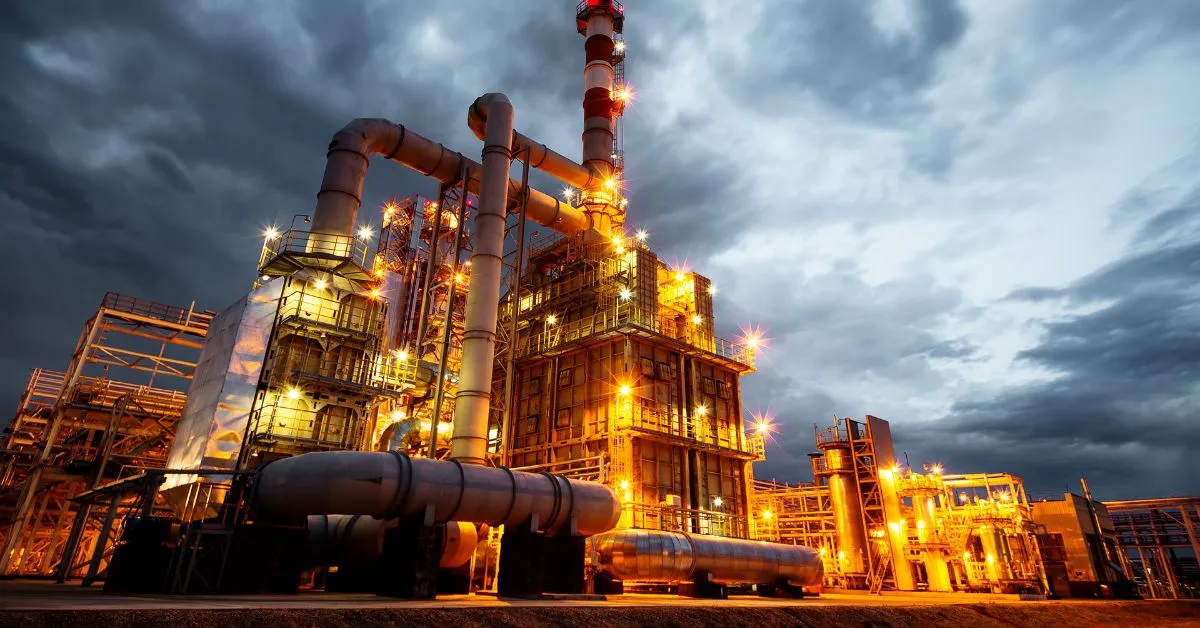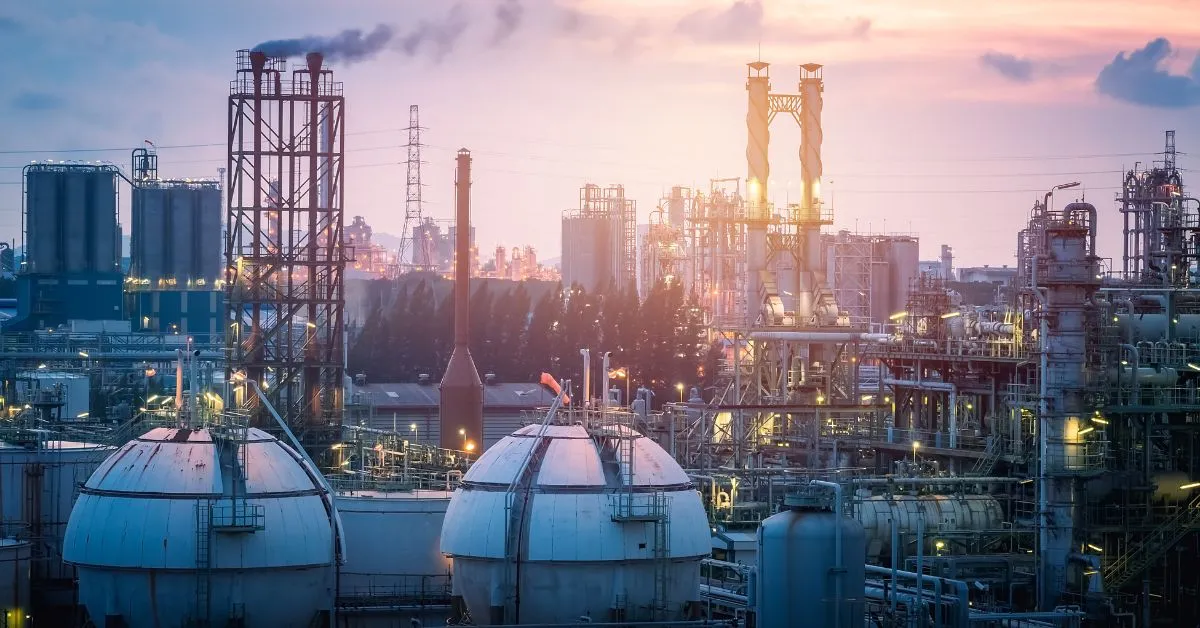
Industrial AI, through Closed Loop AI Optimization (AIO), helps manufacturers overcome challenges like rising energy costs, strict emissions targets, and complex operations. By learning from existing plant data and writing optimized set points in real time, AI solutions improve production, quality, and profitability. This advanced technology provides actionable guidance and predictive maintenance, enhancing overall operational excellence without requiring significant capital projects.
Operations teams face brittle supply chains, rising energy use, and stricter safety limits. New decarbonization mandates demand lower emissions without sacrificing throughput, yet tight budgets leave little room for large capital projects. The result is an industry balancing economic, operational, and environmental constraints simultaneously.
Industrial AI offers a practical escape route by learning from historian data and writing optimized set points to the distributed control system (DCS) in real time. Targeted AI solutions offer process industry leaders a comprehensive framework for operational excellence.
These advanced technologies work together as an integrated system to optimize performance across your entire plant, from reactor management to energy efficiency, delivering measurable improvements in production, quality, and profitability without requiring significant capital investment.
Small excursions in temperature, pressure, or catalyst ratio can turn a high-value product into off-spec waste or create safety concerns. Traditional advanced process control (APC) relies on fixed equations that struggle with the nonlinear behavior of today’s complex reactors, so operators often run conservatively and sacrifice throughput.
A Closed Loop AI Optimization (AIO) model addresses reactor control constraints by learning from your plant’s actual operational data. This approach delivers continuous set point updates through a straightforward but effective process:
The advanced capabilities of modern closed-loop AIO solutions enable operations teams to maintain optimal conditions without constant manual adjustments. These systems process thousands of data points simultaneously, automatically adapt when feed quality fluctuates, and consistently keep reactors operating at peak efficiency levels.
Building on the foundation of real-time data processing, every distillation column, steam header, and cooling tower in your plant generates thousands of data points each second. Industrial AI processes this information continuously, adjusting temperature, pressure, and flow to meet production demand with minimal fuel consumption.
Advanced AI implementations across the process industries have demonstrated improvements in overall energy efficiency, directly reducing both Scope 1 emissions and operating costs.
Traditional energy management relies on static heat-balance calculations and operator experience. AI reveals inefficiencies that stay hidden in conventional approaches; recycle loops that waste steam, valve hunting that burns excess power, and heat-exchanger fouling that forces higher utility consumption.
When these losses appear instantly on control screens, operators can intervene before spikes hit the utility bill. Lower fuel consumption translates directly to fewer greenhouse gas emissions—delivering measurable progress toward decarbonization targets while strengthening profit margins.
Hours pass between taking a sample and receiving lab results, leaving plenty of time for quality to drift. AI closes that gap by continuously analyzing thousands of temperature, flow, and concentration signals to forecast key specifications in real-time.
Deep learning models process these high-dimensional data streams while causal networks isolate the variables that truly drive purity and yield. The algorithm learns non-linear relationships that traditional quality checks miss, so operators see impending deviations long before sample results confirm them.
A quick adjustment to feed ratio or reactor temperature keeps the batch on target and avoids the cascade of downgrades, scrap, and rework that follow an off-spec event. Plants using real-time quality prediction report fewer off-spec lots and higher on-spec throughput. This translates directly into protected margins and steadier customer commitments. When quality stays predictable, operations stay profitable.
Traditional optimization often stops at the boundary of a single reactor or column. When each unit chases its own target, upstream surges can overwhelm equipment and valuable capacity sits idle.
Industrial AI enables zooming out by aggregating data from every unit into a single model, thereby pinpointing inter-unit constraints, balancing feed flow, and scheduling set-point moves that protect the slowest step rather than overdriving the fastest.
The payoff is measurable. AI can deliver 20% to 30% gains in productivity, speed to market, and revenue through incremental value at scale, according to PwC. By surfacing hidden capacity before you invest in new equipment, system-wide coordination grows profits, improves resource utilization, and shortens payback times—benefits that unit-level tuning alone can’t unlock.
Control rooms need clear moves, not more alarms. Industrial AI translates thousands of raw signals into precise set-point suggestions, guiding operators toward optimal performance instead of leaving them to interpret warnings.
Every recommendation comes with driver variables and confidence levels, making the approach fully explainable and dismantling the “black box” stigma. Operators see which pressures, flows, or temperatures led to each conclusion, building trust and speeding adoption.
A virtual plant model functions like a digital twin, doubling as a hands-on simulator for new hires and workforce development. They can rehearse start-ups and grade changes without risking production or safety. With experienced personnel retiring faster than replacements arrive, AI preserves institutional knowledge and delivers it in real time. The result: operators make informed decisions faster, training requirements shrink, and plant-specific expertise remains accessible long after shifts change.
Unexpected equipment failures erode profits faster than almost any other constraint in chemical manufacturing. AI models now monitor vibration, temperature, pressure, and flow signals in real time, learning the normal signature of each pump, compressor, and heat exchanger. When even a faint anomaly appears, often hours or days before a traditional alarm would trigger, the system flags it, letting you schedule a short repair window instead of absorbing a costly, plant-wide shutdown.
These AI models excel at spotting the weak, nonlinear patterns that rules-based monitoring overlooks. By guiding maintenance teams to act only when conditions warrant, it turns scheduled programs into truly condition-based routines. The result is fewer emergency call-outs, extended equipment life, and higher overall equipment effectiveness.
Plants that embed AI into maintenance workflows report productivity improvements of 20% to 30% and a sharp decline in unplanned downtime. Those gains flow straight to the bottom line while reducing safety risks and inventory write-offs that accompany reactive repairs.
AI serves as a pivotal tool for optimizing both supply chains and feedstock management. Real-time data processing enables AI to recommend cost-effective feed blends without compromising product specifications. This capability proves crucial as manufacturers face raw material cost variability and demand uncertainties.
Machine learning models predict disruptions caused by trade fluctuations, geopolitical events, or logistical delays, allowing companies to mitigate these risks proactively. By processing vast data points, AI facilitates dynamic pricing models that adjust product prices based on input costs, demand trends, and competitor actions, ensuring alignment with current market conditions.
This approach extends beyond immediate cost savings or operational improvements. It builds greater resilience and agility into supply chains, essential elements in an unpredictable market environment.
By leveraging these advanced capabilities, manufacturers are better equipped to tackle the challenges and seize opportunities inherent in contemporary global markets.
AI helps you create a virtual model of your plant, an AI-enhanced replica that mirrors real-time operating data and keeps learning every second. By fusing historian tags, sensor feeds, and first-principles constraints, this model lets you explore scenarios that would be risky or impossible on the actual system. The result is a safe playground where you can probe “what-if” questions about feed shifts, new catalysts, or tighter emissions limits without exposing equipment or margins.
Simulations capture and preserve your “golden batches“—those exceptional production runs that achieved optimal quality, yield, and efficiency. Once identified, these golden batch parameters become replicable templates that operators can follow to consistently reproduce peak performance conditions.
The AI model learns the precise combination of temperature profiles, pressure curves, feed ratios, and timing that made these batches successful, then guides future operations to replicate those exact conditions.
Virtual experimentation also breaks down organizational silos. Operations, engineering, and commercial teams can co-review simulated runs, agree on the optimal path forward, and implement changes with confidence.
Plants using AI-driven simulation report faster debottlenecking cycles, fewer off-spec excursions, and measurable progress toward environmental and efficiency targets; all without the investment and downtime that physical trials demand.
Closed Loop AI Optimization (AIO) keeps reactors on target, trims power waste, forecasts specification drift before off-spec production appears, and coordinates entire systems for higher throughput, all while giving front-line operations clear, explainable guidance. When the same data-driven intelligence detects asset anomalies early and steers feedstock choices in real time, unplanned shutdowns fall and working capital tightens.
These improvements are achieved by learning from existing historian and DCS data, not by commissioning new equipment, so the hurdle rate must overcome only the modest investment in analytics infrastructure.
Imubit’s Industrial AI Platform already has more than 100+ applications deployed worldwide, proving these results at scale. To see how a plant-specific model could unlock similar value, request a Complimentary Plant AIO Assessment and explore what closed-loop intelligence can deliver for your operations.