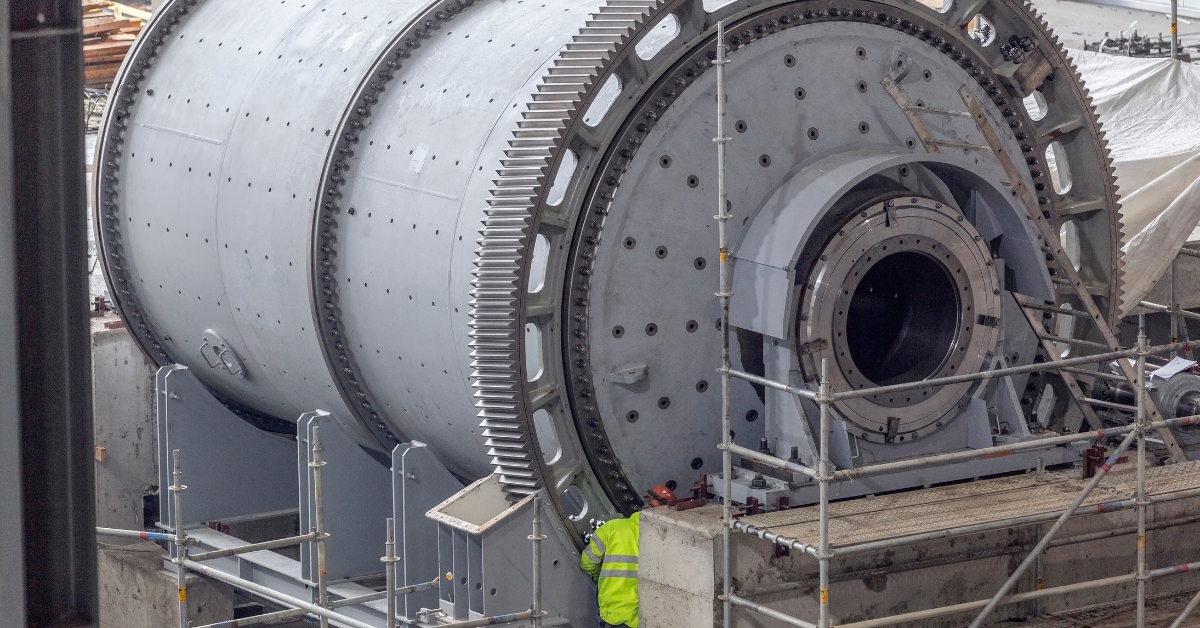
Grinding operations consume substantial energy in mineral processing facilities. According to CEEC research, comminution represents the single largest electricity user in most mineral operations. This concentration of energy demand creates both a constraint and an opportunity for operations leaders: reduce costs while maintaining throughput and product quality.
The fundamental constraint lies in grinding’s inherent complexity. Traditional control systems struggle to optimize this process because they rely on fixed setpoints and reactive adjustments that cannot adapt to constantly changing ore characteristics, equipment conditions, and operational constraints.
Closed Loop AI Optimization changes this equation by continuously learning from operational data and adjusting control strategies in real time to capture efficiency improvements that conventional methods cannot achieve.
Why Traditional Grinding Control Falls Short
Conventional grinding control relies on predetermined setpoints based on historical averages and operator experience. While effective for basic operation, this approach creates several optimization gaps that compound over time.
Fixed Setpoint Limitations
Traditional control systems use static parameters that cannot respond to ore variability. When ore hardness shifts throughout the day (a common occurrence in mineral processing operations), conventional systems continue operating at the same mill speed, feed rate, and grinding pressure. This inflexibility means plants either over-grind during easier conditions, wasting energy, or under-grind during challenging periods, reducing throughput.
Delayed Feedback Loops
Laboratory sampling cycles typically require hours to provide particle size analysis. By the time operators receive quality data, thousands of tons of material have already been processed under suboptimal conditions. This delay prevents proactive optimization and forces reactive corrections that create additional process variability.
Single-Variable Focus
Traditional advanced process control (APC) optimizes individual equipment units independently. But grinding circuits are interconnected systems where upstream operations directly affect downstream performance. Optimizing a single mill in isolation misses the broader opportunity to balance trade-offs across the entire circuit.
Operator Variability
Even experienced operators make different optimization decisions based on their individual expertise and comfort levels. This variability leads to inconsistent process performance across shifts and limits plants’ ability to maintain optimal efficiency around the clock.
Laboratory delays mean thousands of tons processed under suboptimal conditions before operators can respond.
How AI Transforms Grinding Operations
Closed Loop AI Optimization addresses these fundamental limitations through AI models that continuously analyze process data and adjust control parameters in real time. Rather than relying on predetermined setpoints, these solutions learn the optimal operating conditions for current ore characteristics and equipment status. This represents a significant evolution in AI-driven mineral processing.
Dynamic Parameter Adjustment
AI models process real-time sensor data including mill power draw, motor current, bearing pressure, feed rates, and particle size measurements. When ore hardness changes, the optimizer can automatically adjust mill speed, feed rate, and water addition within defined safe operating envelopes to maintain optimal grinding efficiency.
This eliminates the need for delayed laboratory confirmation by using predictive models that forecast optimal conditions before deviations occur.
Predictive Process Control
AI models provide prediction horizons that allow the technology to anticipate process changes and adjust parameters proactively. This predictive capability can significantly reduce process variability compared to conventional PID controllers, enabling plants to operate closer to optimal conditions more consistently.
Circuit-Level Optimization
AI optimization solutions can simultaneously optimize multiple interdependent variables while respecting operational constraints. Rather than adjusting mill speed alone, these solutions coordinate changes across feed rate, water addition, classifier speed, and grinding pressure to achieve measurable system-level improvements.
Optimizing entire grinding circuits rather than individual equipment units typically yields greater benefits than optimizing units in isolation.
Continuous Learning
Unlike static control logic, AI models improve their ability to optimize grinding performance as conditions change. Periodic model updates using accumulated operational data enable adaptation to process changes and equipment evolution, maintaining performance improvements as plant-specific characteristics become better understood.
How AI Delivers Measurable Energy Savings
AI optimization solutions deliver energy savings through four primary mechanisms that work together to capture efficiency improvements conventional methods cannot achieve.
Eliminating Overgrinding
Overgrinding represents one of the largest sources of energy waste because grinding energy increases exponentially with decreasing particle size. AI solutions can reduce overgrinding through precise management of residence time and grinding intensity, ensuring materials achieve target specifications without excessive size reduction. Any reduction in unnecessary fine grinding translates directly to lower energy costs in mining.
Optimal Load Management
Both underloading and overloading mills result in higher specific energy consumption per ton. AI technology uses load prediction models that enable proactive feed rate adjustments before suboptimal conditions develop. These solutions can maintain grinding circuits within peak efficiency windows while maximizing both energy efficiency and throughput.
Reduced Process Variability
Reduced variability translates to energy savings because the process spends less time in transitional states and requires fewer corrective actions. Plants spend more time in optimal operating zones and require fewer corrections that temporarily reduce efficiency.
Circuit-Level Coordination
Multi-objective optimization balances trade-offs between throughput, energy consumption, and product quality across the entire circuit. According to McKinsey’s analysis of AI in industrial processing, advanced optimization can deliver meaningful production increases and profitability improvements, with energy efficiency gains contributing significantly to these results.
Operational Benefits Beyond Energy
While energy reduction drives initial investment justification, AI optimization delivers value across operations to reduce mining processing costs across multiple dimensions.
Throughput Improvements
Beyond energy savings, documented industrial implementations have achieved meaningful capacity utilization gains through optimized feed rates and circuit coordination. These capacity gains defer the need for new grinding mill installations, which typically represent significant capital projects in large operations.
Product Quality Consistency
AI-driven real-time process adjustments can maintain particle size distributions more consistently than traditional feedback systems. This improved consistency reduces production variability, maintains tighter adherence to product specifications, and improves downstream recovery while reducing costly rework and waste from off-spec material.
Maintenance Cost Reductions
Continuous optimization reduces equipment stress and extends asset life. AI technology that continuously adjusts operational parameters can achieve meaningful reductions in maintenance costs and unplanned downtime through condition-based strategies enabled by predictive analytics.
Ask yourself: what would meaningful reductions in grinding energy mean for your annual operating budget? What about increased throughput from existing assets without capital investment?
Getting Started Without Disrupting Operations
Successful AI optimization requires structured implementation approaches that prioritize operational stability while building organizational confidence in the technology.
Phased Deployment
Implementation typically advances through progressive phases: advisory mode where AI provides recommendations, supervised automation where AI adjusts non-critical parameters within safety boundaries, and full closed loop optimization after demonstrating prediction accuracy across multiple operating cycles. This progression prioritizes operational stability and validated performance benefits.
Integration with Existing Infrastructure
AI solutions integrate with existing control infrastructure through industry-standard protocols to enable secure data exchange between optimization layers and legacy systems without requiring replacement of existing equipment or compromising safety interlocks. Initial deployments operate in advisory mode where AI recommends setpoints that operators approve, which ensures safety interlocks remain operational and operators retain override authority at all times.
Change Management
Success requires early operator involvement, comprehensive training, and clear communication about how AI augments rather than replaces operator expertise. Operators will build trust in the technology after witnessing consistent, demonstrable performance improvements over months of parallel operation.
How Imubit Unlocks Value in Grinding Technology Optimization
For process industry leaders seeking sustainable efficiency improvements while maintaining operational reliability, closed loop AI represents a proven approach with documented ROI. The combination of energy cost savings, production capacity increases, extended equipment life, and product quality consistency creates compelling returns that justify implementation investment.
Imubit’s Closed Loop AI Optimization solution continuously learns from plant and lab data to build dynamic models of grinding operations. The technology writes optimal setpoints to the control system in real time and adapts to changing ore characteristics and equipment conditions without human intervention, all while maintaining safety boundaries and operator override capability.
Get a Plant Assessment to identify specific energy savings and operational improvements available through AI optimization of your grinding operations.