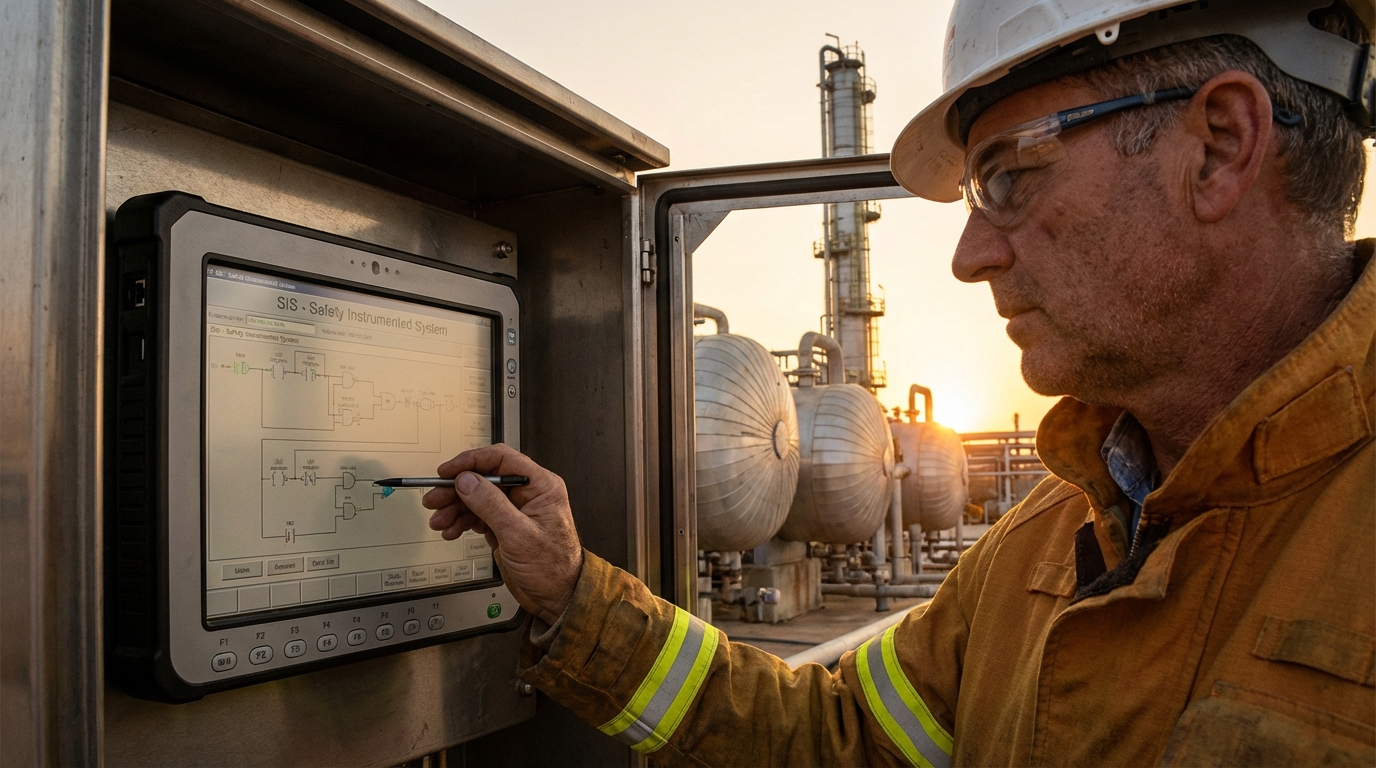
When an experienced shift supervisor retires, decades of intuition about how equipment sounds before it fails walks out the door with them. The pressure relief valve that “always sticks a little in winter.” The pump that vibrates differently when bearing wear accelerates. The subtle pattern in alarm sequences that signals a developing upset rather than a nuisance condition.
According to Deloitte, a significant share of process industry leaders cite the inability to attract and retain skilled employees as a leading business constraint. For operations leaders in refining, chemicals, and other continuous process environments, the question is no longer whether to modernize safety programs, but which practices will close the knowledge gap before the next process upset.
Regulatory expectations for process safety management continue to tighten, with increasing emphasis on demonstrating continuous improvement in hazard identification and control. The four practices outlined here address this dual pressure by shifting safety programs from reactive response to predictive prevention. Each practice delivers value independently, but the greatest returns come from combining them into a coordinated approach that builds organizational capability over time.
TL;DR: Industrial Safety Best Practices That Prevent Incidents
Process plants can strengthen safety outcomes by shifting from reactive inspection to predictive, continuous monitoring that catches problems before they become incidents.
Why Traditional Safety Approaches Fall Short
- Manual inspection creates blind spots because equipment degrades faster than inspection cycles can detect
- Alarm floods during upsets can reach dozens of simultaneous alerts, overwhelming operators when accurate decisions matter most
- The most experienced operators develop mental models for filtering signal from noise, but that capability leaves when they retire
Phased Implementation That Builds Operator Trust
- Advisory mode establishes data infrastructure and validates model accuracy before expanding to autonomous control
- Operators retain override authority and define the boundaries within which systems operate
- Organizations see meaningful returns from advisory mode alone, without requiring progression to closed loop
Here’s how to put these practices into action.
Why Traditional Safety Approaches Fall Short
Traditional safety programs struggle with modern process complexity because they rely on periodic inspections, scheduled maintenance, and human vigilance during high-stress situations.
Manual inspection creates blind spots. McKinsey research shows how digital twins and continuous sensor data reveal performance issues earlier than periodic approaches. In facilities operating under high pressures and elevated temperatures around the clock, human inspectors cannot maintain continuous visibility into equipment health. A heat exchanger develops fouling between quarterly inspections. A control valve drifts out of calibration between annual checks. These conditions create safety exposure during intervals when no one is watching.
Human cognitive limits compound these constraints during process upsets. BCG research documents how human error, including operator mistakes, communication breakdowns, fatigue, and cognitive load, significantly impacts safety outcomes. During upsets, alarm floods can reach dozens of simultaneous alerts, overwhelming operators precisely when accurate decision-making matters most. The most experienced operators develop mental models for filtering signal from noise, but that capability leaves with them when they retire.
These limitations create the case for practices that supplement human judgment with continuous, predictive monitoring.
Continuous Monitoring Over Periodic Inspection
Equipment degradation accelerates faster than inspection cycles can detect. This creates windows where emerging failures go unnoticed.
A pump showing early bearing wear creates subtle vibration signatures days before failure. A pressure relief valve develops sticking behavior that worsens gradually. A heat exchanger loses cooling capacity as fouling builds. Under periodic inspection, these conditions progress unchecked until the next scheduled maintenance window, potentially weeks away. Continuous monitoring catches these patterns between rounds.
IoT sensors provide real-time data feeds across temperature, pressure, vibration, and other parameters that signal equipment health. These monitoring systems detect anomalies that precede both safety incidents and equipment failures, sometimes days or weeks before problems become visible to operators or trigger traditional alarm thresholds.
Consider a compressor showing subtle vibration pattern changes. Under periodic inspection, this condition might progress undetected until the next scheduled check. Continuous monitoring flags the anomaly within hours. This enables intervention before the condition escalates to a failure that could release hazardous materials or create emergency conditions.
Effective implementation requires three components: sensor infrastructure must cover critical equipment with appropriate measurement frequency; data integration must flow into systems where operators and engineers can act on alerts; and alert thresholds must be tuned to plant-specific conditions to avoid false positives that erode trust in the system.
The practice delivers value even before implementing predictive analytics by reducing the visibility gaps that periodic inspection creates.
Predictive Maintenance Before Reactive Response
Predictive maintenance targets interventions precisely when degradation patterns indicate approaching failure, preventing the equipment failures that create safety incidents.
Traditional maintenance either responds after equipment fails or follows fixed time-based schedules that don’t account for actual equipment condition. Predictive maintenance uses historical patterns to anticipate failures before they occur. The safety implication is direct: equipment failures in process environments can release hazardous materials, create fire or explosion risks, or force emergency shutdowns that introduce their own hazards.
Industry case studies of predictive maintenance report significant reductions in unplanned downtime through early anomaly detection. When interventions do occur, mean time to repair decreases because maintenance teams arrive prepared for the specific issue rather than diagnosing on arrival.
Implementation requires historical data to train predictive models on plant-specific failure patterns. Most facilities already collect sufficient data through existing sensors and historians. The practice can begin with available data and improve accuracy iteratively as the system learns which patterns reliably precede failures in specific equipment and operating conditions.
Preventing equipment failures also prevents the process upsets and emergency conditions that create safety incidents.
Cognitive Support During Process Upsets
AI-driven classification reduces cognitive overload during high-stress situations. This helps operators focus on root causes rather than alarm noise.
When process upsets trigger cascading alarms, operators face the difficult task of processing dozens of simultaneous alerts while making rapid decisions that affect safety. BCG research shows AI and digital tools enable operators to use real-time data and advanced analytics to identify issues, optimize corrective actions, and improve communication. Rather than processing dozens of alarms simultaneously, operators receive prioritized recommendations that focus attention on what matters most.
Traditional alarm systems present every alert with equal urgency. AI-driven classification analyzes alarm patterns in real time, distinguishes likely root causes from downstream effects, and surfaces candidate interventions most likely to stabilize the process. This shifts alarm response from reactive firefighting to systematic problem-solving.
Effective cognitive support requires careful design of the human-AI interface. The system must surface critical information first, suppress nuisance alarms that distract from genuine issues, and present recommendations in formats operators can quickly evaluate. The goal is augmenting operator decision-making, not replacing it.
This practice delivers particular value during shift transitions and for less experienced operators who may not have encountered specific upset conditions before. By providing context and recommendations based on historical patterns, cognitive support bridges the knowledge gaps created by workforce turnover. Organizations facing the manufacturing skills gap find that cognitive support accelerates time-to-competence for new operators while preserving institutional knowledge that would otherwise leave with retiring staff.
Phased Implementation That Builds Operator Trust
Attempting to deploy advanced safety systems all at once typically fails because operators have not developed confidence in the technology and organizations have not built the supporting processes.
Phased implementation follows a defined progression. Advisory mode comes first: the system monitors conditions and generates recommendations, but all actions require human approval. This phase establishes data infrastructure, validates model accuracy against plant-specific conditions, and gives operators direct experience with system recommendations. Organizations should define clear success criteria for this phase, such as recommendation accuracy rates and false positive frequency, before advancing.
As confidence builds, supervised autonomy expands capability. The system acts autonomously within strictly defined parameters, with human oversight reserved for exceptions. Organizations should document precisely which conditions permit autonomous action and which require human approval. Simulation environments enable validation of autonomous capabilities in simulated scenarios before deployment on production systems.
Even for fully autonomous process optimization, organizations must maintain instant human intervention capability and continuous validation of system decision quality. Operators retain override authority and define the boundaries within which the system operates.
Advisory mode alone delivers enhanced visibility, faster troubleshooting, and improved shift-to-shift consistency. Organizations see meaningful returns from advisory mode without requiring progression to closed loop operation.
Measuring Safety Performance
Leading indicators provide earlier signals of safety performance than waiting for incident statistics to change.
Process safety management frameworks aligned with OSHA PSM emphasize both lagging indicators (incident rates, severity) and leading indicators that signal emerging risk before incidents occur. Leading indicators include near-miss frequency, time between anomaly detection and intervention, percentage of maintenance activities that are predictive versus reactive, and operator response time to critical alerts.
Tracking these metrics reveals whether practices are working. Initial improvements often come from continuous anomaly detection that identifies risks human inspectors miss between scheduled intervals. Deeper improvements develop as the system learns plant-specific patterns and operators gain confidence in system recommendations.
Integrating safety metrics into overall equipment effectiveness frameworks connects safety performance to operational performance in a unified view. Many organizations report measurable improvements within the first few months of deploying AI-driven safety monitoring.
Strengthening Safety While Protecting Margins
For operations leaders seeking to strengthen safety performance while addressing workforce constraints, these four practices provide a structured path forward. Each practice delivers value independently, and combined they create a comprehensive approach to predictive safety management.
Imubit’s Closed Loop AI Optimization solution supports each of these practices by learning from plant data to detect anomalies, predict failures, and optimize operations in real time. For safety applications, most organizations begin in advisory mode, building operator confidence through demonstrated accuracy before expanding to autonomous interventions within defined parameters. Plants progress toward closed loop operation as trust builds.
Get a Plant Assessment to discover how AI optimization can strengthen your safety performance while protecting operational margins.
Frequently Asked Questions
How long does it typically take to see safety improvements from AI-driven monitoring?
Organizations implementing continuous monitoring and predictive maintenance typically report measurable improvements within the first few months of deployment. Initial improvements come from anomaly detection that identifies risks between scheduled inspection intervals. Deeper improvements in predictive capabilities develop as systems learn plant-specific patterns. This enables prevention of failures before they create safety events or unplanned downtime.
Can AI-driven safety practices integrate with existing distributed control systems?
AI-driven safety practices integrate with existing distributed control systems (DCS) rather than replacing them. The technology operates as an optimization layer above current infrastructure, sending recommendations through established communication pathways while maintaining all existing safety interlocks and operator override capabilities. This approach preserves existing control system investments while adding predictive capabilities.
What data infrastructure is required to implement predictive safety monitoring?
Effective implementation requires historical process data from plant historians covering temperature, pressure, flow, vibration, and equipment health measurements across normal and upset conditions. Most facilities already collect sufficient data through existing sensors and monitoring infrastructure. Plants can begin with available plant data and improve data quality iteratively as systems identify gaps and calibration opportunities.