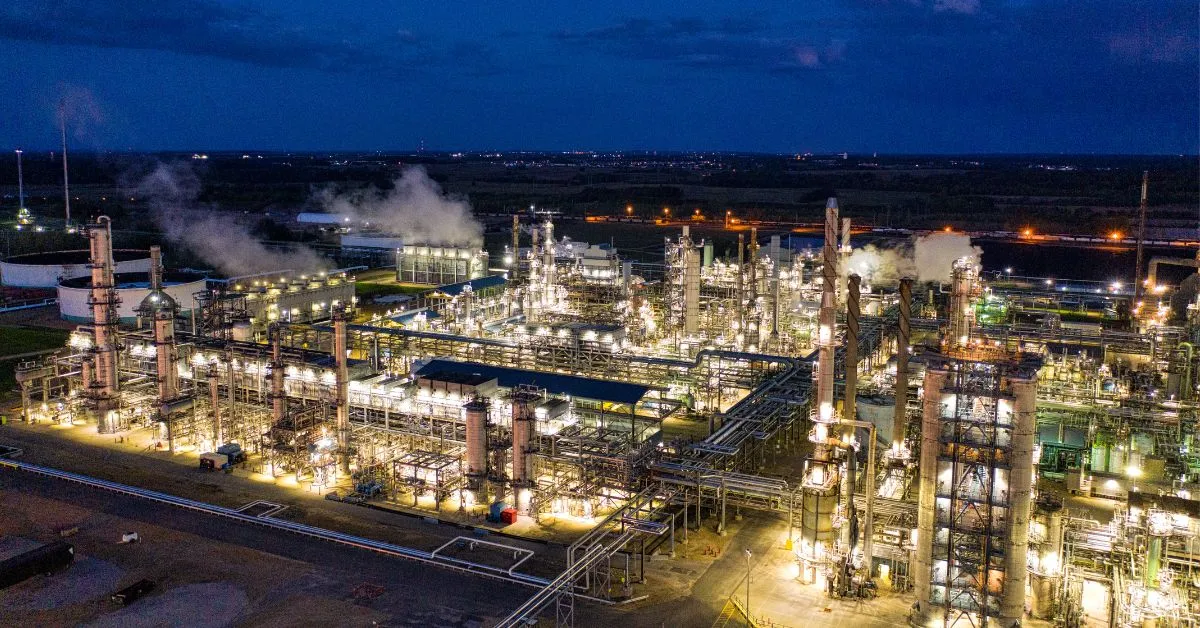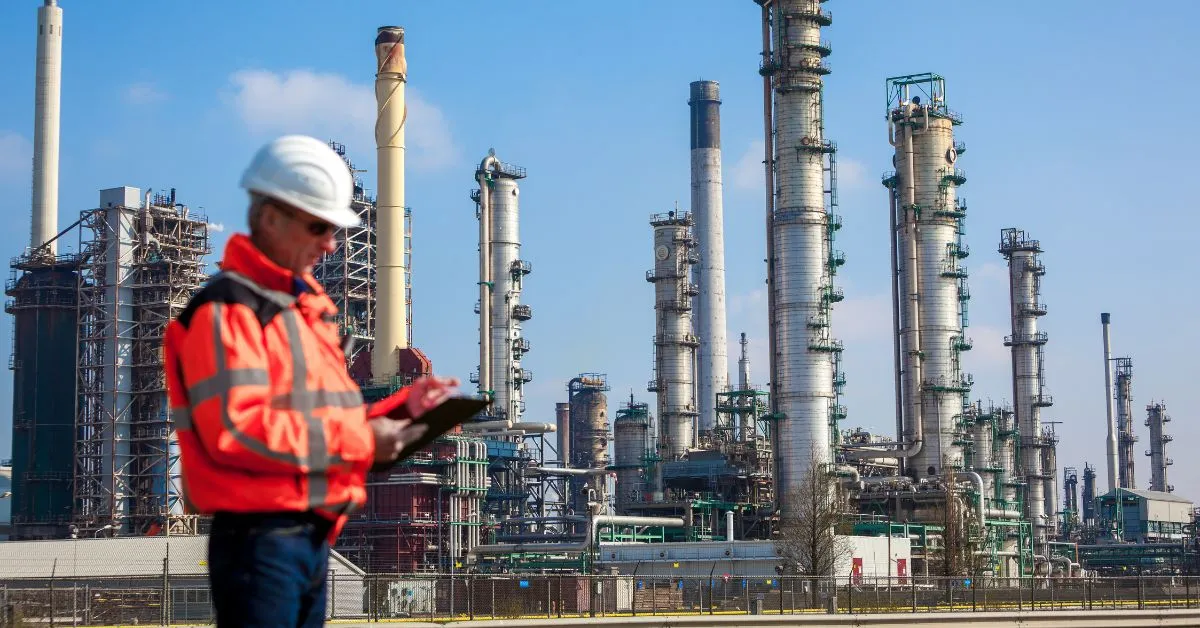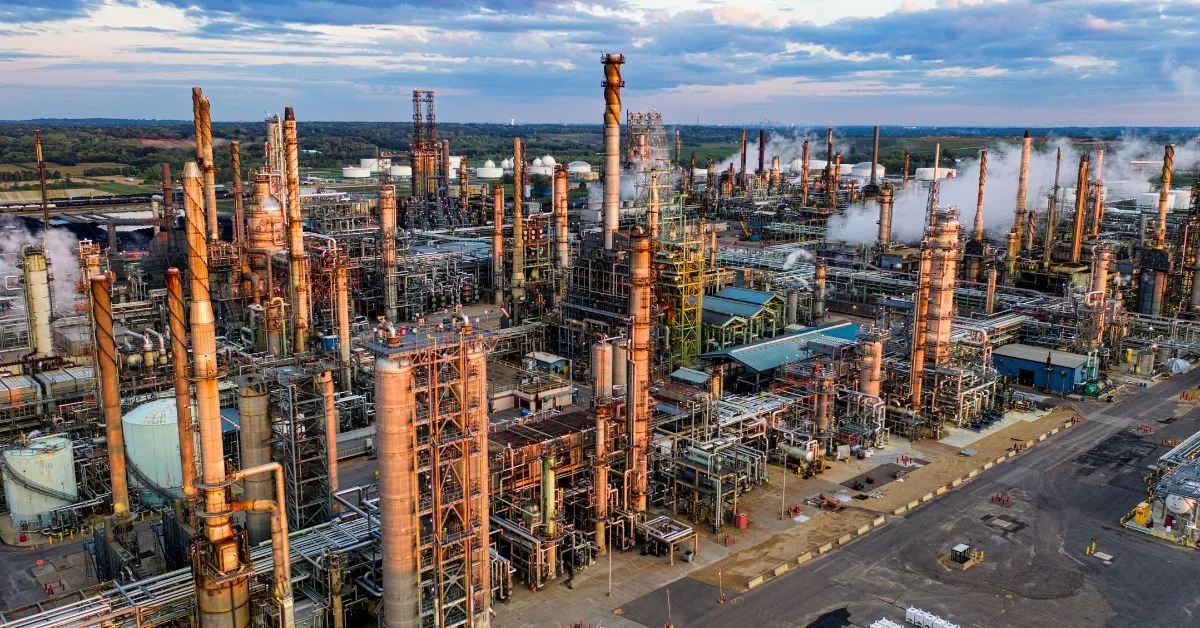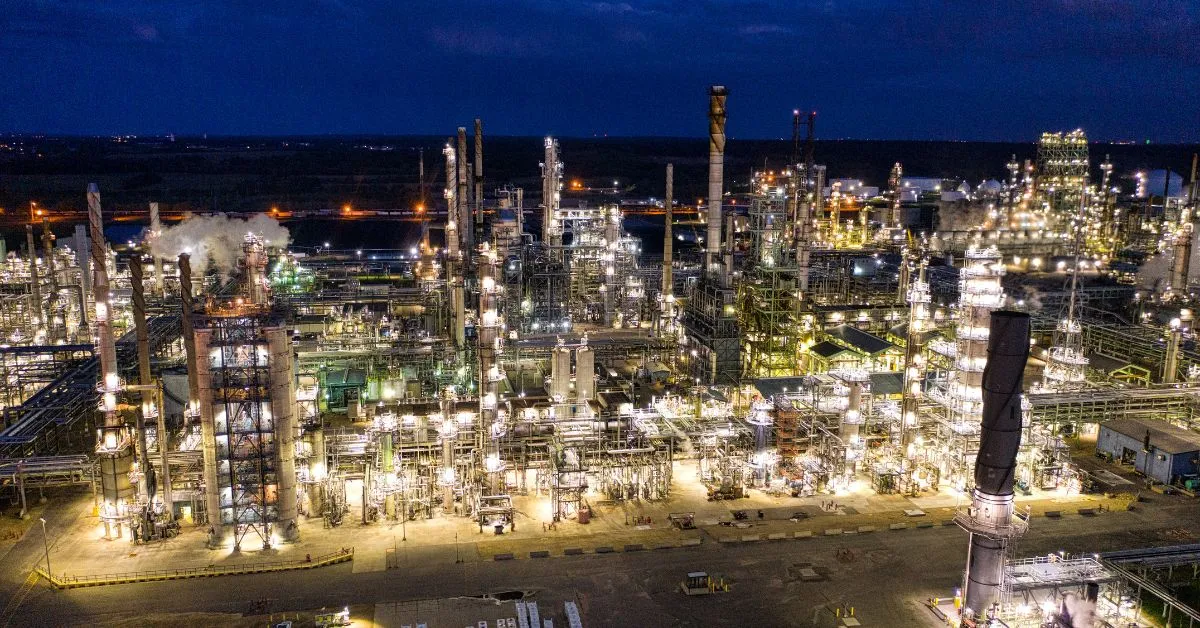
Refiners are facing severe margin collapses, making operational efficiency critical. This article highlights five ways industrial AI offers immediate survival and long-term advantage. AI solutions enhance energy management, optimize real-time process control, streamline supply chain logistics, improve safety and risk mitigation, and enable predictive maintenance to prevent costly downtime. Adopting these AI strategies is essential for maintaining competitiveness and profitability.
The downstream industry faces unprecedented economic headwinds that transform operational excellence from aspirational to existential. Refining margins have collapsed dramatically in 2024, with the WTI–US Gulf Coast crack spread dropping approximately 83 percent year-over-year by September. With margin pressure projected to continue through 2025, refiners now confront difficult decisions about capacity rationalization that will reshape the competitive landscape.
Energy already ranks among the largest operating expenses on every barrel you run, so inflated fuel, steam, and power costs cut even deeper into profitability. The path forward requires embracing advanced optimization technologies to maintain competitiveness in this constrained market.
Meanwhile, downstream operators embracing industrial AI are widening the gap. Artificial intelligence delivers critical advantages across energy management, real-time operations, supply chain, safety, and maintenance, helping you protect margins while meeting demanding reliability and emissions targets.
Digital transformation has evolved from a future aspiration to an immediate survival strategy. Forward-thinking refiners are deploying comprehensive AI solutions that work in concert to address the most pressing operational constraints.
From energy optimization to predictive asset health monitoring, these integrated technologies create a multiplier effect, each reinforcing the others to deliver sustainable performance improvements across the entire value chain.
The most successful implementations focus on quick wins that build momentum while establishing the foundation for long-term competitive advantage in a permanently altered market landscape. Let’s review five ways AI technology is able to make this possible.
With crack spreads collapsing 83% year-on-year by September 2024, energy has become the most expensive raw material in your plant’s balance sheet. Every extra megawatt saved now feeds straight to the bottom line.
Advanced machine learning analytics process years of historian data alongside live sensor streams, continuously tuning furnace firing, column ΔT, pumparounds, reflux, and side-draw balance. When a closed-loop artificial intelligence system connects to the distributed control system (DCS), it writes optimal setpoints in real time and delivers measurable KPI improvements within weeks.
Because the optimizer learns plant-specific behavior, gains accumulate quickly. Most projects reach cash-positive status in well under twelve months, delivering immediate relief when margins matter most.
Building on energy optimization success, fuel, steam, power, and flaring all rise when setpoints drift from their economic sweet spot. Machine learning-enhanced advanced process control (APC) layers data-driven optimizers on top of your distributed control system, continuously learning from historian data to hold units at energy-optimal conditions.
By writing setpoints directly or advising operators, the optimizer anticipates feed swings and ambient changes, trimming variability and cutting energy intensity within weeks of activation. Nonlinear predictive models, following established process control hierarchy principles, capture complex interactions between variables and constraints that traditional linear APC misses.
Multi-objective optimization balances energy, product quality, and emissions costs, ensuring higher margin capture without sacrificing compliance. Because the intelligent optimization solution augments rather than replaces existing controls, deployment fits neatly into established safety governance.
Operators maintain override authority, yet many report that “testing” the optimizer quickly becomes a game they rarely win; the system persistently keeps the plant closer to its economic optimum. This link between human expertise and closed-loop intelligence accelerates acceptance while delivering sustained energy savings and throughput improvements.
Flattening U.S. fuel demand is tightening working-capital budgets across terminals and retail networks, making accurate downstream forecasting more critical than ever. Machine learning techniques ingest sales history, terminal liftings, macroeconomic indicators, weather, and even local events to predict grade-level demand with far less manual tuning than traditional spreadsheets.
With clearer visibility into expected drawdowns, planners can set safety stocks and reorder points that keep stations supplied without tying up excess product, reducing the risk of dry runs that plague distribution networks.
Logistics optimization engines build on these forecasts, delivering multiple benefits:
Beyond bulk movements, intelligent systems support high-margin decisions in real time. Blending optimizers trim research octane number or sulfur giveaway, dynamic routing steers finished barrels to the most profitable terminals, and live tanker ETA feeds allow refineries to adjust unit rates before ships reach the dock.
These capabilities deliver faster price responses, leaner inventories, and fewer stockouts—advantages that become decisive as demand volatility, work-from-home travel patterns, and complex product-grade requirements reshape the downstream landscape.
Safety is the boundary you never cross in downstream operations, yet complex systems make hazards hard to spot until they become problems.
Intelligent systems close that gap by processing data from sensors, historian tags, work orders, and incident logs to build models that learn normal behavior and flag early changes.
Computer vision extends that vigilance across your facility. The following technologies enhance safety monitoring throughout your operations:
When vibration patterns shift on critical pumps or pressure differentials trend upward in columns, anomaly detection raises alerts hours before equipment trips, allowing controlled intervention rather than emergency shutdowns.
Unplanned outages at a refinery can burn through more than $1 million every day, so waiting until equipment fails is no longer an option. By shifting from fixed-interval checks to machine learning-enabled condition monitoring, you detect early warning signs and schedule repairs before a fault snowballs into a shutdown.
Advanced analytics absorb vibration, temperature, pressure, flow, and electrical signals, compare them against learned “healthy” patterns, and flag anomalies hours—or even days—before a trip.
AI advisors and digital twins add another layer of protection by letting you test “what-if” repairs or loading scenarios without touching live equipment. The financial payoff extends across your most critical assets, including rotating equipment like pumps, compressors, and turbines; heat exchange networks, including condensers and coolers; fired equipment such as furnaces and heaters; and electrical systems covering motors, drives, and switchgear.
Across these assets, you raise Overall Equipment Effectiveness, push availability closer to 100%, and keep production flowing when markets are tight.
Downstream plants adopting industrial artificial intelligence now position themselves ahead of competitors facing the sharp margin squeeze following the roughly 83% year-on-year collapse in WTI–US Gulf Coast crack spreads. These five innovations work together to reduce energy intensity, increase throughput, and minimize incident risk.
The urgency continues mounting: persistent margin compression, potential capacity rationalization, tighter emissions rules, and a wave of retirements threaten continuity of expertise. Leading process industry leaders are expanding successful pilots into plant-wide deployments with optimization specialists.
A practical next step involves a proof-of-value assessment that quantifies energy, yield, and reliability improvements using actual historian data. For process industry leaders seeking more resilient, efficient, and sustainable operations, Imubit’s Closed Loop Optimization solution offers a clear path forward. Get your Complimentary Plant Assessment today and see how you can bring more efficiency to your operations.