Hydrocracking, a key refinery process, faces challenges with unpredictable feed material. Traditional control systems struggle to adapt. Modern Industrial AI overcomes this by using real-time data and learning models to anticipate changes, balance hydrogen costs, and protect equipment. This results in dynamic optimization, reducing operating costs by up to 50% and ensuring safer, more efficient production of high-value fuels like diesel and jet fuel.
Hydrocracking sits at the heart of your refinery’s economics, turning heavy vacuum gas oil into high-value diesel and jet fuel. Every day, the feed slate grows less predictable—heavier cuts, higher nitrogen, more cracked material—forcing you to juggle tighter margins and shifting product demand.
Modern Industrial AI solutions change that dynamic, learning from years of historian data and updating control moves to anticipate feed swings, balance hydrogen cost, and protect catalyst life. What follows reveals exactly how AI overcomes the control limits of hydrocracking, the measurable improvements it delivers, and the practical steps to bring those benefits to your unit.
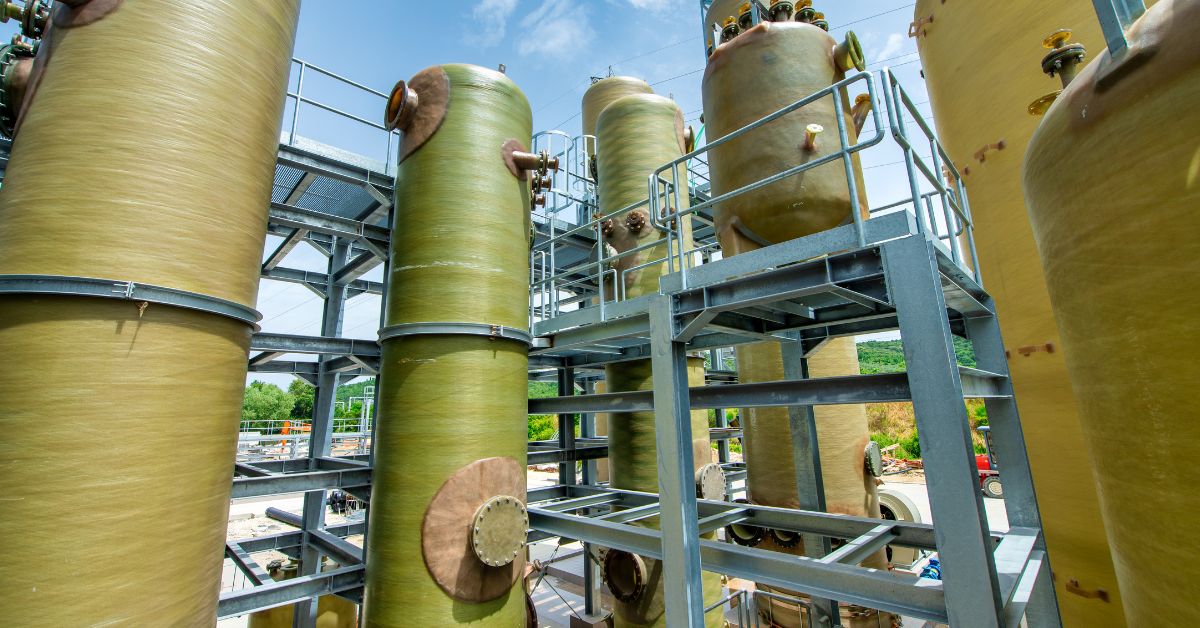
Before implementing AI Optimization (AIO) on a hydrocracker, understanding the unit’s fundamentals is crucial. Hydrocracking processes heavy vacuum gas oil through high-pressure, high-temperature reactors with hydrogen recycle and product fractionation. Each reactor contains catalyst beds with quench points to control exothermic reactions in vessels operating at high pressure.
Key control variables include:
Bed ΔP serves as the real-time fouling indicator, with spikes signaling catalyst issues.
Performance is measured through conversion, middle-distillate yield, hydrogen-to-hydrocarbon ratio, ΔAPI, and energy efficiency. Effective AIO requires comprehensive data: historian tags, lab results, catalyst histories, and detailed feed characterization.
Hydrocracking is ideal for AIO application due to its nonlinear, time-variant nature. Unlike traditional APC systems that maintain conservative margins, AIO models continuously learn from data, anticipating deviations and optimizing yield against hydrogen cost in real time—unlocking value between critical operating boundaries.
Those boundaries remain non-negotiable. Your model must respect the maximum temperature rise allowed for each catalyst bed; older reactor shells can see damage if any zone creeps beyond its design limit.
It must also stay within reactor pressure limits that keep hydrogen in solution and protect welds, while ensuring hydrogen purity remains high enough to avoid catalyst poisoning. Quench flows can vary, but the linear velocity in high-H₂S piping must sit between 10 and 20 ft s⁻¹ to curb ammonium-bisulfide corrosion.
Product quality places its own guardrails: diesel sulfur, jet aromatics, and gasoline nitrogen specs cannot be treated as soft targets. Equipment alarms on delta-pressure or flow bypass any optimization logic, triggering immediate operator or emergency action.
Catalyst life management stacks another constraint layer; exceeding the allowed temperature rise by even a few degrees can shorten a cycle or force an unplanned shutdown. The model has to honor emergency depressurization protocols; if temperatures surge or hydrogen leaks, the priority shifts instantly from optimization to safe shutdown.
Managing the complex and dynamic nature of hydrocracking has traditionally relied on PID (Proportional-Integral-Derivative) and APC (Automatic Process Control) systems. However, these technologies face significant constraints in adapting to the constantly shifting variables inherent in hydrocracking processes.
One of the core limitations stems from their reliance on steady-state assumptions, which do not accommodate the large and rapid swings in feed composition that modern refineries encounter. This leads to slow adaptation to transient conditions, where traditional controllers cannot quickly adjust to changes such as a spike in nitrogen or asphaltenes.
Catalyst aging further complicates the process, as traditional systems lack proactive deactivation modeling. The designs are reactive, addressing temperature or yield drifts after they occur rather than preemptively adapting to the slow deactivation of catalysts over time. This insensitivity to non-uniform aging often results in operational inefficiencies, with frequent manual interventions required to correct process upsets.
The operational constraints of these systems compound these issues, as traditional control approaches frequently cannot integrate all relevant variables, such as temperature, pressure, and hydrogen levels simultaneously, though modern advanced process control systems are designed to address this integration challenge.
This incomplete approach leads to inadequate optimization timelines and poor integration of the numerous factors that impact hydrocracking efficiency. As a result, the systems often operate in a limited capacity that does not fully exploit the potential of the available data.
Modern hydrocracking units require precision control that traditional systems struggle to deliver. AI-powered solutions transform your control room with anticipatory discipline through a structured three-layer approach:
This comprehensive approach transforms AI from an opaque technology into a transparent decision partner that operators can trust and verify, delivering consistent optimization within your unit’s safe operating envelope.
Dynamic optimization trims operating costs by up to 50% in energy-intensive areas. Those savings reduce exposure to volatile hydrogen costs and cut CO₂ taxes without touching throughput. Benefits extend beyond the balance sheet. Operators report steadier operation, fewer manual trims, and longer catalyst cycles as the AI continuously keeps ΔP and quench rates in their sweet spots.
An early warning layer, able to flag equipment anomalies, further protects uptime. Crucially, every cycle of new data sharpens the model, so improvements compound month after month.
Implementing AI in hydrocracking requires methodical planning and execution. The following best practices will help you navigate common pitfalls and maximize your chances of success:
With solid data foundations, transparent models, and deliberate change management, you can transform potential pitfalls into a repeatable playbook for safer, more profitable hydrocracker control.
With Imubit’s Closed Loop AI Optimization (AIO), your hydrocracker learns plant-specific behavior in real-time and writes optimal set points back to the distributed control system (DCS) or APC system every few minutes.
Operators stay firmly in charge: transparent model explainers, feature-importance plots, and advisory mode drills upskill the workforce rather than replace it. Request your AIO assessment to learn how Imubit’s solution can bring more profits and efficiency to your oil and gas operations.