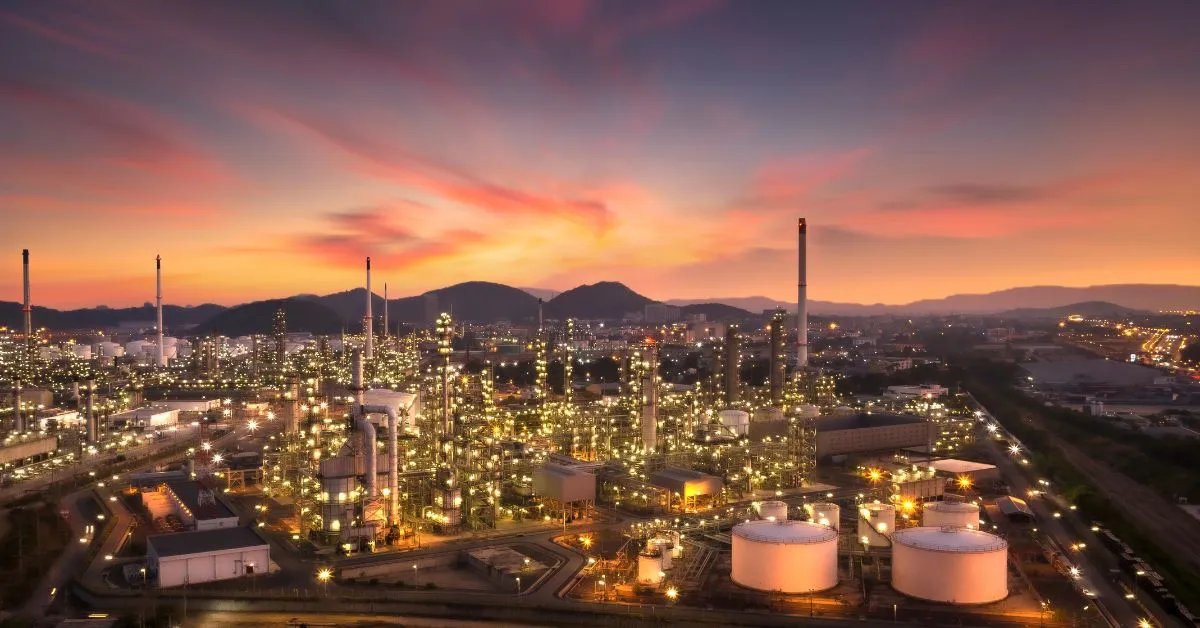
The oil and gas industry is urgently pursuing decarbonization, driven by regulatory pressure and net-zero commitments. Key trends include using hybrid power, scaling carbon capture (CCUS), adopting low-carbon fuels like hydrogen, and intensifying digital optimization. Real-time industrial AI is emerging as a crucial tool, turning emissions reduction into a source of operational savings and competitive advantage across facilities.
The oil and gas industry stands at an inflection point where decarbonization has evolved from boardroom discussion to operational imperative. The International Energy Agency reveals that operational activities alone generate roughly 15% of all energy-related greenhouse gas emissions—a level that the IEA indicates must be rapidly reduced to align with limiting global warming to 1.5°C.
Leading producers have responded with bold commitments: aggressive near-term methane reduction, 2030 intensity targets, and net-zero operations by mid-century. Converting these pledges into measurable results hinges on transformative trends already reshaping operations today.
Each trend offers immediate implementation opportunities, with real-time artificial intelligence emerging as the catalyst that transforms decarbonization from a compliance cost into a source of operational savings, regulatory advantage, and competitive differentiation across front-line facilities.
Upstream operators continued to face energy transition pressures last year, but evidence does not show substantial double-digit growth in on-site solar and wind assets. These companies now combine renewables with batteries and backup generators to create robust microgrids capable of powering critical operations.
A typical configuration integrates photovoltaic panels for daytime loads, compact wind turbines for overnight generation, battery storage systems for output smoothing, and gas or diesel generators for emergency backup. On well pads, these hybrid systems power telemetry equipment, artificial-lift motors, and drilling operations.
The financial case strengthens as equipment costs continue declining, lowering levelized electricity costs while eliminating expensive fuel transportation and associated safety risks.
Advanced control algorithms enable microgrids to continuously optimize solar, wind, battery, and generator dispatch for minimum cost per kilowatt-hour. For operators weighing capital investment against persistent diesel operating expenses, the combined economics and emissions benefits now favor renewable-hybrid power solutions.
Large-scale carbon capture has transitioned from planning phase to active deployment. Announced projects have positioned global capacity to potentially grow significantly by the end of the decade, with projections nearing 430 million tonnes of annual CO₂ capture capability by 2030, though recent annual growth has been more modest. The International Energy Agency projects this momentum could quadruple capacity by 2030.
Three primary capture technologies serve different applications:
While capture costs currently range from $40 to $120 per tonne, innovative solvents and membrane technologies drive steady reductions. U.S. Department of Energy initiatives target $30 per tonne within the decade.
Captured carbon finds productive uses through enhanced oil recovery, synthetic fuel production, and concrete curing applications. Federal incentives help bridge financing gaps the World Economic Forum identified, with the enhanced 45Q tax credit now providing up to $85 per tonne for permanent storage.
Oil and gas companies leverage decades of subsurface expertise and existing pipeline infrastructure for storage development. Regional hub models that integrate capture, transport, and injection are materializing across major basins.
Successfully scaling these hubs requires disciplined cost management and collaborative investment, but CCUS directly addresses the most challenging emissions sources while integrating naturally into comprehensive decarbonization strategies.
Real-time industrial AI learns facility constraints, establishes accurate emissions baselines, and continuously adjusts operating parameters to achieve targets with reduced fuel consumption.
Advanced optimization technology begins by identifying heat integration opportunities—rebalancing heat exchangers and furnaces so thermal energy gets recycled rather than wasted.
It then addresses flare and methane emissions, where AI-powered leak detection systems rapidly identify plumes, enabling prompt action to prevent high global warming potential releases. When equipment performance degrades, predictive maintenance tools schedule interventions before fouling reduces efficiency. Cloud-based dashboards consolidate operational parameters into auditable key performance indicators, providing ESG teams with immediate, verifiable data.
These improvements reduce utility costs while avoiding carbon fees, enabling pilots to typically achieve payback within 12 months. The algorithms continuously learn from expanding datasets, ensuring emissions reductions accelerate well beyond initial optimization phases. Recent efficiency improvement studies confirm these sustained benefits across diverse facility types.
Blue hydrogen, produced from natural gas with carbon capture, and green hydrogen generated through renewable-powered electrolysis provide two viable pathways for reducing emissions without abandoning existing thermal processes. Low-emissions hydrogen represents one of the fastest methods for shrinking Scope 1 and 2 footprints, according to International Energy Agency analysis.
The environmental impact proves substantial. Replacing conventional grey hydrogen with green alternatives avoids roughly ten tonnes of CO₂ per tonne of hydrogen that steam-methane reforming would otherwise release. Blending clean hydrogen into turbines or boilers displaces natural gas firing, while surplus production creates new revenue streams for industries requiring sustainable ammonia or methanol.
Additional low-carbon fuels—including advanced biofuels, synthetic liquids, and ammonia—integrate into existing logistics networks with minimal infrastructure modifications. This compatibility allows product diversification and hedging against future carbon pricing mechanisms.
Early adopters already recognize multiple benefits: expanded customer bases, reduced regulatory risk, and stronger ESG credentials that enhance long-term competitiveness in evolving markets.
Compliance timelines are accelerating across major jurisdictions. Europe’s emissions trading system now encompasses maritime transport, with Phase 4 pricing currently around €75 per tonne. The U.S. Inflation Reduction Act introduces escalating Methane Fees through 2027, while Canada’s carbon price targets C$170 per tonne by 2030.
Financial institutions are simultaneously tightening requirements. More than 600 institutions participating in Climate Action 100+ demand credible net-zero roadmaps from portfolio companies.
The Science Based Targets initiative is in the process of developing oil and gas standards that will define acceptable decarbonization pathways. Many operators are joining voluntary initiatives to demonstrate commitment and avoid the financing premiums that increasingly penalize laggards.
Non-compliance carries measurable costs: elevated investment hurdles, restricted market access, and reputational challenges that can delay critical projects. Real-time operational data provides audit-ready records for carbon fee calculations, voluntary disclosures, and stakeholder reviews. When combined with AI-driven optimization, regulatory pressure transforms into competitive advantage by simultaneously reducing emissions and operational costs.
Imubit’s Closed Loop AI Optimization solution analyzes years of historian and laboratory data, then automatically writes optimal setpoints to distributed control systems in real-time. Because the models continuously adapt as operating conditions evolve, facilities achieve sustained energy and margin improvements without constant manual retuning.
This closed-loop intelligence integrates seamlessly with every decarbonization approach outlined above. The system balances turbine output against battery charge levels on hybrid well sites, optimizes steam usage in carbon capture units, maximizes efficiency in refinery heaters and flare systems, and fine-tunes hydrogen purity to meet product specifications with minimal fuel consumption.
Automated KPI dashboards deliver results directly to ESG and regulatory teams, streamlining audit processes and reducing documentation overhead.
For process industry leaders pursuing sustainable efficiency gains, Imubit’s solution offers a data-driven approach rooted in real-world operations. A Complimentary Plant AIO Assessment reveals how your plant can accelerate transition to lower emissions and higher profitability. Schedule yours today.