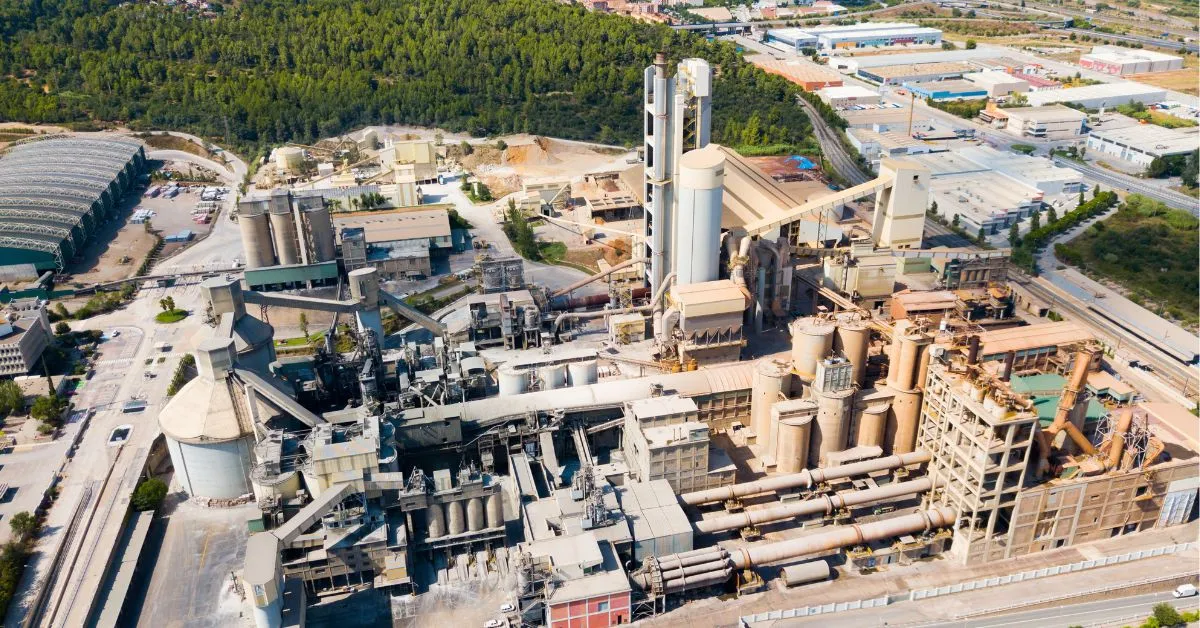
Closed-Loop AI is critical for cement plants to remain competitive amid rising fuel costs and strict emissions rules. These AI systems continuously optimize operations—like fuel flow and feed blends—in real-time. This results in measurable gains: higher throughput, 5-10% energy savings, better quality, enhanced safety, and lower emissions, all without costly plant rebuilds, delivering rapid return on investment.
Fuel and electricity now rank among the largest variable costs in cement production, and every uptick in carbon-pricing legislation tightens EBITDA margins even further. Cement manufacturing accounts for roughly 8% of global CO₂ emissions, making the need to operate leaner and cleaner more urgent than ever. Operational excellence isn't just a program anymore—it's the business case for staying competitive while meeting sustainability targets.
Closed-Loop AI offers a direct path to that objective. These systems learn from historical and real-time plant data, then continuously send optimal control setpoints to existing equipment.
They adjust fuel flow, airflow, and feed blends in real time without waiting for human intervention. The result: measurable improvements in throughput, energy efficiency, quality consistency, and emissions reduction—all without the cost or downtime of major plant rebuilds.
Closed loop AI helps cement plants protect margins and meet emissions targets by continuously optimizing kiln, cooler, and mill operations.
Here's how these operational excellence strategies play out in practice.
Fuel represents about a third of your production cost, and every spike in coal or gas prices squeezes EBITDA. Carbon pricing and tighter CO₂ limits add another line item to the budget. Because cement production faces intense regulatory and investor scrutiny, environmental performance directly impacts financial results.
Leading producers respond by embedding operational excellence—disciplined routines that drive reliable throughput, stable quality, and lower energy intensity—across daily activities. Traditional approaches like spreadsheets, manual audits, and periodic tuning can't match the pace of kilns that drift minute by minute.
This reality makes the business case for adopting Closed-Loop AI: autonomous models constantly steer the plant within tighter cost, safety, and emissions constraints to protect margins and sustainability targets.
Cement plants face relentless pressure from fuel price volatility and tightening emissions regulations, while traditional improvement methods struggle to keep pace with these dynamic constraints. Closed-loop AI addresses this challenge by continuously absorbing historian, sensor, and lab data, running advanced optimization models, and automatically adjusting control setpoints in the distributed control system (DCS) without operator intervention.
Instead of static limits that ignore changing conditions, these systems maintain adaptive targets that keep kilns, coolers, and mills operating closer to ideal performance while respecting safety boundaries. Traditional improvement routines and legacy advanced process control (APC) systems require manual tuning and periodic recalibration—approaches that lose effectiveness as raw-material composition shifts, fuel quality varies, or seasonal conditions change.
Closed-loop AI eliminates this performance drift by learning from both historical operations and real-time process feedback, simultaneously optimizing hundreds of variables that would be impossible to manage manually. Because these systems layer onto existing APC and PID control loops, cement plants capture immediate benefits without costly equipment replacements or extended production shutdowns.
The following measurable improvements demonstrate how closed-loop AI unlocks hidden throughput, trims energy bills, widens safety margins, locks in golden batch quality, lowers emissions, speeds up troubleshooting, and sustains peak performance day after day. These gains lift EBITDA without costly rebuilds, additional headcount, or maintenance-induced shutdowns.
Closed-loop AI reviews thousands of data points across your kilns, coolers, and finish mills, then writes optimal setpoints back to the distributed control system in real time. The model continuously balances draft, feed rates, and residence times, nudging each asset closer to its true capacity while keeping shell temperature, O₂, and vibration safely within operating envelopes.
Plants that have moved beyond advisory mode see production lifts with the same equipment, focused on kiln and grinding circuits. This optimization builds on existing assets, so payback typically arrives far sooner than capital-heavy line expansions while avoiding the downtime that large rebuilds require.
Fuel is the largest variable cost in cement production, yet traditional control leaves efficiency on the table. Closed-loop AI optimization watches every sensor and executes continuous optimization, writing new setpoints to burners, ID-fans, and grinding circuits moment by moment. This live recalculation slashes energy consumption.
Lower heat demand flows straight to your bottom line and to the stack. Using less fuel automatically cuts CO₂ per metric tonne of clinker, easing compliance pressure while protecting margins when prices spike. Because the models learn continuously, they eliminate the drift that creeps back between manual tune-ups, keeping improvements locked in.
Closed-loop AI keeps kiln shell temperatures, O₂ levels, and pressure swings inside tighter limits than even the most vigilant operator can manage. By writing optimized setpoints back to the distributed control system in real-time, the model dampens disturbances before they cascade into high-heat excursions or refractory damage, sharply lowering the odds of process upsets and equipment failure.
This disciplined control supports Process Safety Management compliance while reducing the need for manual checks in hazardous areas, allowing your crew to spend less time near red-hot vessels. Plants that deploy continuous anomaly detection report fewer emergency shutdowns, avoiding the multimillion-dollar losses tied to unplanned downtime and repairs.
In cement manufacturing, consistent clinker quality is the benchmark every shift aims to sustain — hitting targets for free lime, Blaine fineness, and 28-day strength. Closed-loop AI captures the complex relationships among kiln temperature, raw-mix chemistry, and mill power, then updates setpoints in real time to keep production within that narrow quality window.
This approach eliminates the traditional wait for lab sample results by predicting strength shortly after clinker leaves the kiln, reducing both giveaway and costly rework. Plants using this technology report steadier clinker integrity and fewer customer claims, even when raw-material quality varies significantly. The continuous learning capability allows the system to adapt to fuel changes or weather conditions, preserving reliable performance across all operating conditions.
The result is sustained product consistency that minimizes variability, lowers production costs, and strengthens customer confidence.
Energy is the biggest lever for shrinking a cement plant's environmental footprint, and AI optimization solutions tune kiln temperature, fuel mix, and airflow to squeeze every kilojoule from each tonne of clinker while limiting CO₂ and NOₓ formation. By reacting in real-time to raw material or weather shifts, the model keeps combustion in the sweet spot, eliminating the over-burning that wastes fuel and accelerates refractory wear.
The same approach tightens variability, so fewer non-prime batches need rework or disposal. Lower fuel use directly cuts carbon intensity, helping your operation track climate commitments without curbing throughput. In practice, plants report energy savings above two percent, translating into immediate cost relief, fewer regulatory headaches, and a clear path to more sustainable operations.
When dozens of variables shift at once, pinpointing the one that caused a pressure surge or quality dip can feel like guesswork. AI optimization solutions study every signal in your plant data, learning the plant's normal behavior and flagging subtle deviations long before alarms trip. Because the model evaluates kiln temperature, ID-fan load, and feed chemistry together, it uncovers hidden correlations humans rarely spot, guiding you straight to the root cause instead of its symptoms.
Early insight lets you adjust setpoints or plan repairs while equipment is still healthy, reducing downtime and spare-parts spending. Documented implementations show payback in under a year by preventing just a handful of avoided failures.
Closed-loop AI never stops learning. Reinforcement learning models continually update themselves with the latest historical and quality data, then write optimal setpoints back to the distributed control system in real-time. As kiln refractories wear, ambient humidity swings, or raw-mix chemistry drifts, the model adapts instantly—eliminating the slow performance decay you see after traditional improvement events.
This continuous adaptation addresses a fundamental constraint in cement operations: equipment and conditions change constantly, but manual optimization happens infrequently. Traditional improvement initiatives deliver initial gains, but performance gradually erodes as operators revert to familiar patterns and equipment characteristics shift.
Because the optimization remains active 24/7, energy savings, throughput gains, and quality consistency compound month after month. Operators spend less time chasing alarms and more time on higher-level analysis, creating a culture where continuous improvement becomes embedded in daily operations rather than periodic events.
Even compelling business cases face practical implementation hurdles. Fortunately, experience shows these challenges are manageable:
With these elements in place, the path to autonomous optimization becomes achievable and practical.
AI optimization solutions tie every operational improvement together, turning short-term wins into sustained profit for cement plants. By compounding multiple gains—higher throughput, lower fuel consumption, steadier quality, safer operation, fewer emissions, faster troubleshooting, and continuous learning—plants capture financial benefits far greater than individual metrics alone.
Documented throughput improvements and energy savings of 5–10% have translated into substantial annual benefits, with payback periods under 12 months for cement producers. As models continue learning from kiln operations, cooler performance, and finish mill data, the platform creates a foundation for broader smart-factory initiatives: digital twins, adaptive supply chains, and integrated emissions trading.
Control room operators shift from reactive troubleshooting to higher-value analysis, preserving critical process knowledge even as the workforce evolves. In a market constrained by rising fuel costs and carbon regulations, maintaining peak performance without costly equipment rebuilds creates a durable competitive advantage that compounds year after year.
Closed loop AI unlocks higher yield, lower energy use, safer operations, golden batch quality, reduced emissions, faster troubleshooting, and continuous optimization, all without costly rebuilds. Because the models learn from the data already flowing through the distributed control system, they reinforce rather than disrupt existing improvement routines.
Plants can start in advisory mode to benchmark savings and build operator trust, then progress toward closed loop optimization at their own pace. This approach validates value at every stage while minimizing risk.
For cement plant leaders seeking sustainable efficiency improvements, Imubit's Closed Loop AI Optimization solution offers a data-first approach that learns from actual plant operating history. The technology adapts continuously, creating a foundation for sustained excellence that grows stronger over time.
Get a Plant Assessment to discover how AI optimization can strengthen operational excellence across your cement operations.
AI optimization platforms connect to existing distributed control systems through standard interfaces, so legacy equipment rarely needs replacement. Most implementations start in advisory mode, where the model provides recommendations without writing setpoints. This builds operator confidence before any transition to closed loop control. Beginning with a single high-impact unit like a kiln keeps scope manageable while demonstrating measurable value and confirming cement data readiness before scaling.
Plants deploying AI optimization on kiln and grinding circuits typically report energy savings that translate directly into lower fuel costs and reduced CO₂ per tonne of clinker. Because the models learn continuously from process data, they eliminate the performance drift that accumulates between manual tune-ups. The compounding effect of sustained energy efficiency improvements means savings grow over time rather than eroding after initial implementation events.
Closed loop AI captures relationships between kiln temperature, raw-mix chemistry, and mill power that are too complex for operators to track across hundreds of variables simultaneously. The system predicts strength shortly after clinker leaves the kiln rather than waiting for lab results, reducing both giveaway and rework. As fuel sources or weather conditions change, continuous learning adapts setpoints to preserve clinker quality within tight specification windows.